Ripley’s way finding system
Wayfinding Design · Spatial Navigation · UX Strategy · 2024 · Experiential Environments
This project explores a conceptual redesign of the wayfinding system within the Ripley’s Aquarium parking structure. The goal was to create a clear and intuitive orientation experience that helps visitors understand their location and navigate confidently to their destination through a cohesive system of signage, graphics, and spatial cues.
Problem
Visitors entering the Ripley’s Aquarium parking structure often lack clear orientation, making it difficult to quickly understand where they are and how to reach their destination. The absence of a strong visual hierarchy and consistent navigation cues can lead to confusion, missed pathways, and unnecessary stress at the start of the visitor journey.
Solution
We proposed a redesigned wayfinding system that improves clarity and confidence through themed parking zones, clear directional graphics, regulatory signage, and orientation maps. By combining functional navigation with a storytelling approach, the system helps visitors easily identify their location and follow a logical path from parking to entry.
My Role
Position:
Research and design lead
Duration:
4 months
Responsibilities:
Wayfinding concept development, circulation mapping, information hierarchy, visual system design, and signage strategy.
Research highlights
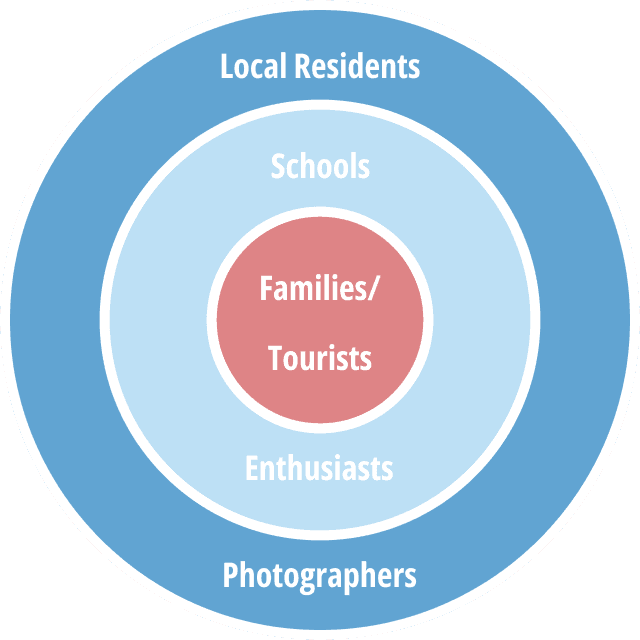
Target Audience
Families on a day trip
Tourists from near or far visiting these hot spots
School groups and educators (field trips)
General audiences interested in interactive exhibits & marine life encounters
Public seeking indoor entertainment on rainy days or during off-season visits
Aquatic life enthusiasts and photographers
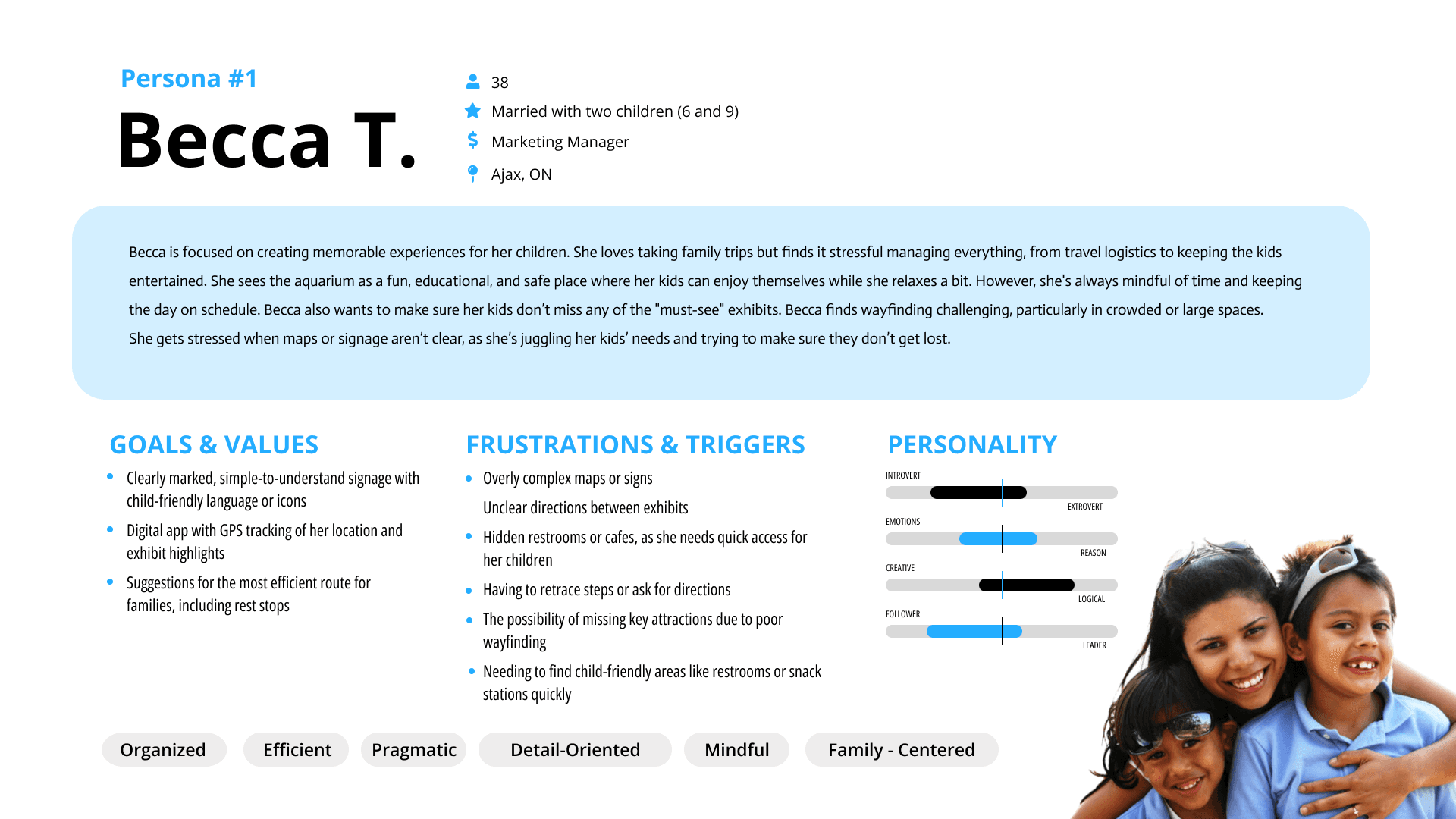
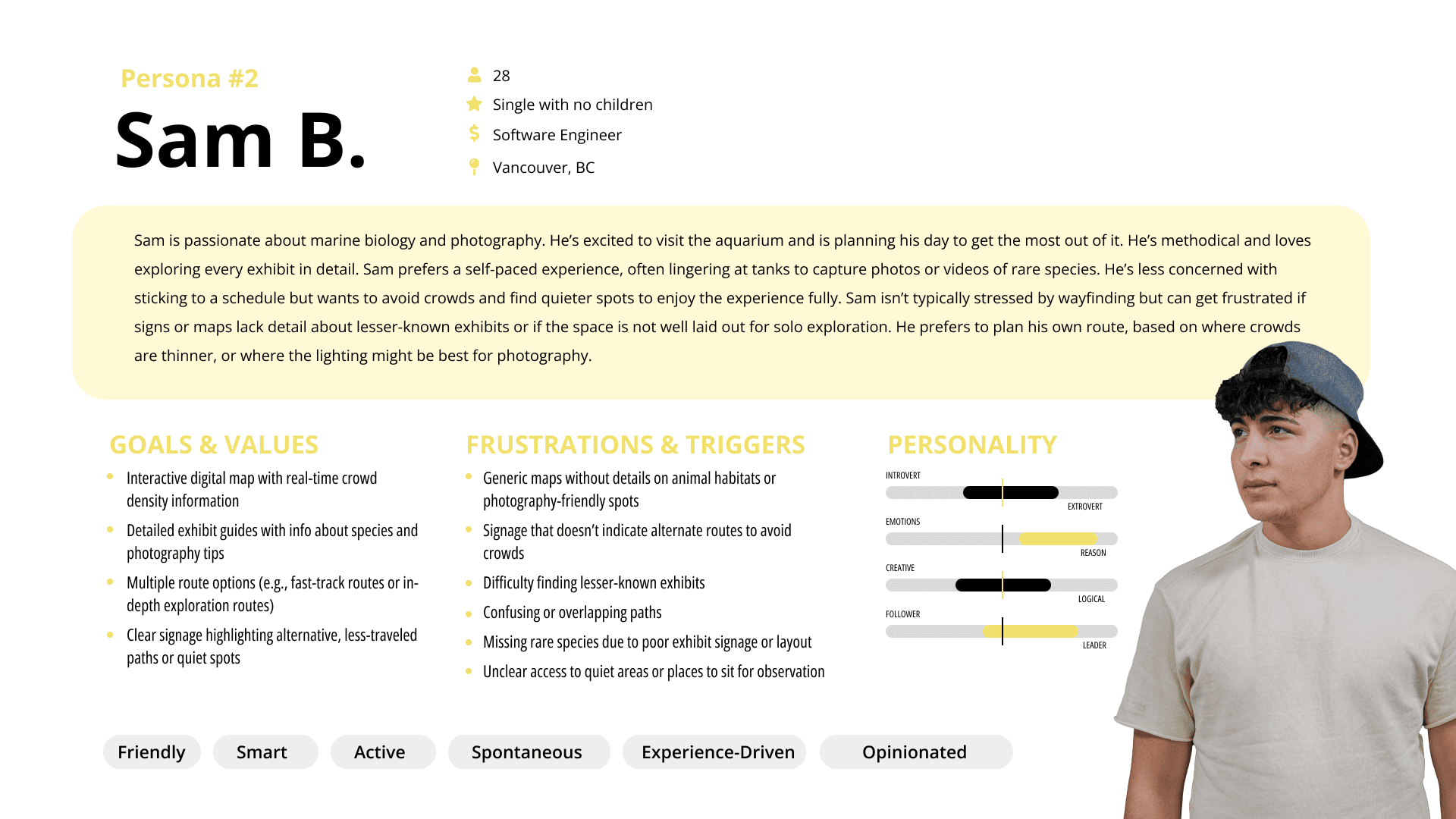
Becca and Sam represent two key visitor types navigating the aquarium parking structure. By mapping their goals, values, and frustrations, these personas helped identify common navigation challenges such as the need for immediate orientation, clear visual cues, and confidence when moving through unfamiliar spaces. Defining these personas allowed us to design a wayfinding system that addresses real user needs and supports a smoother, less stressful arrival experience.
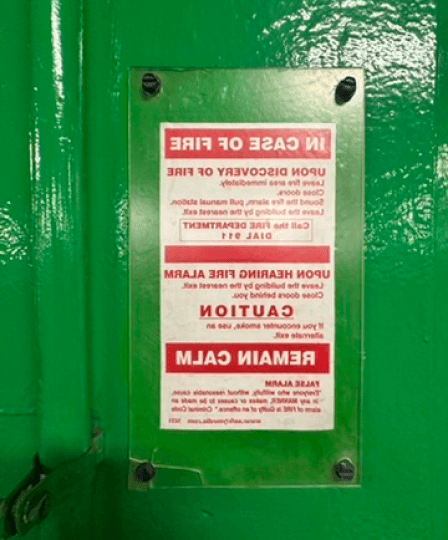
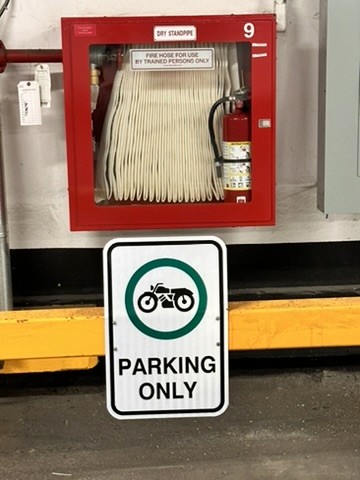
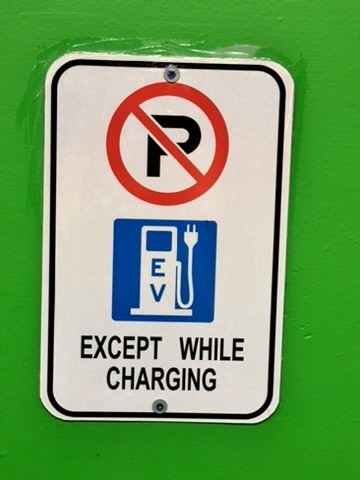
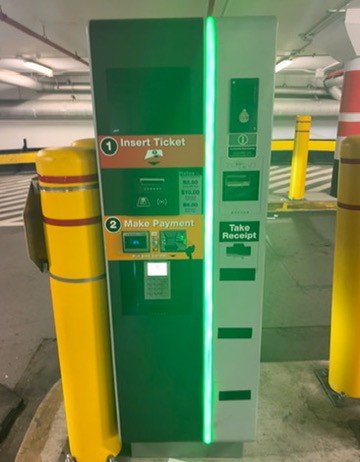
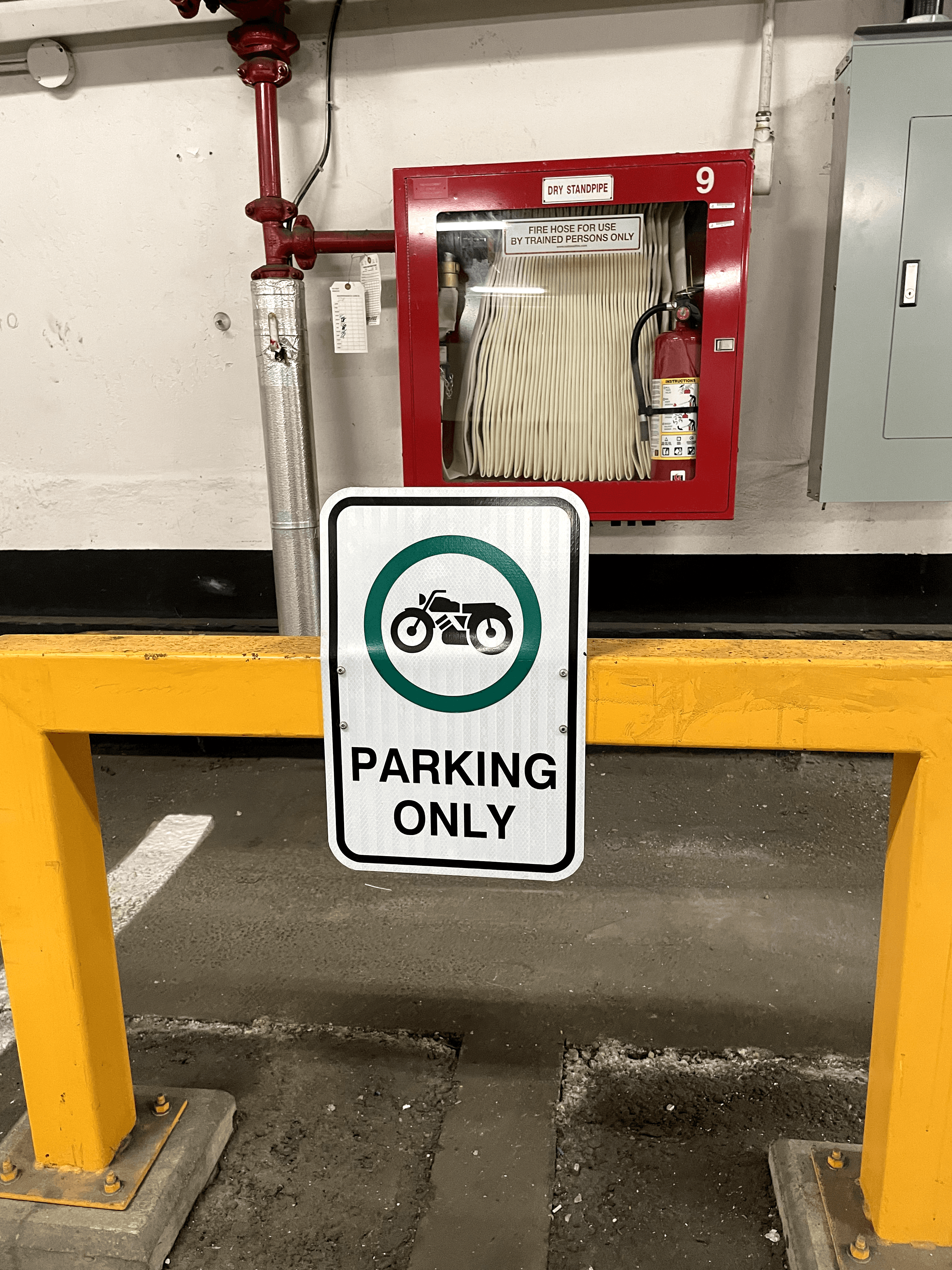
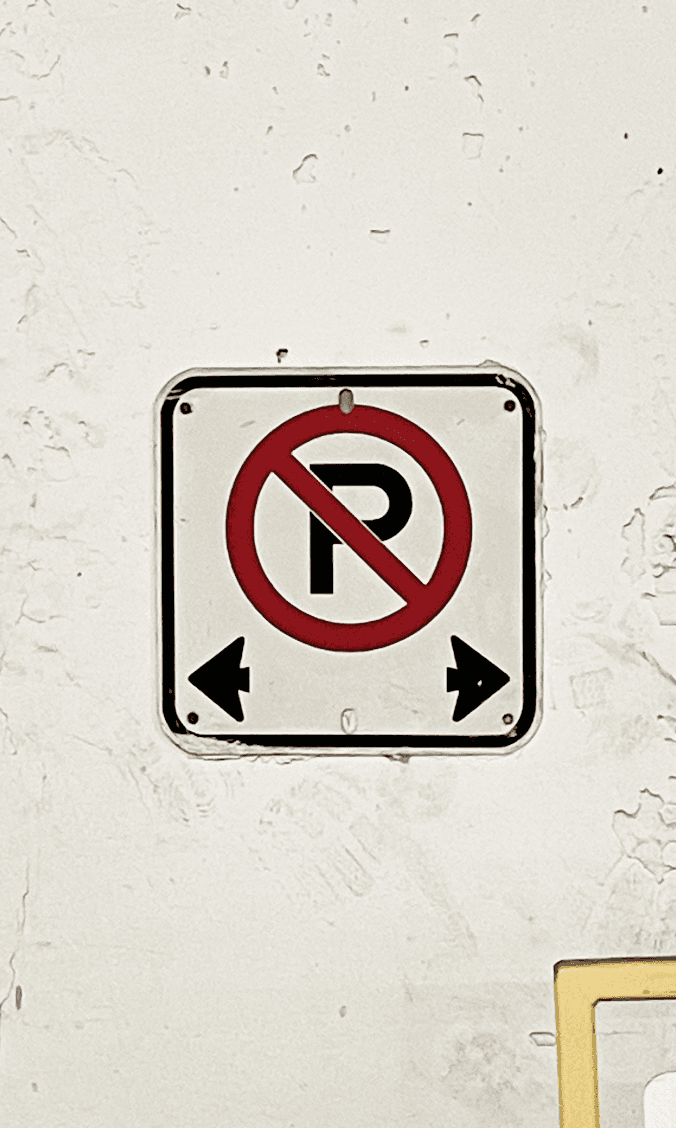
The exterior signage was generally clear and visible; however, the large amount of regulatory signage created visual clutter and felt overwhelming at times. Exterior directional signage was limited, particularly for pedestrians—while vehicle entry was easy to locate, pedestrian access points were less visible and harder to identify.
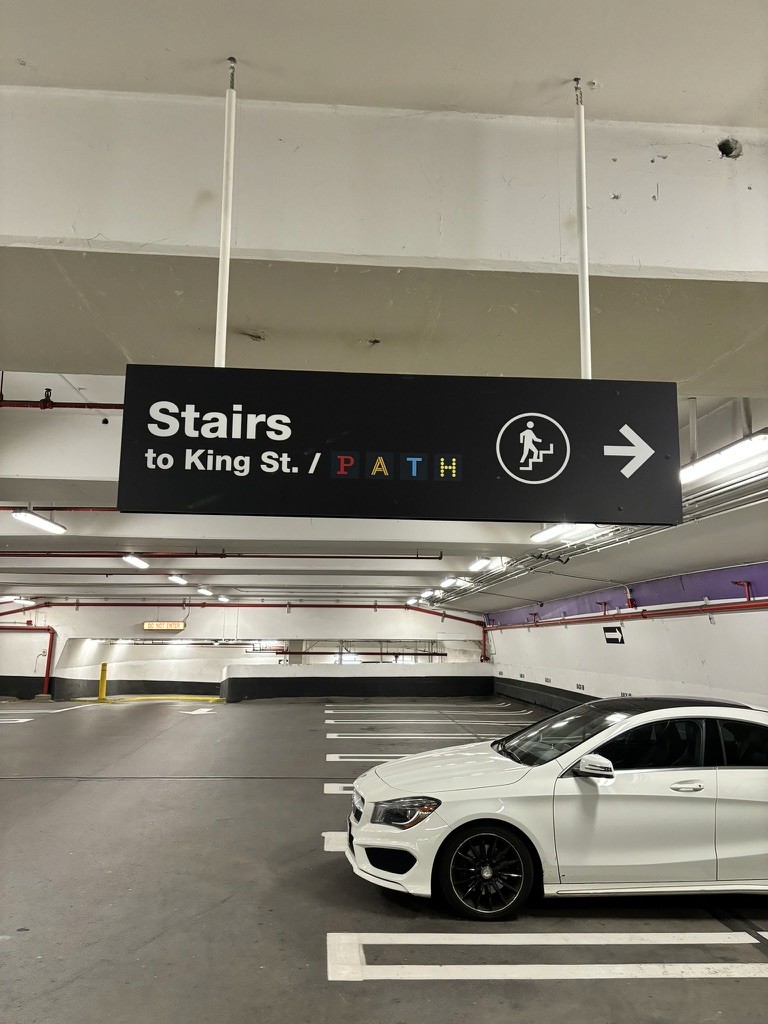
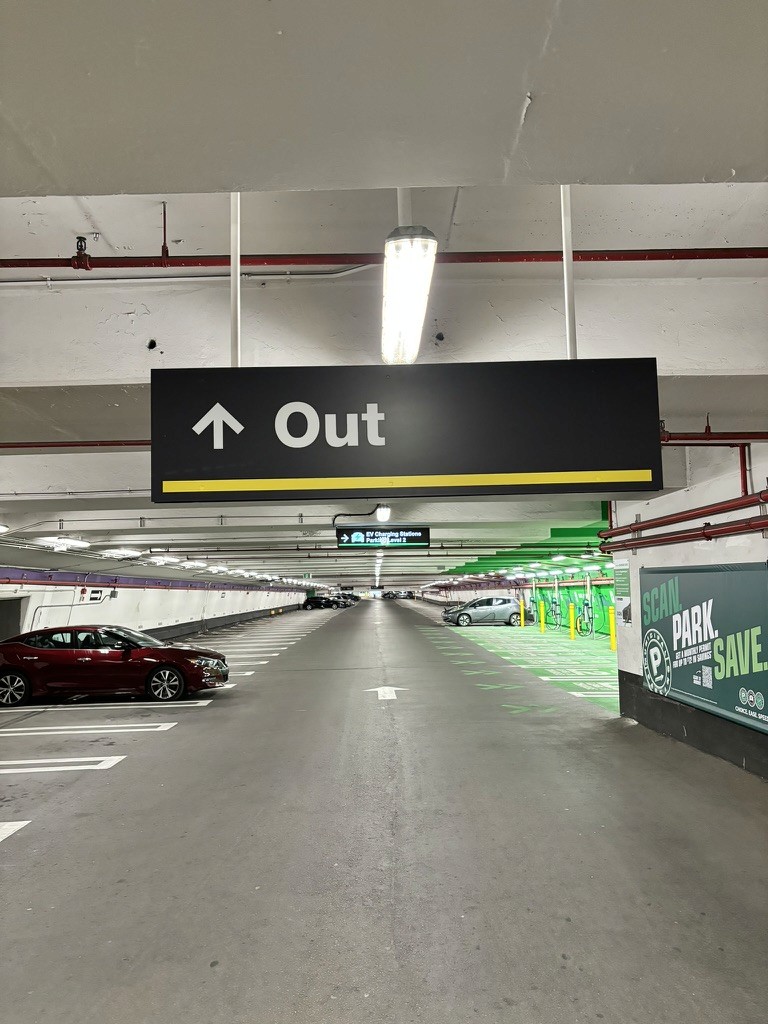
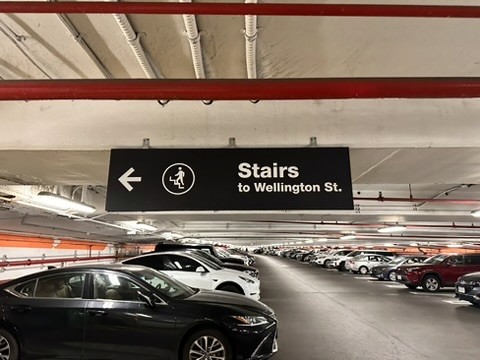
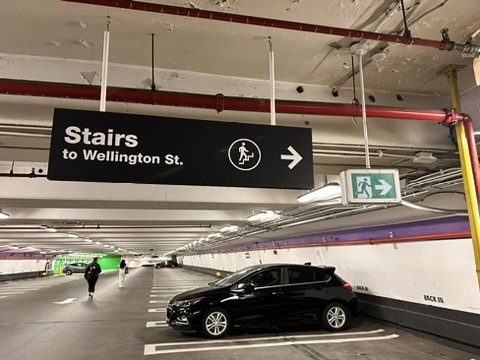
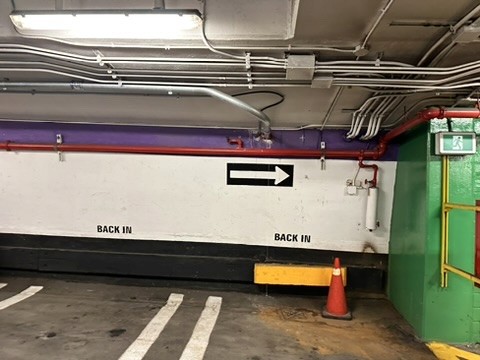
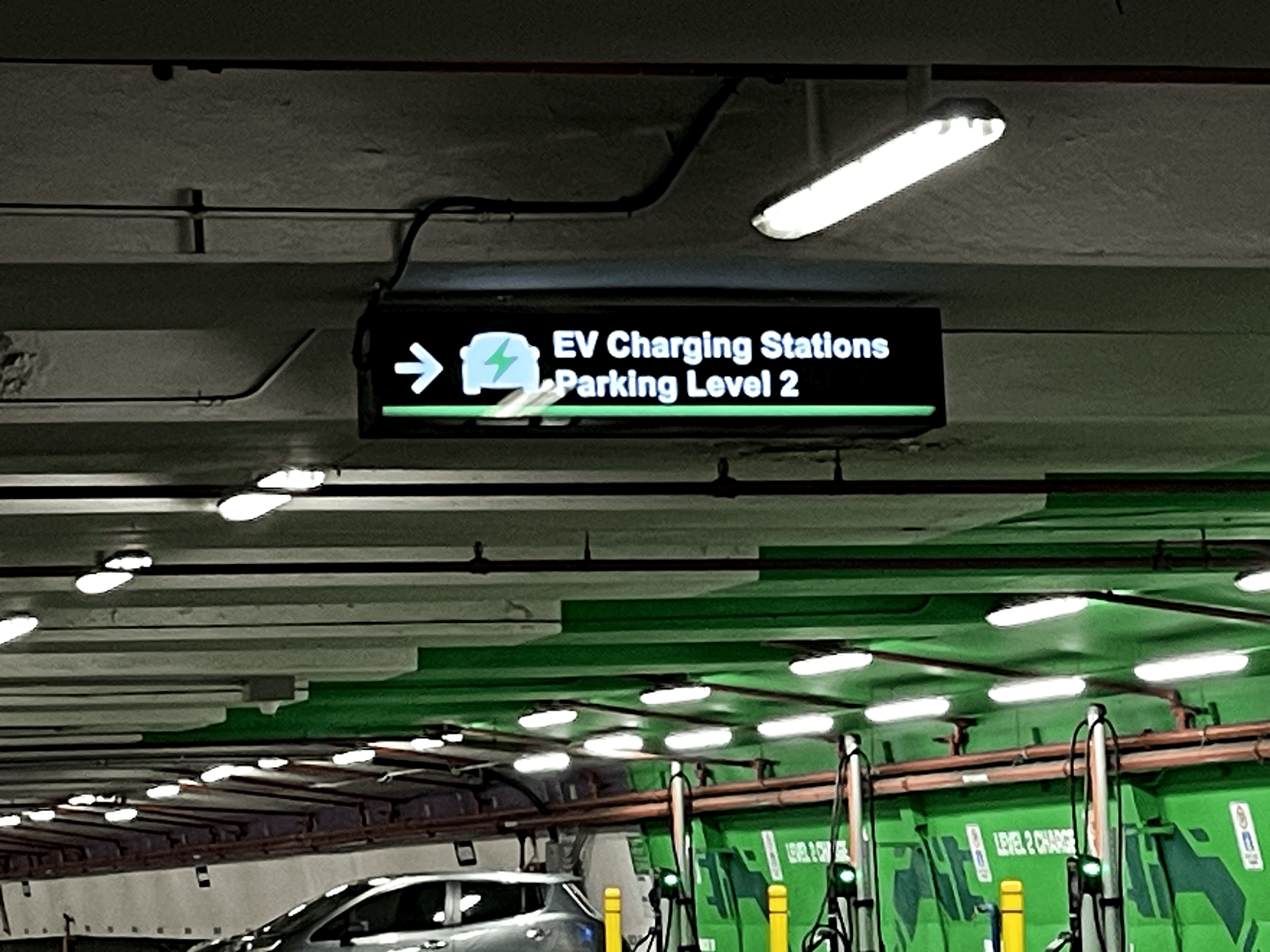
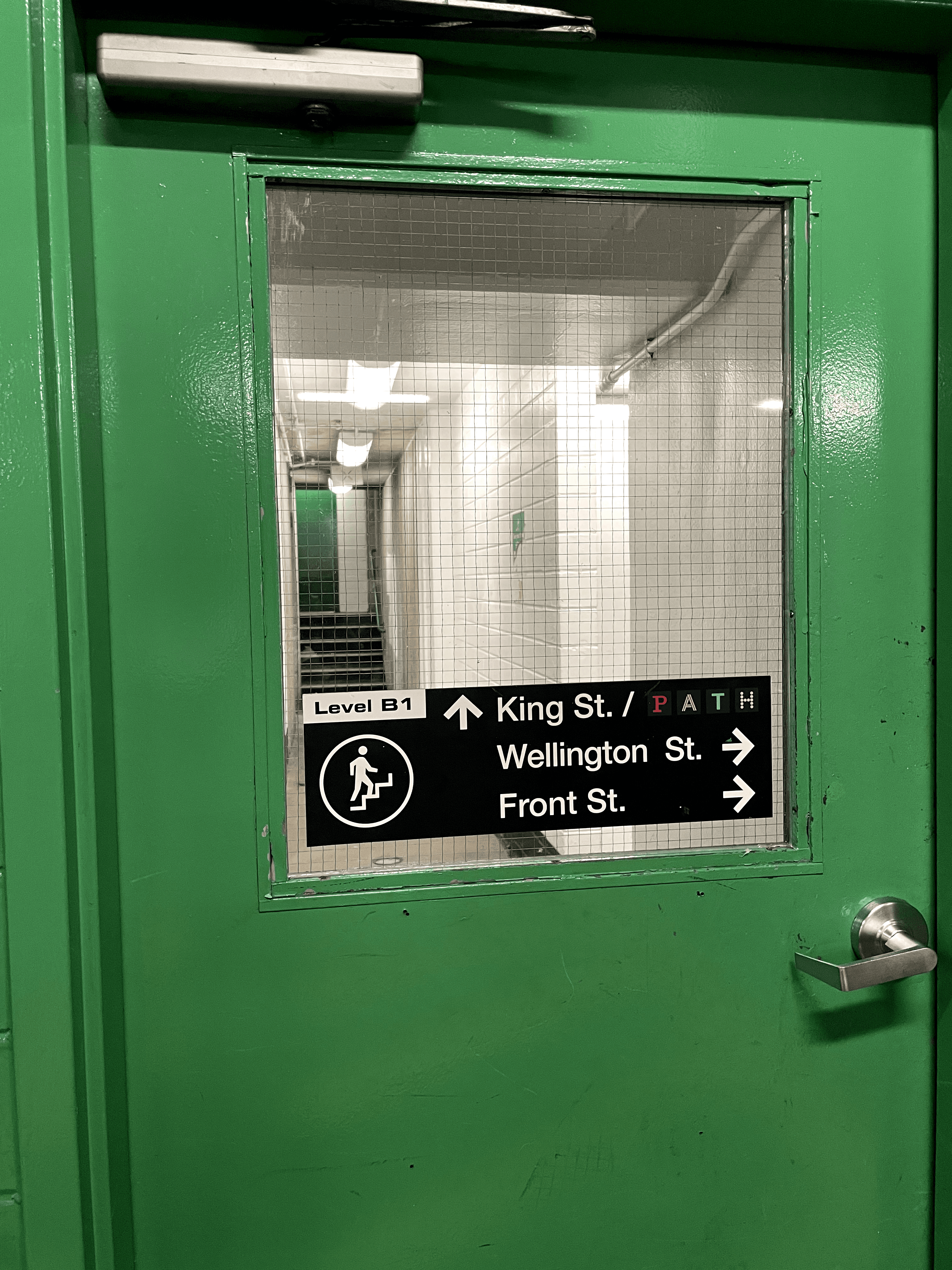
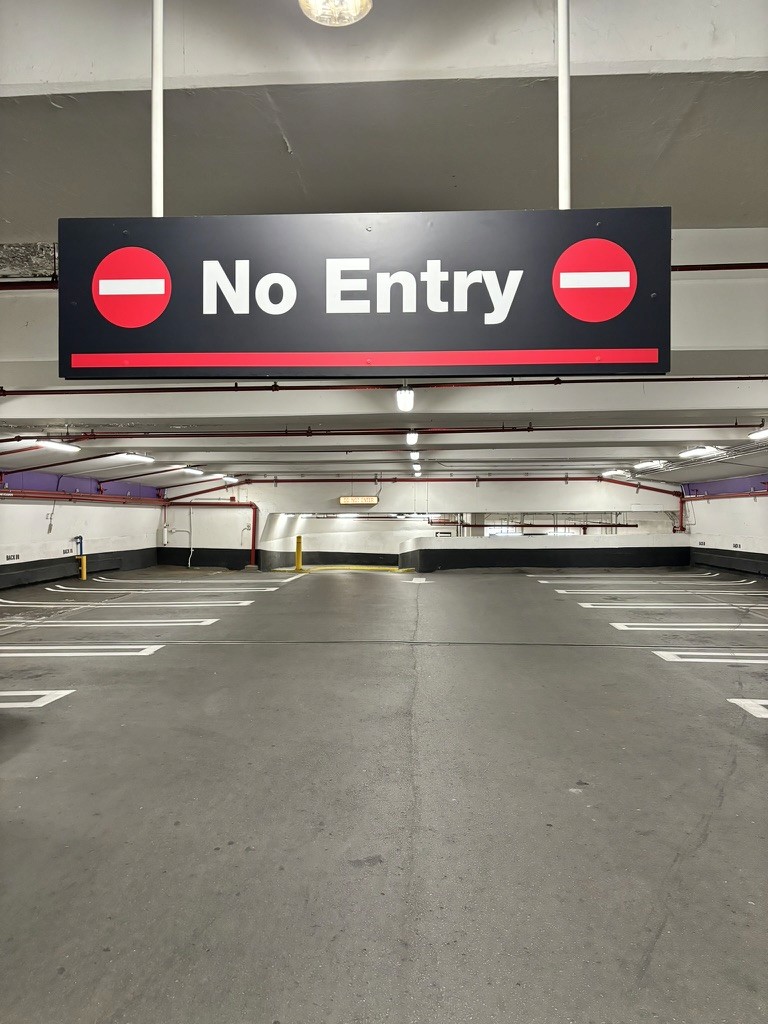
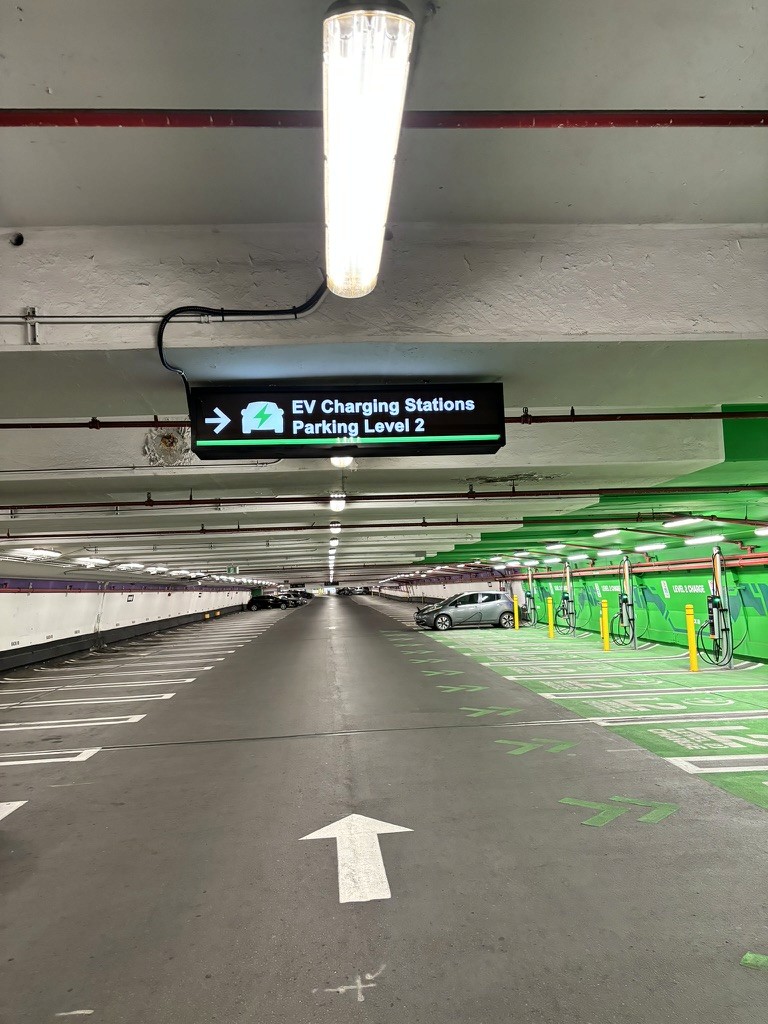
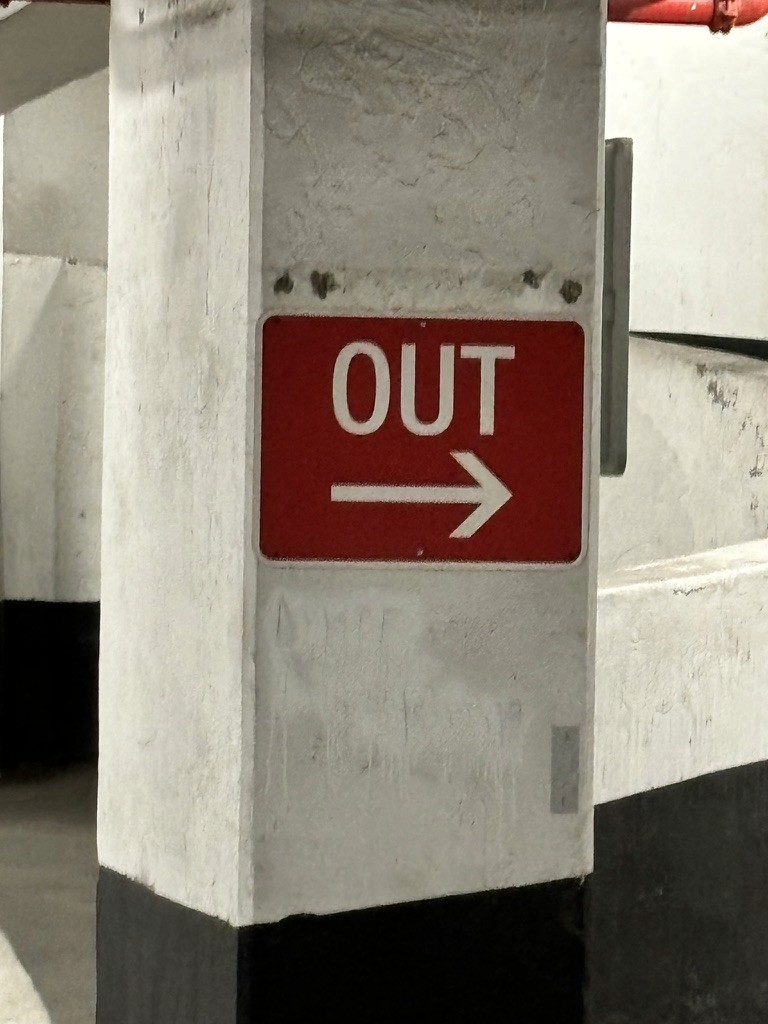
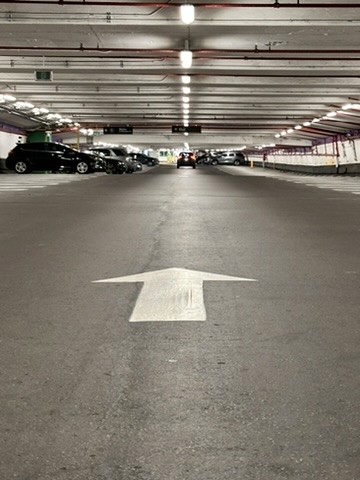
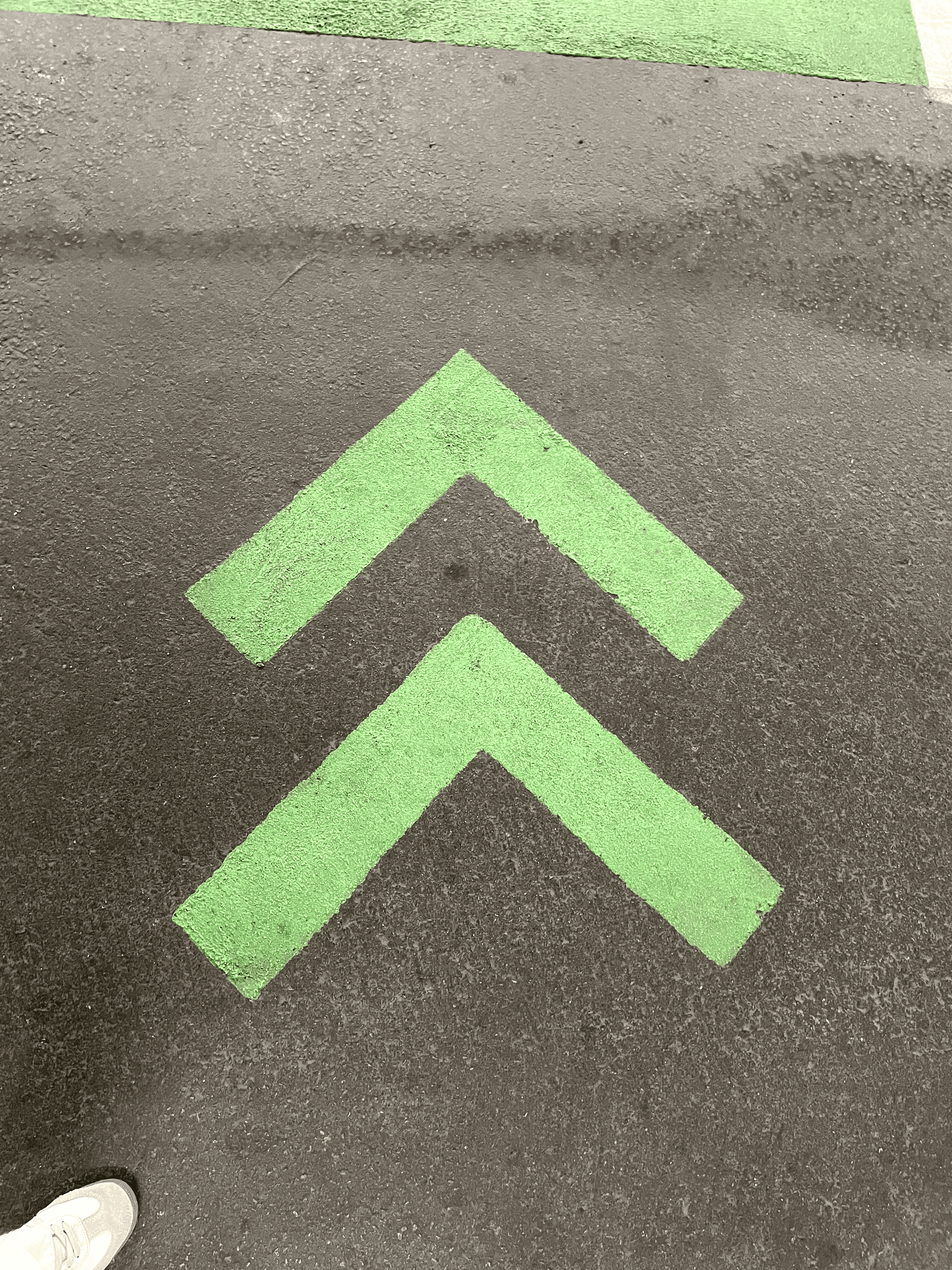
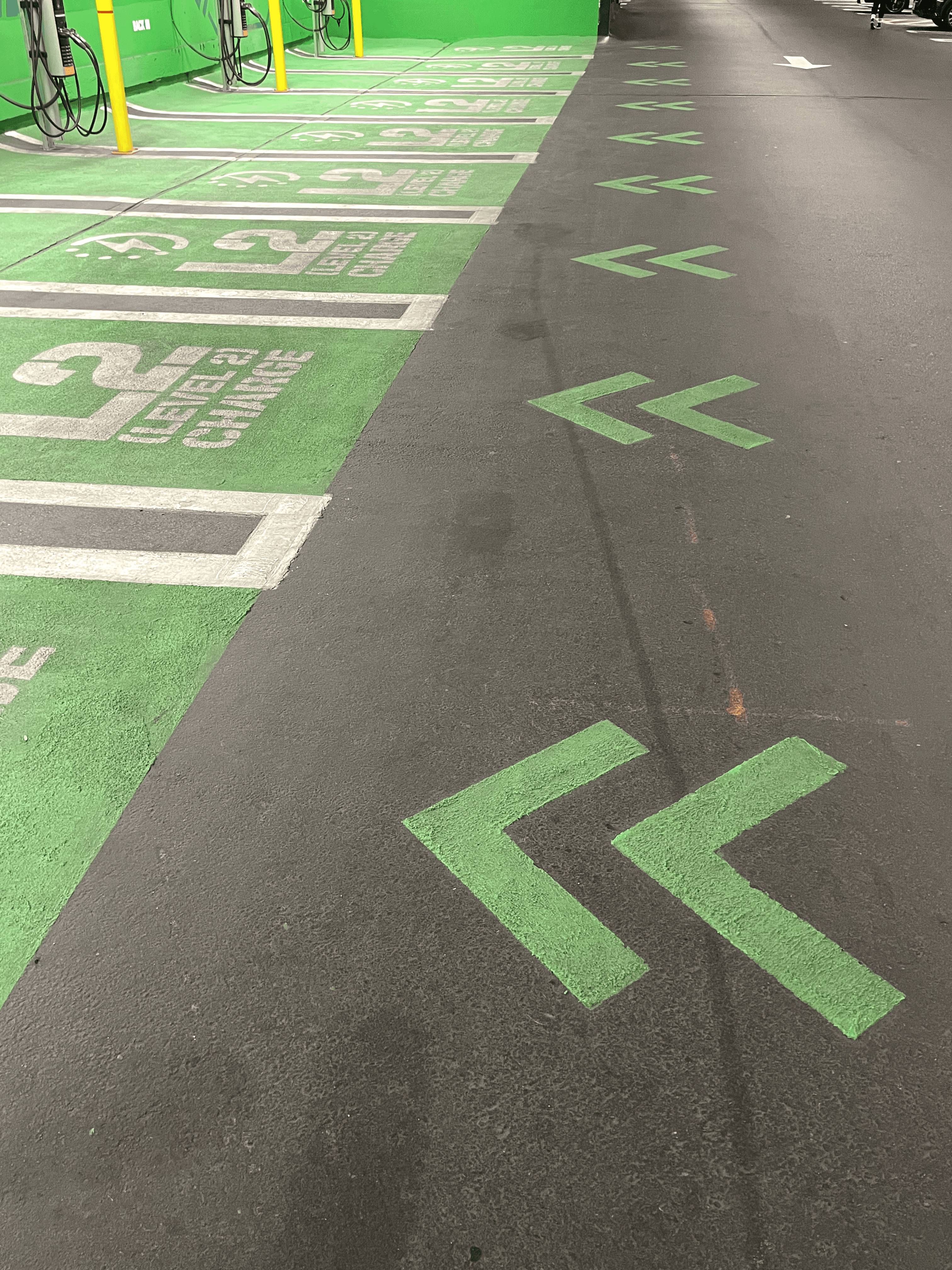
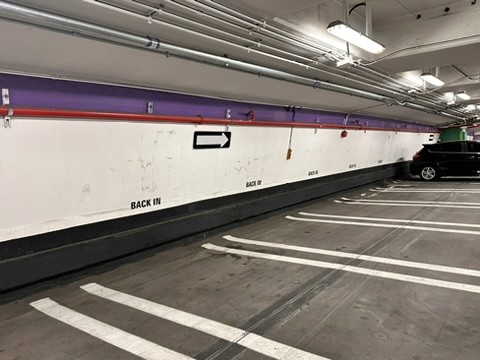
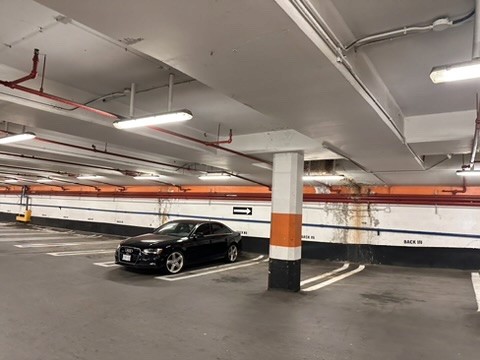
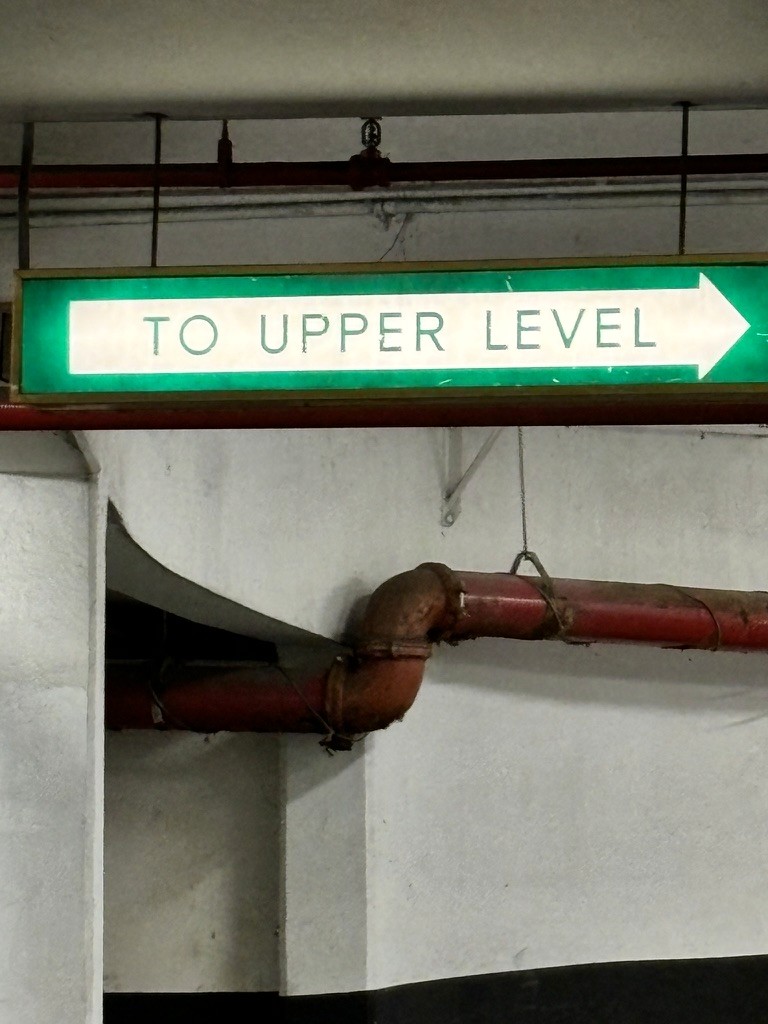
Inside the parking structure, the use of distinct colors and shapes to differentiate sections and levels was effective and helped support spatial recognition. However, interior directional signage lacked consistency, with multiple sign styles appearing throughout the space. Additionally, the absence of orientation signage made it difficult for visitors to understand their exact location. Without clear “you are here” indicators, users were required to rely on memory of color-coded levels, increasing cognitive load and potential confusion.
On-site parking evaluation
The exterior signage was generally clear and visible; however, the large amount of regulatory signage created visual clutter and felt overwhelming at times. Exterior directional signage was limited, particularly for pedestrians—while vehicle entry was easy to locate, pedestrian access points were less visible and harder to identify.
Inside the parking structure, the use of distinct colors and shapes to differentiate sections and levels was effective and helped support spatial recognition. However, interior directional signage lacked consistency, with multiple sign styles appearing throughout the space. Additionally, the absence of orientation signage made it difficult for visitors to understand their exact location. Without clear “you are here” indicators, users were required to rely on memory of color-coded levels, increasing cognitive load and potential confusion.
On-site parking evaluation
Design principles
The wayfinding system was guided by a set of clear design principles focused on reducing confusion and supporting confident navigation. The goal was to make orientation immediate, movement intuitive, and information easy to process at a glance.
Principles:
Clear hierarchy over visual noise
Immediate orientation upon arrival
Consistency across all signage types
Reduced cognitive load through simple cues
Wayfinding System Breakdown
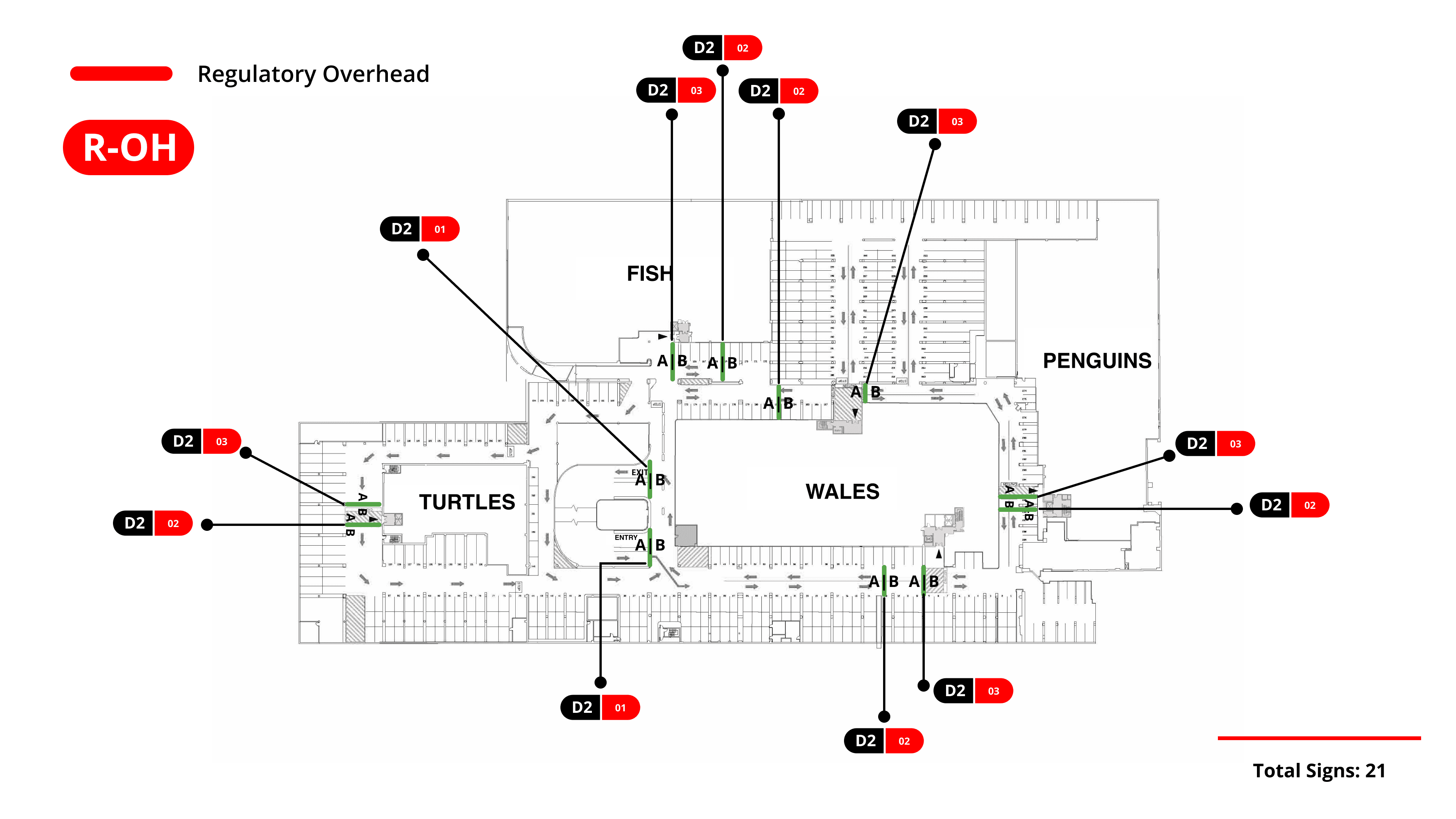
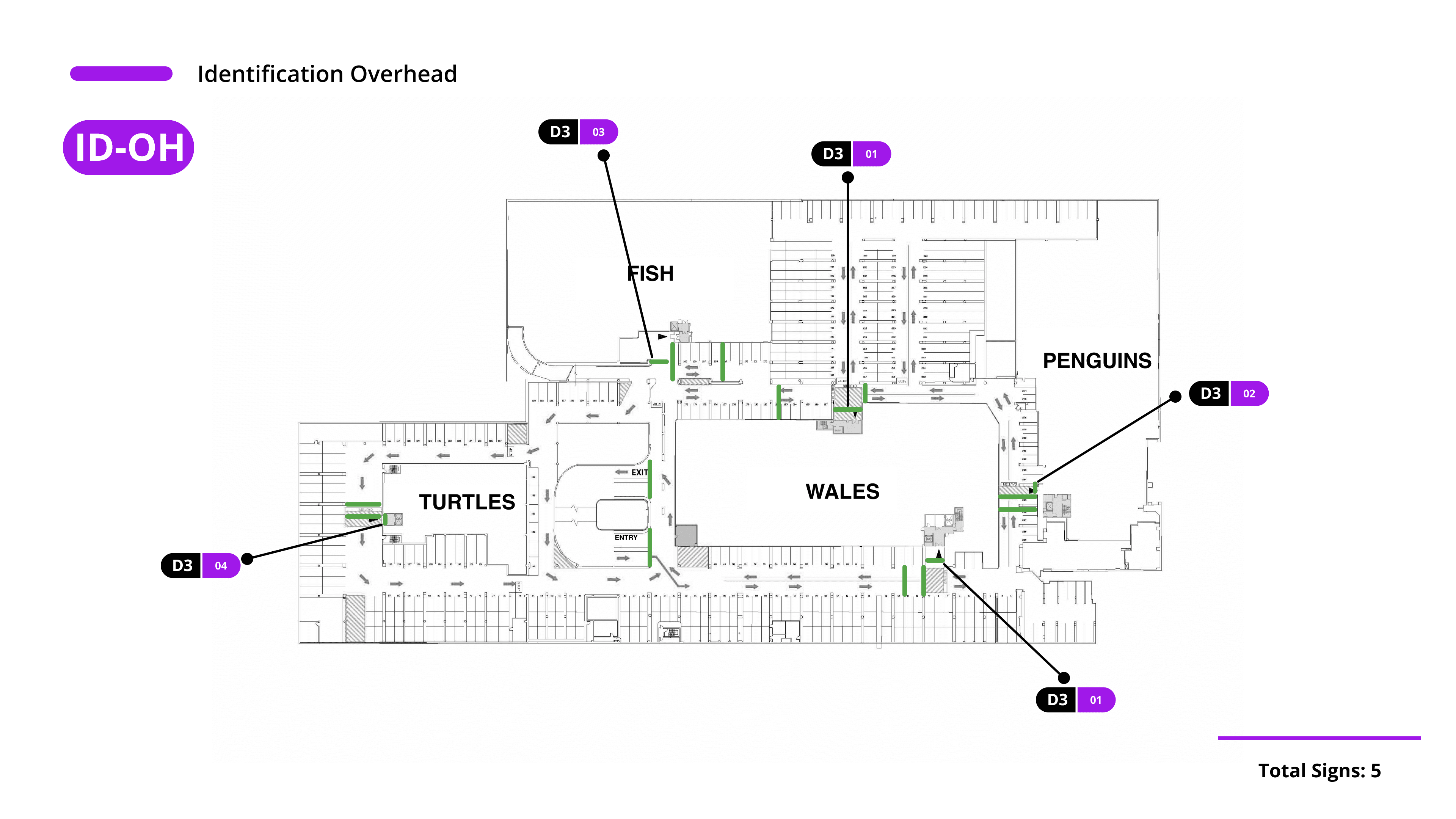
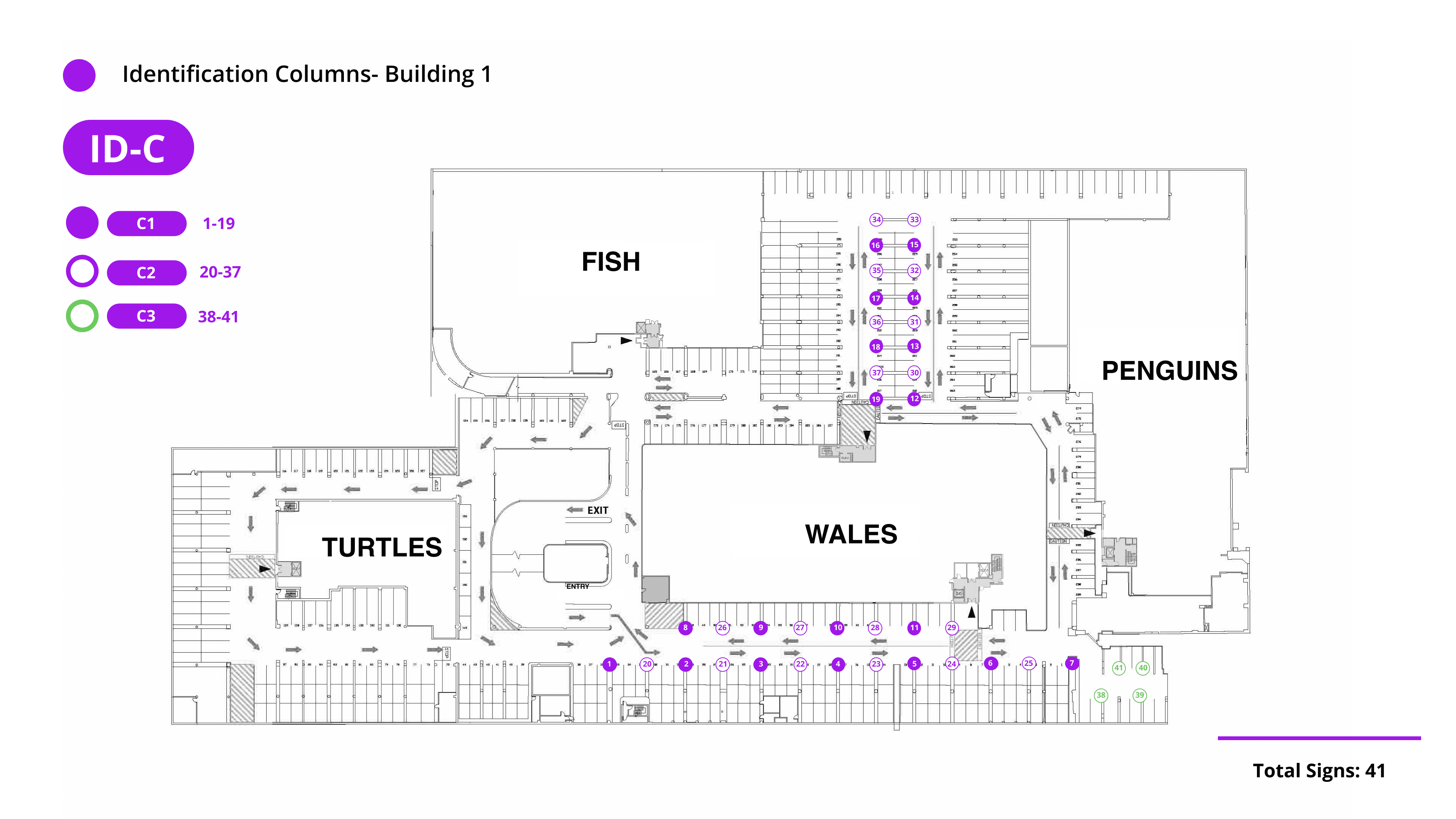
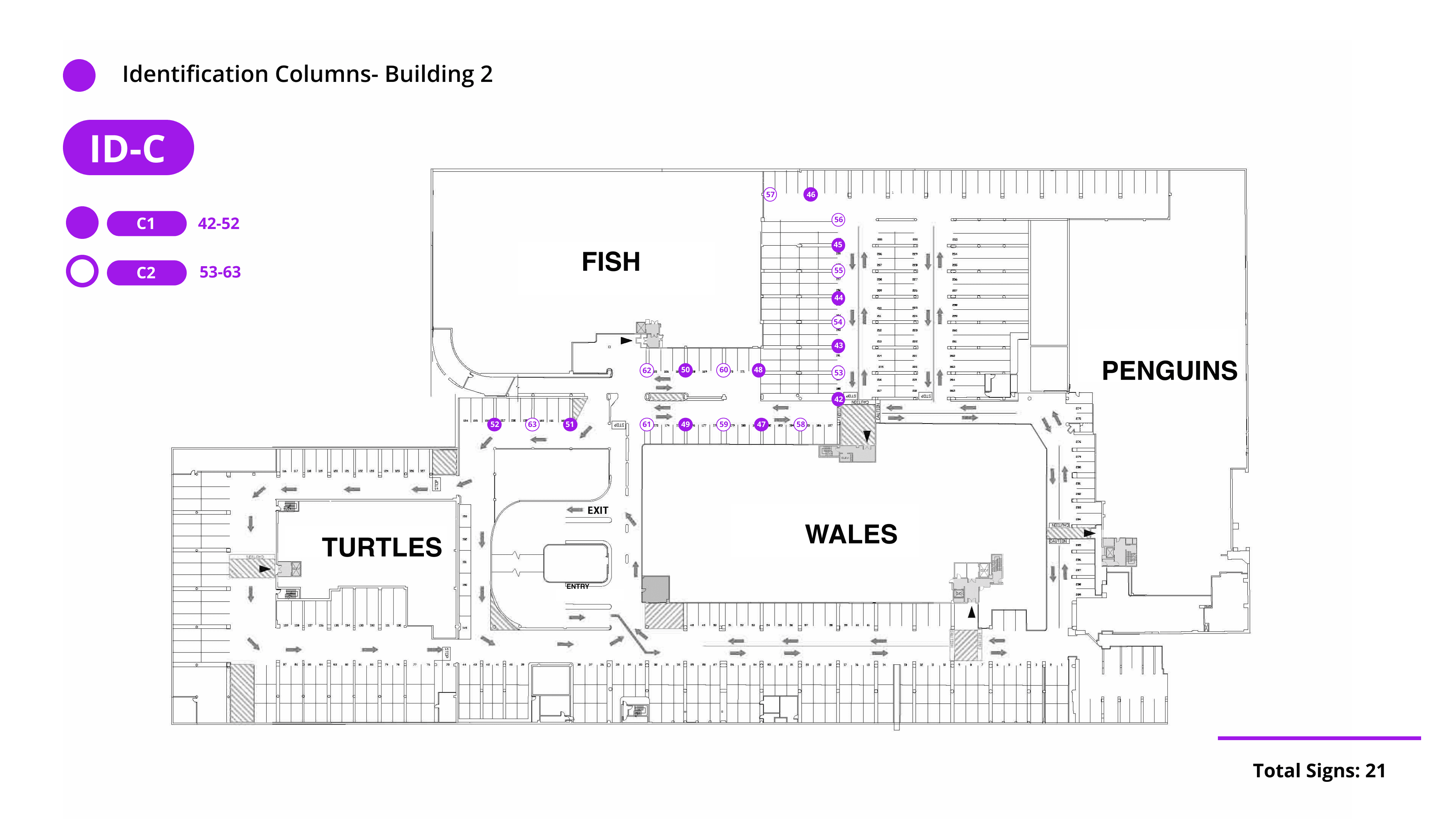
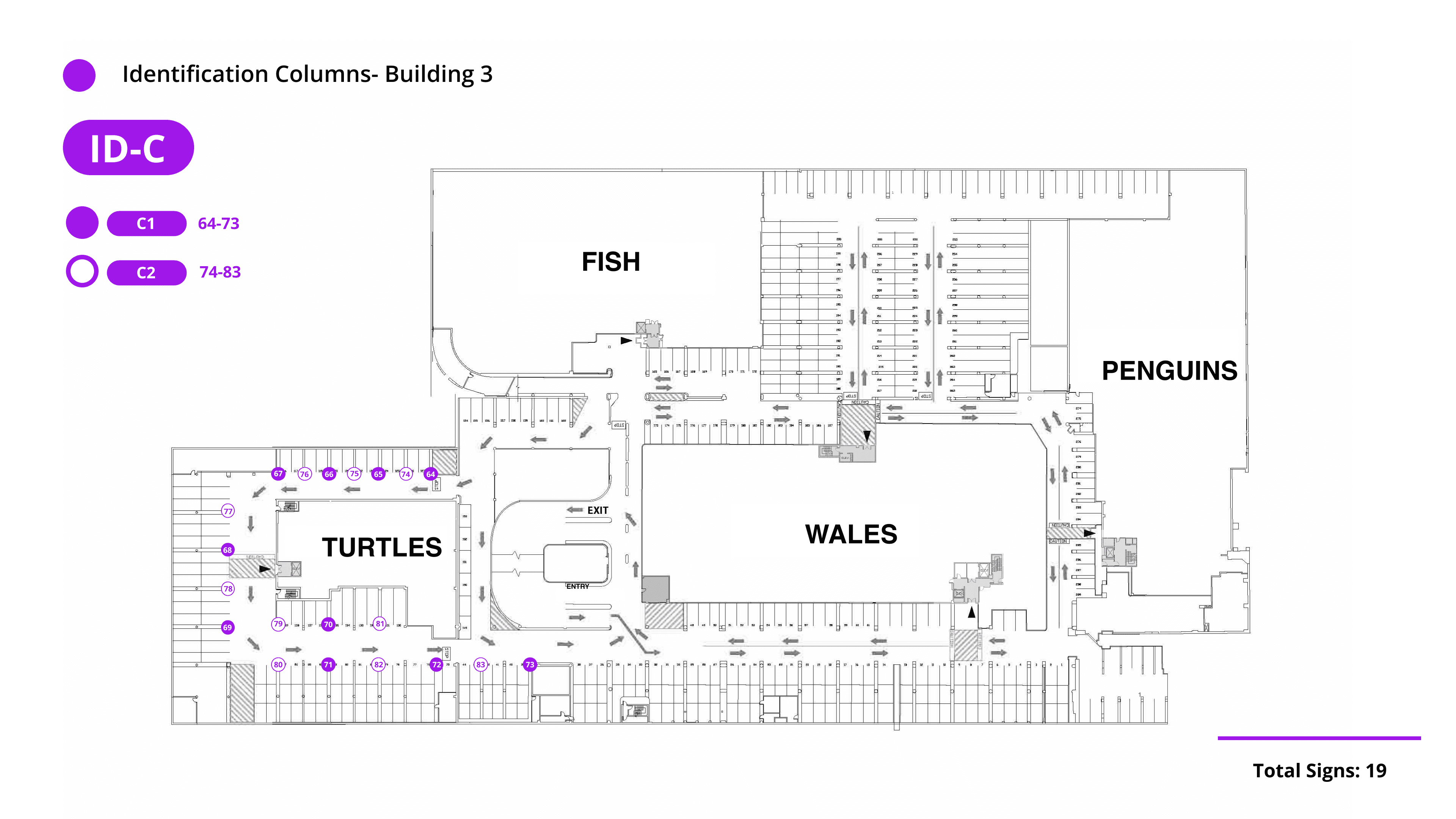
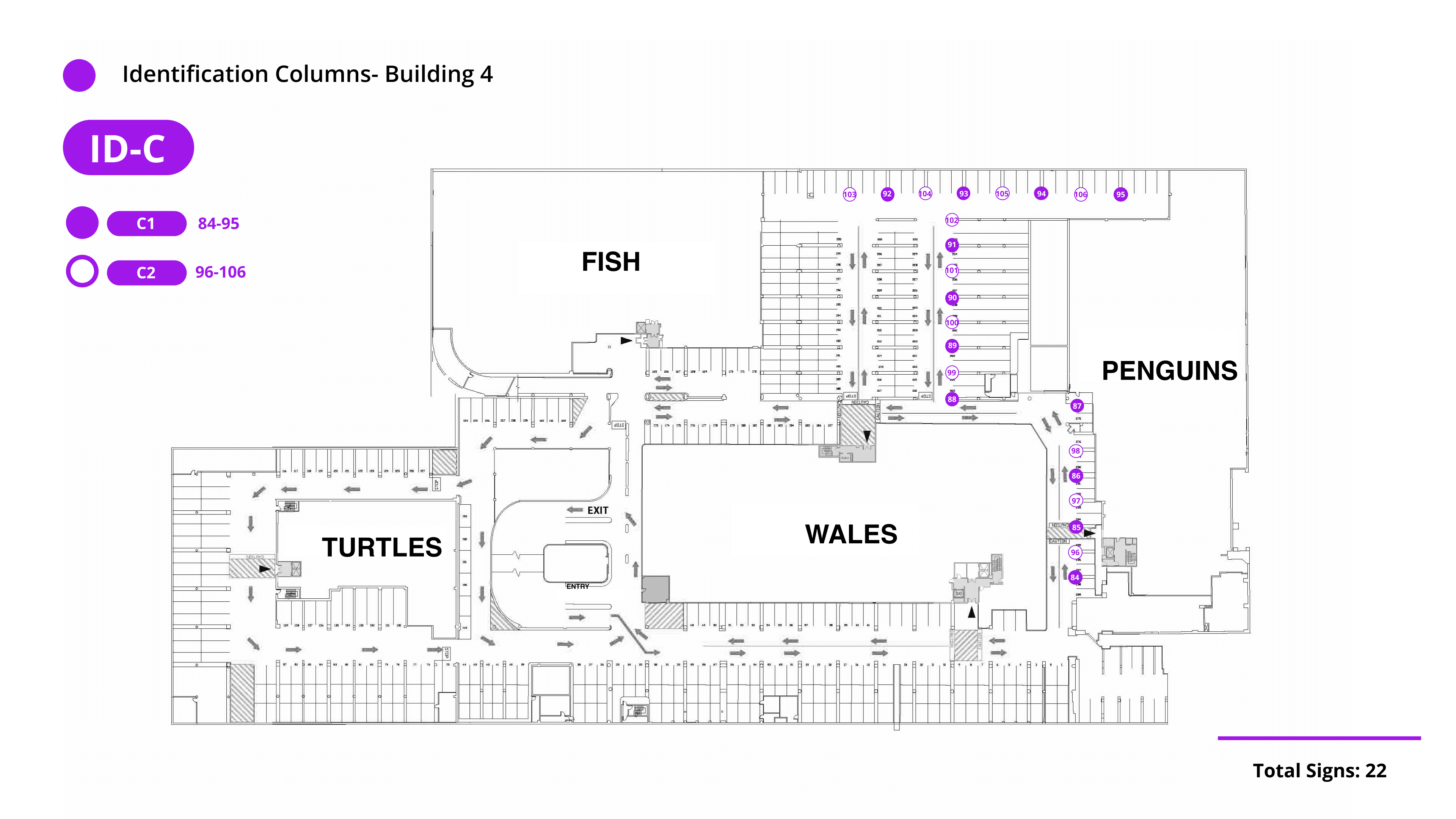
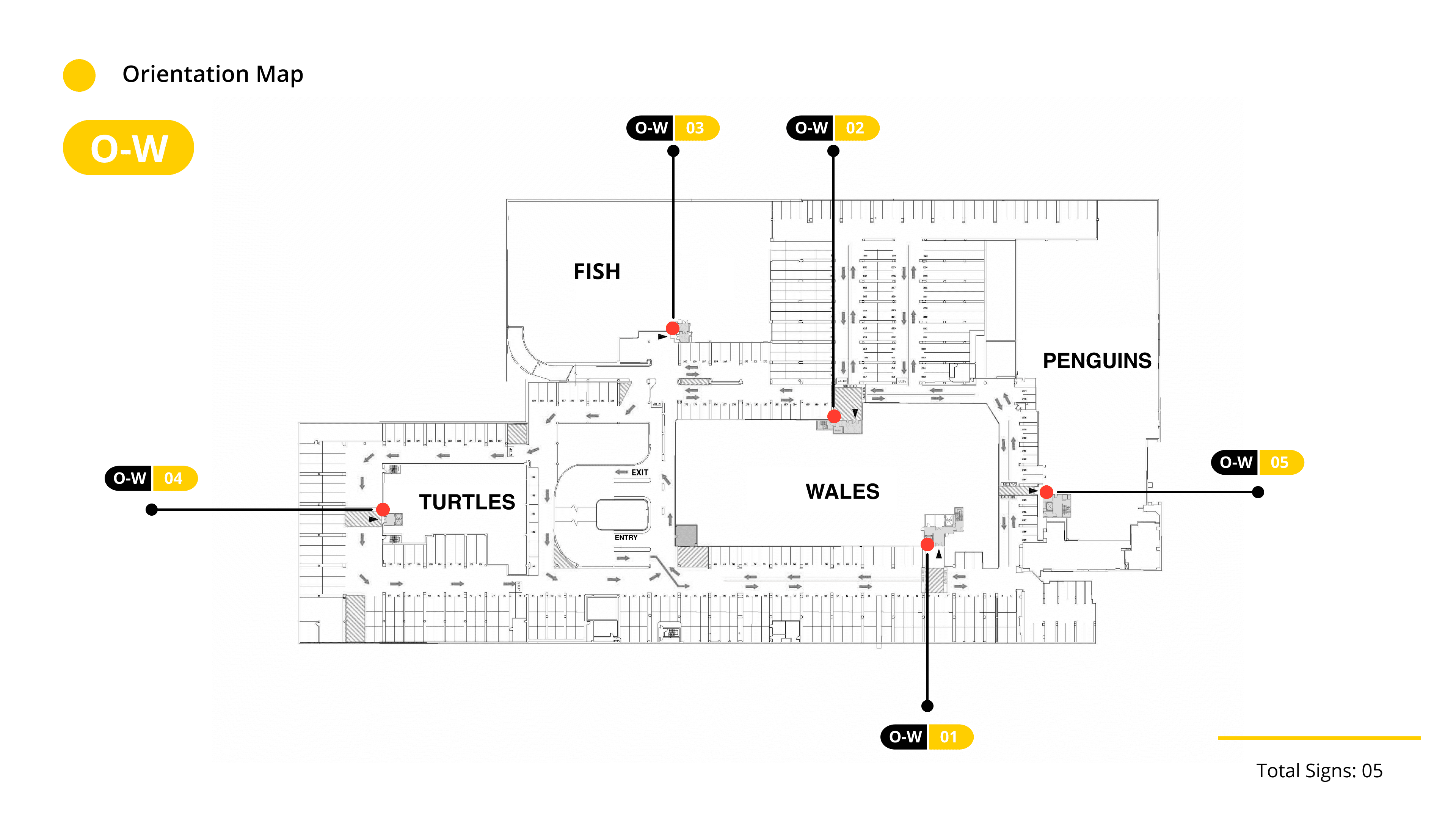
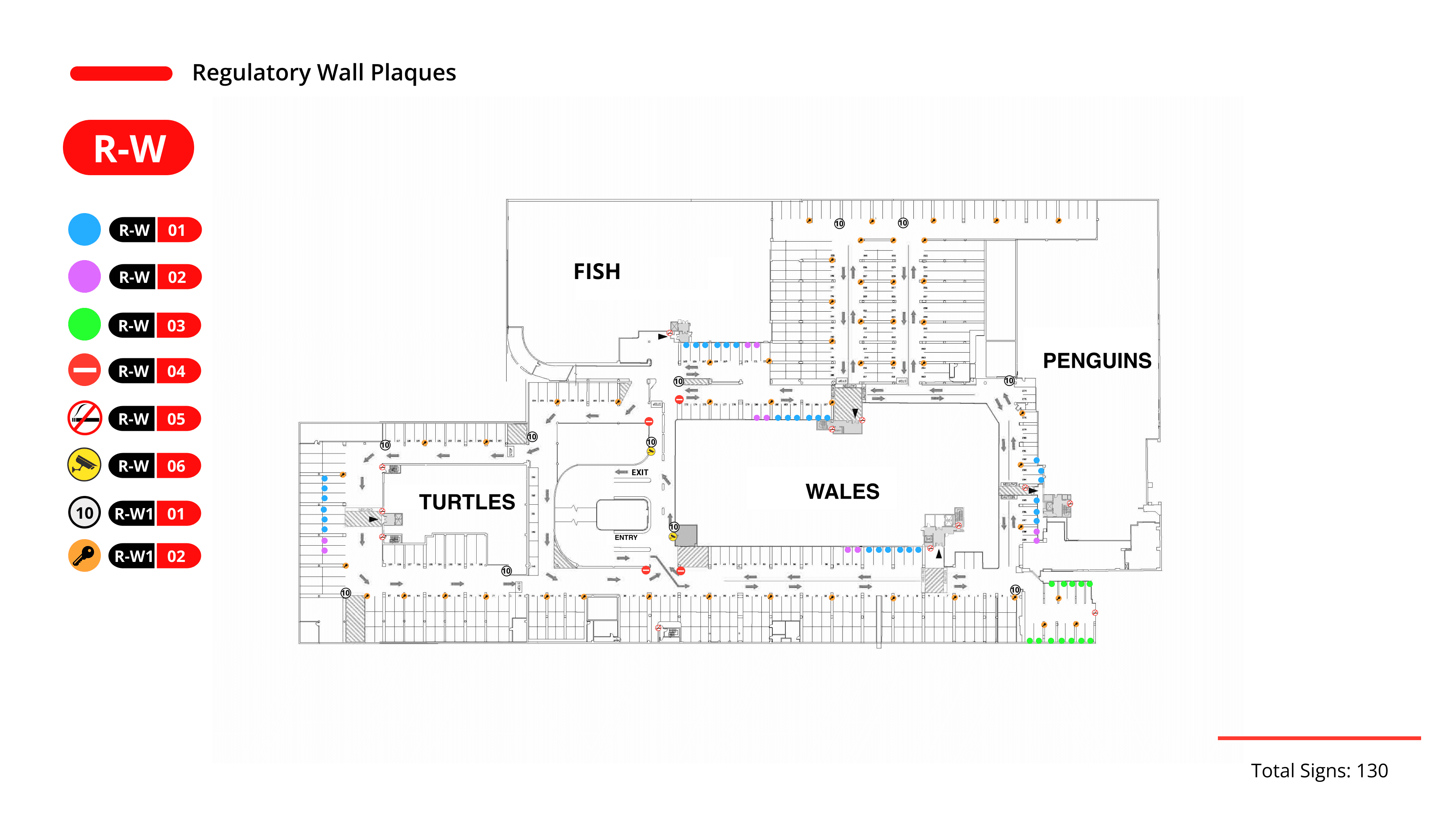
The proposed system is composed of multiple signage types, each serving a specific role within the parking structure to support a seamless navigation experience.
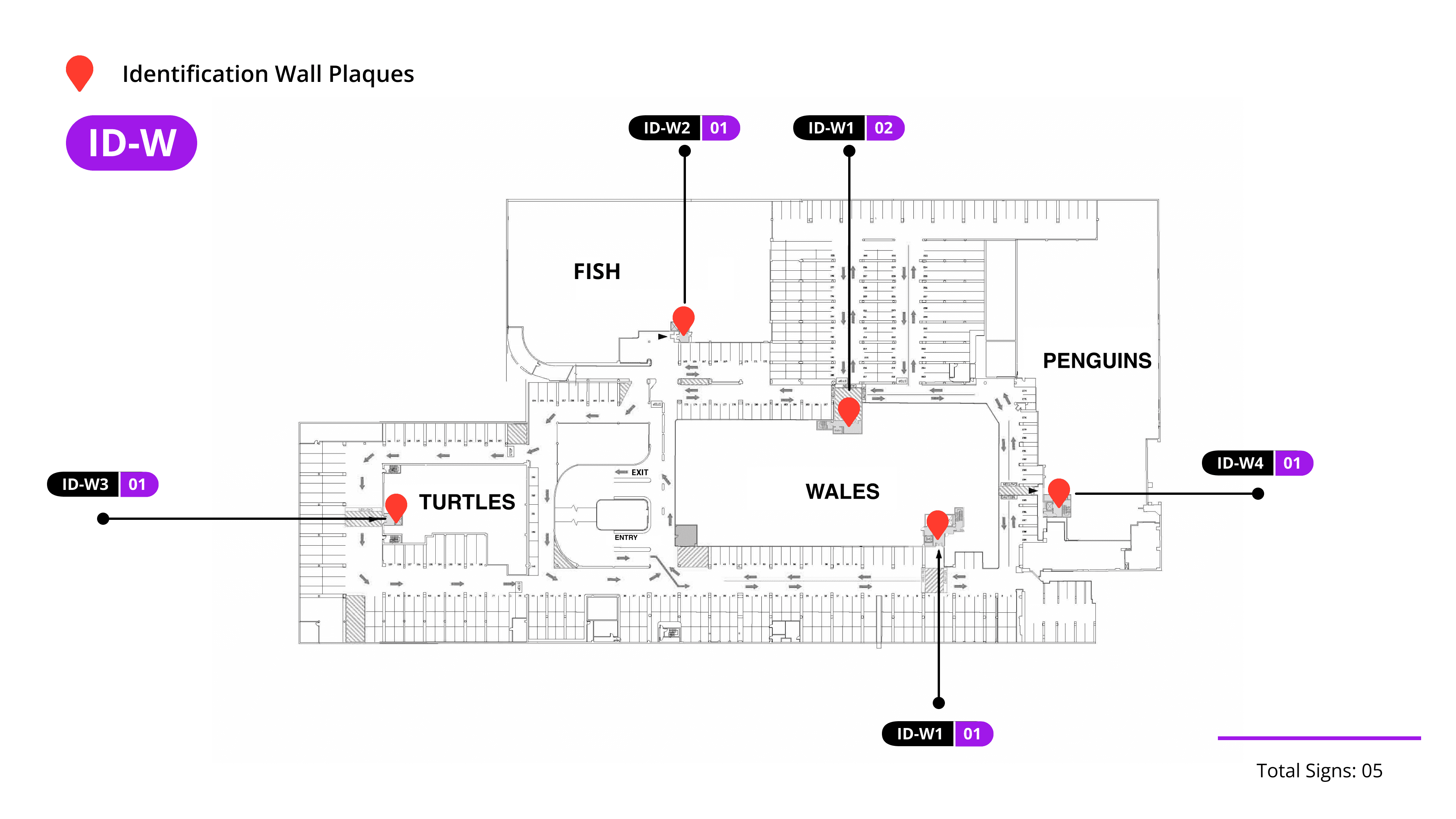
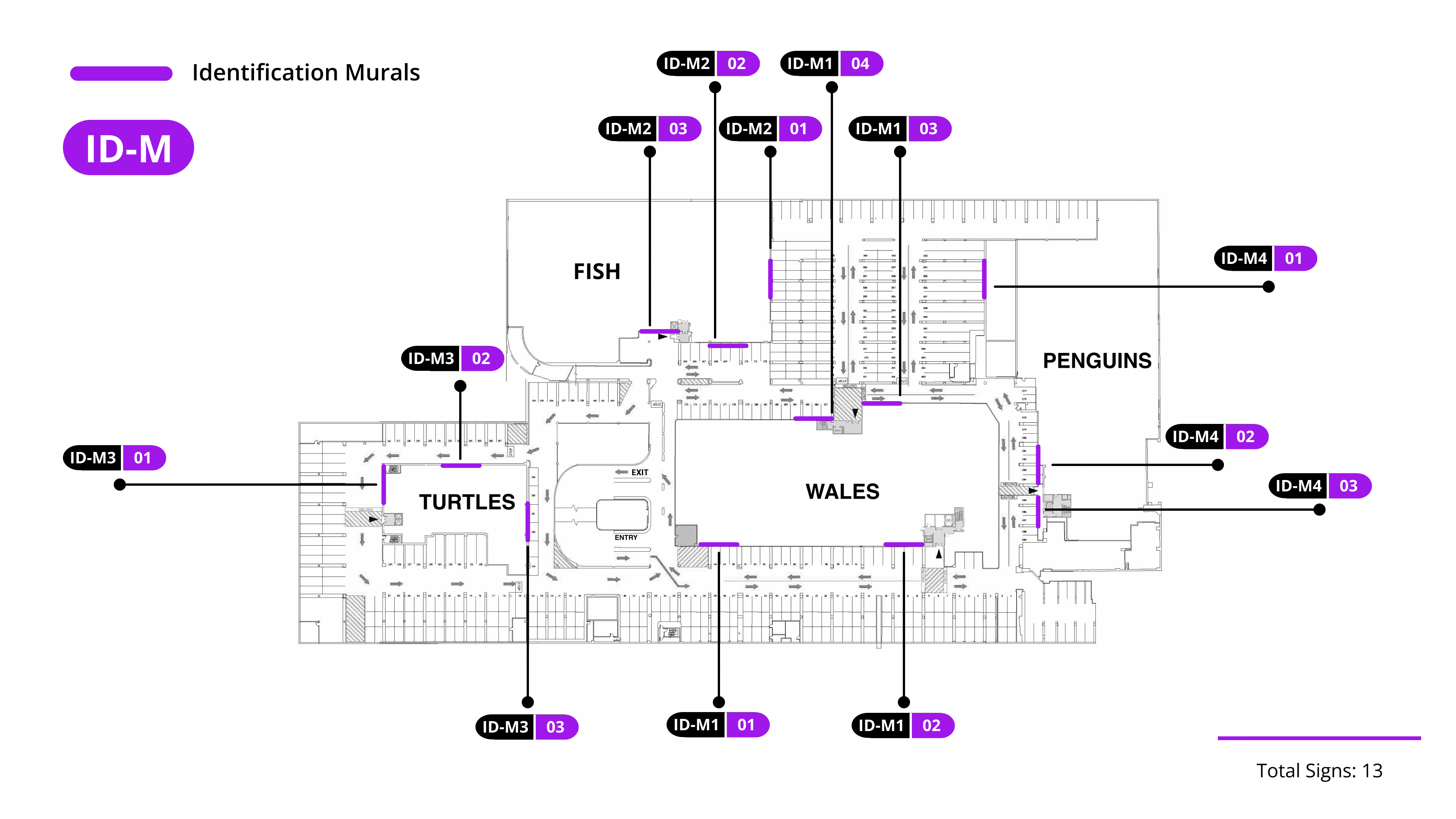
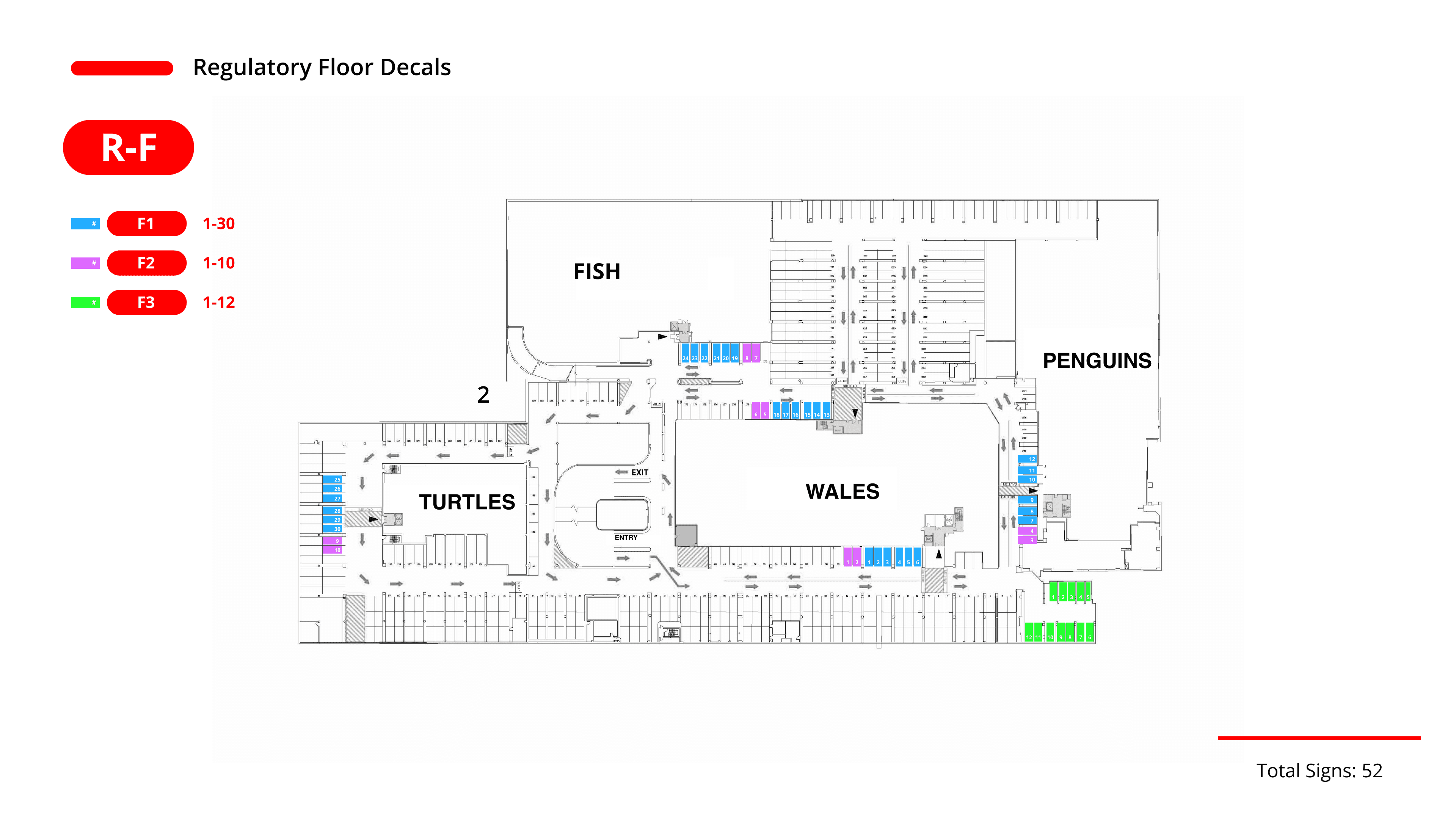
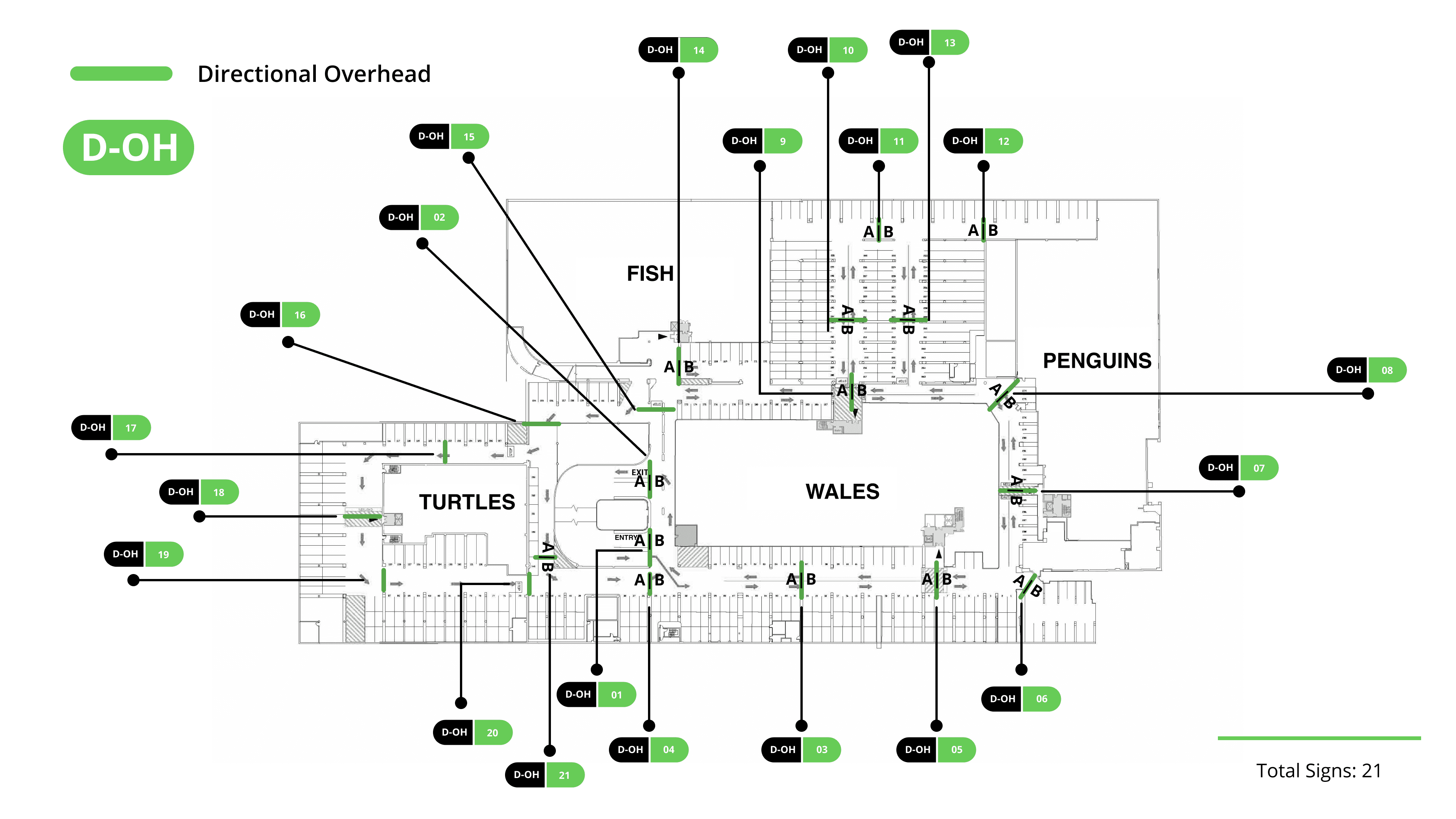
Location planning
Building concepts
Building overview
Final result
Sketches
Early sketches explored layout, hierarchy, and initial signage ideas. This phase focused on understanding visitor movement and identifying key decision points that would later shape the wayfinding system.
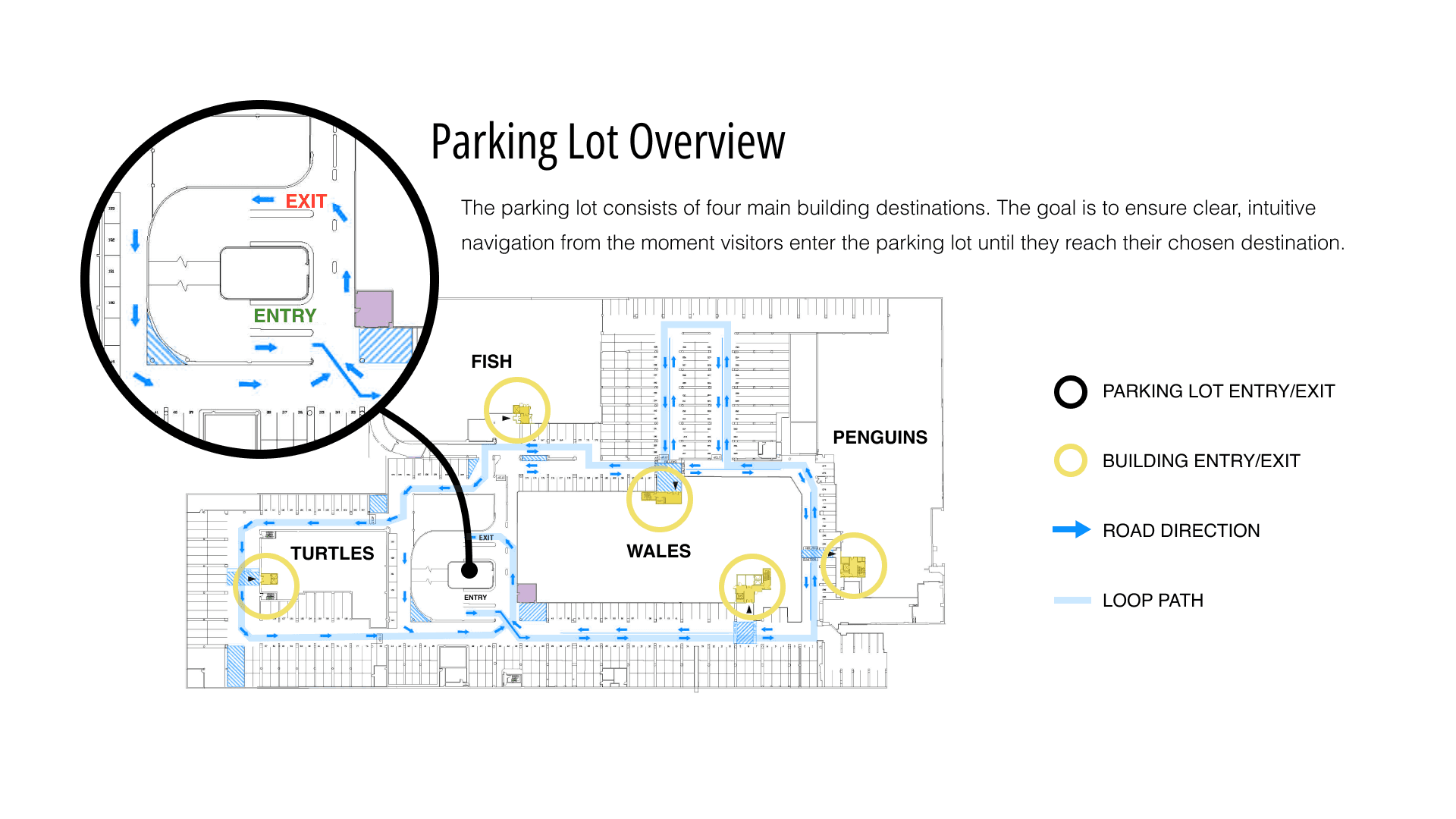
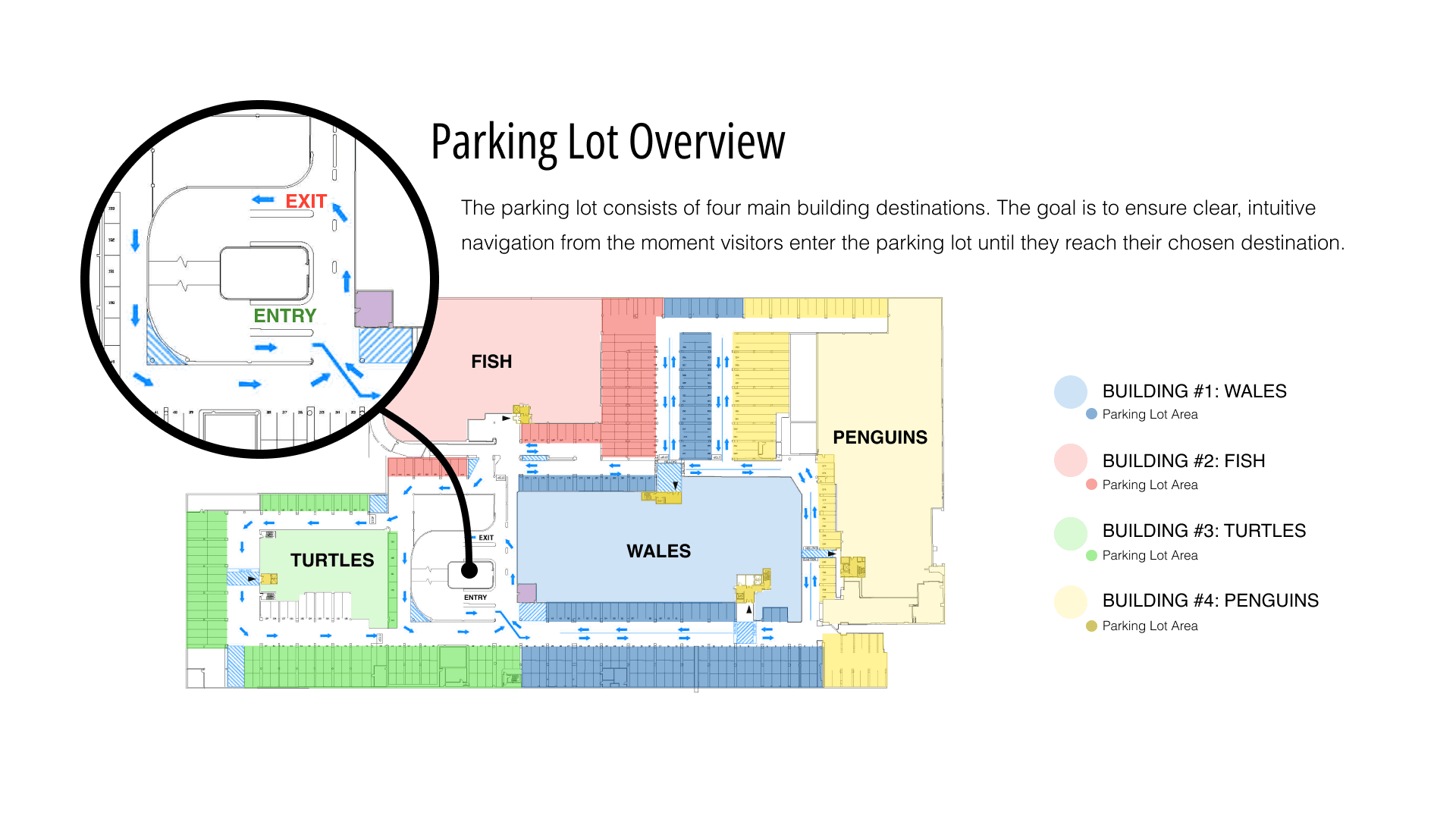
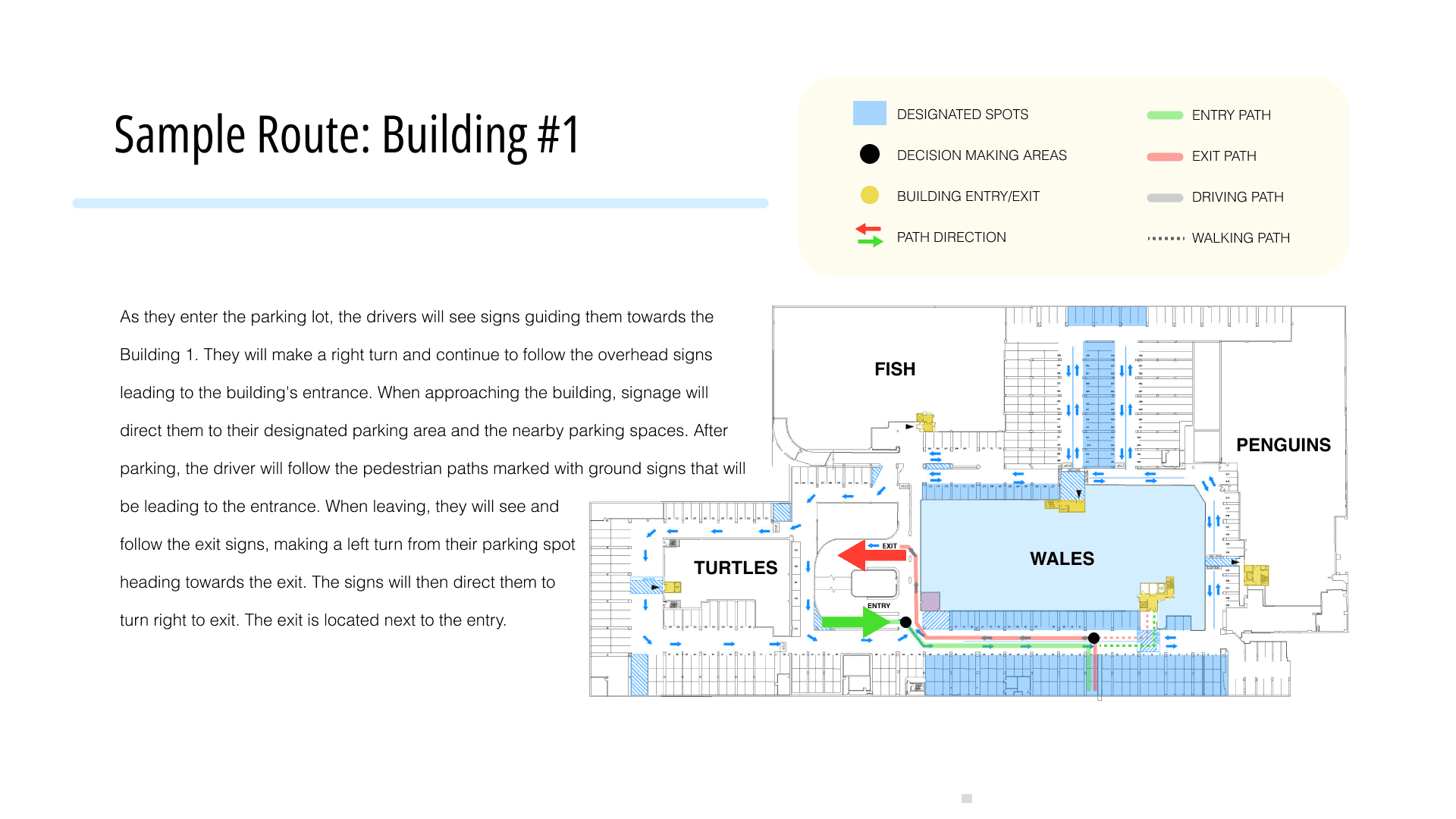
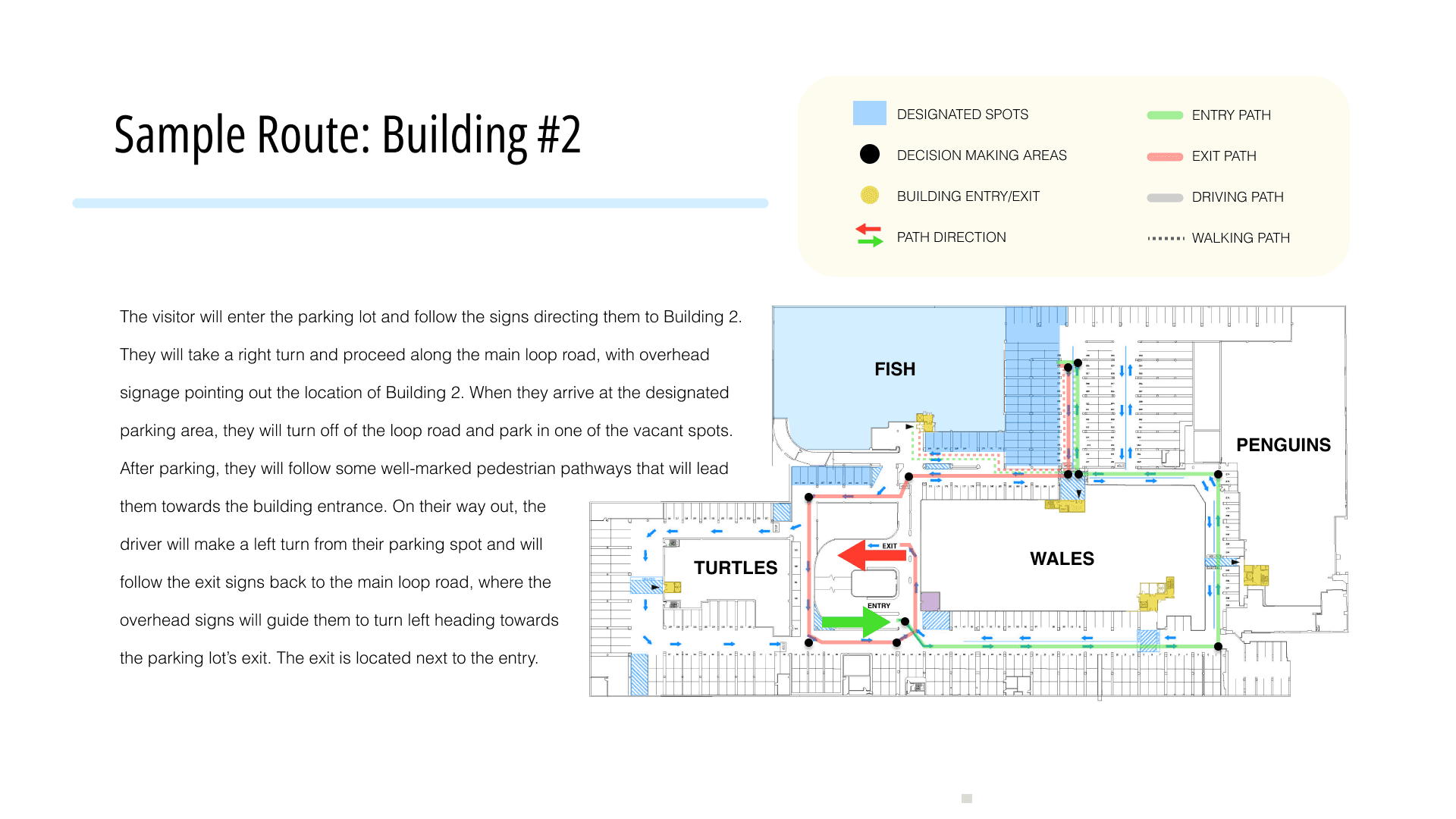
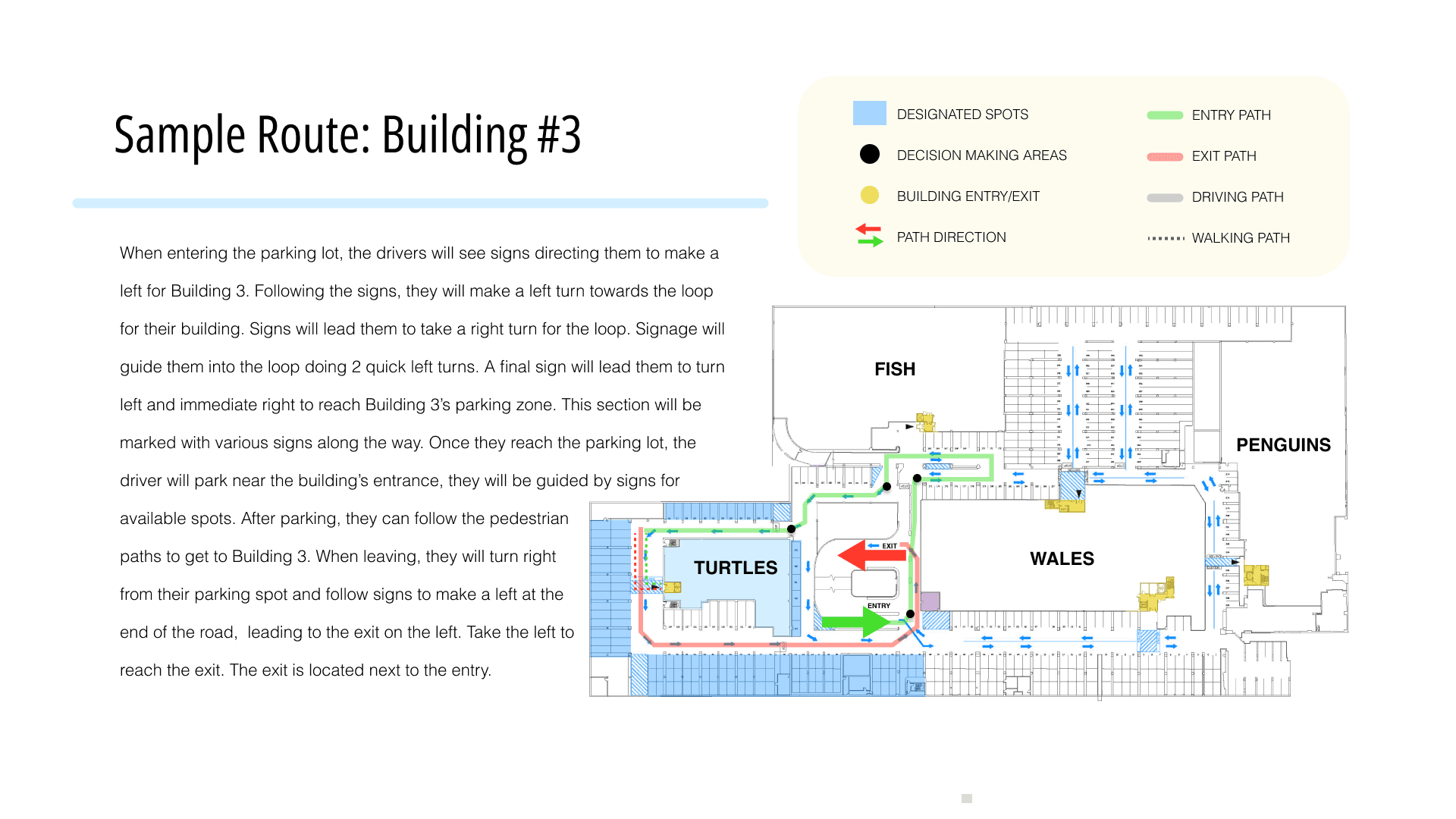
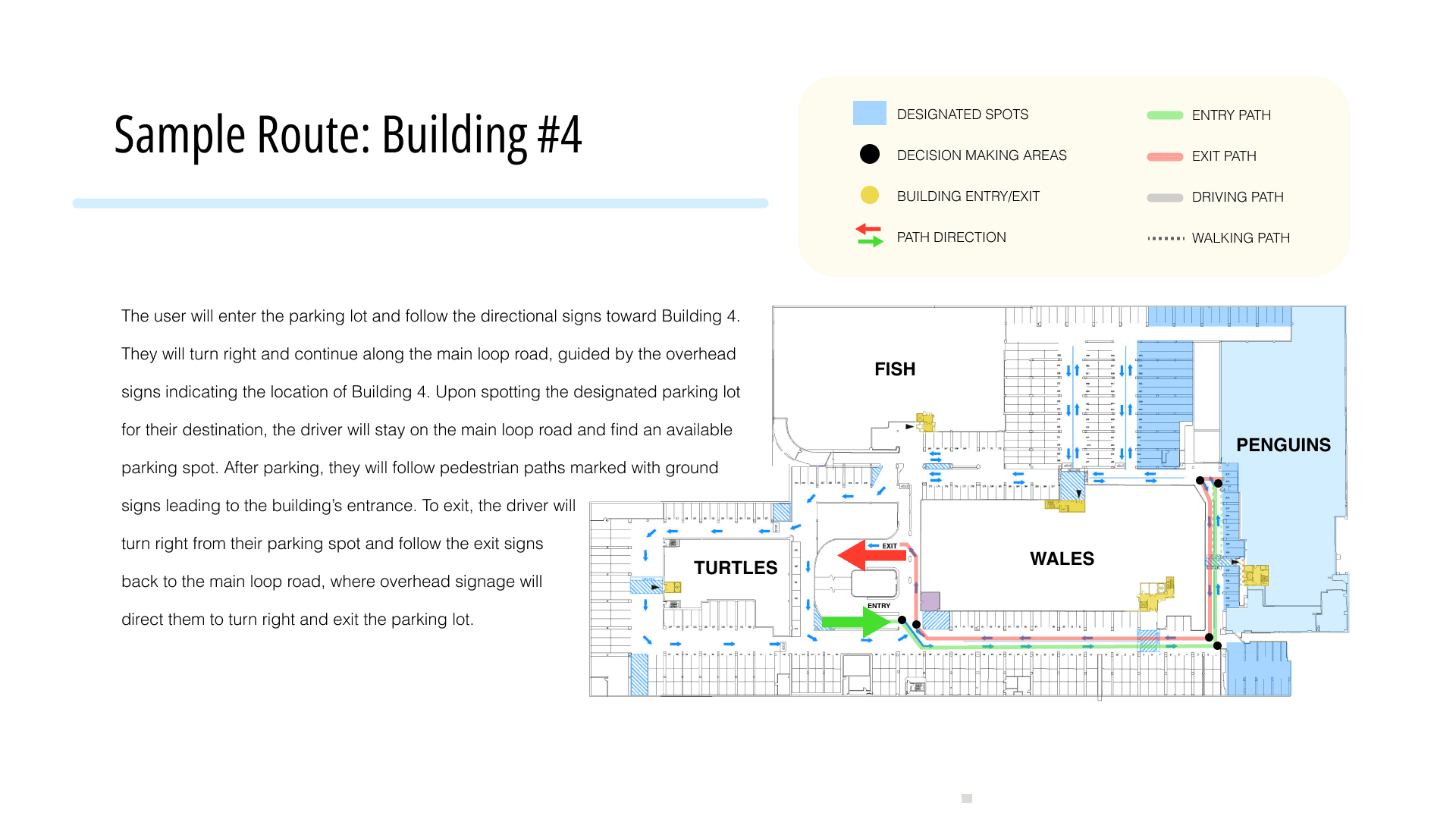
This stage analyzed entry points and circulation paths for both vehicles and pedestrians. A circulation diagram was used to visualize movement and highlight areas where wayfinding support was most needed.
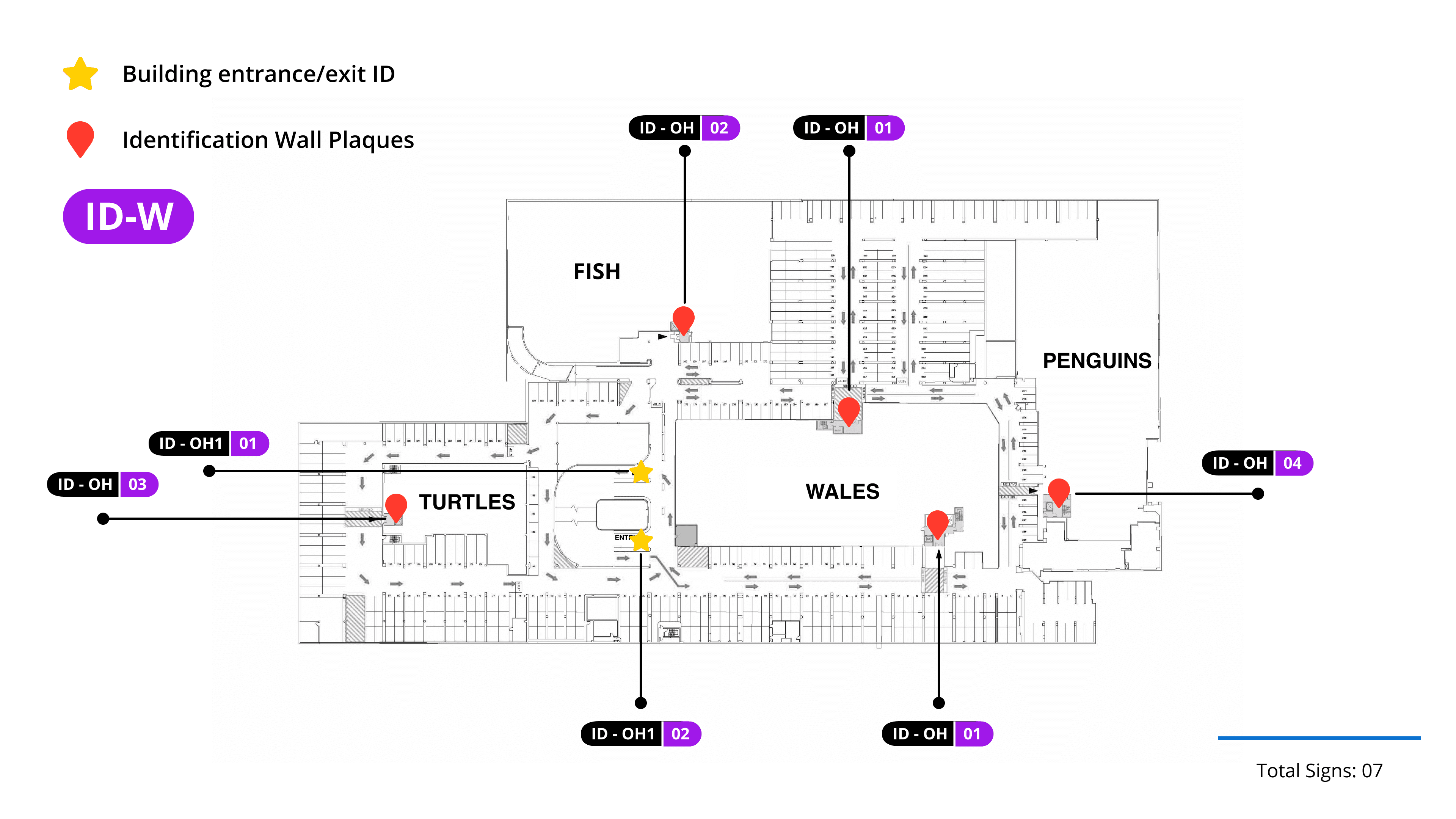
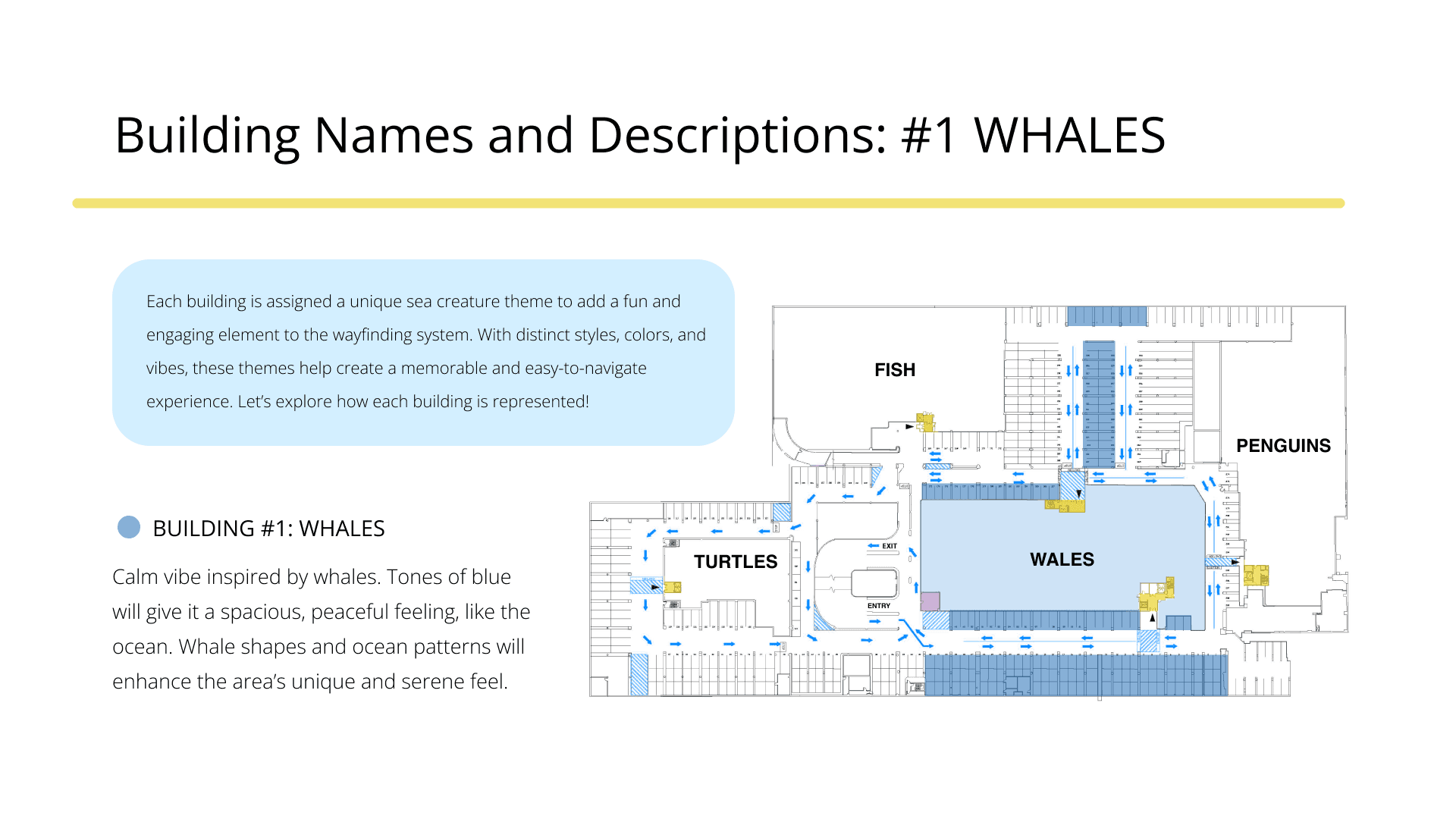
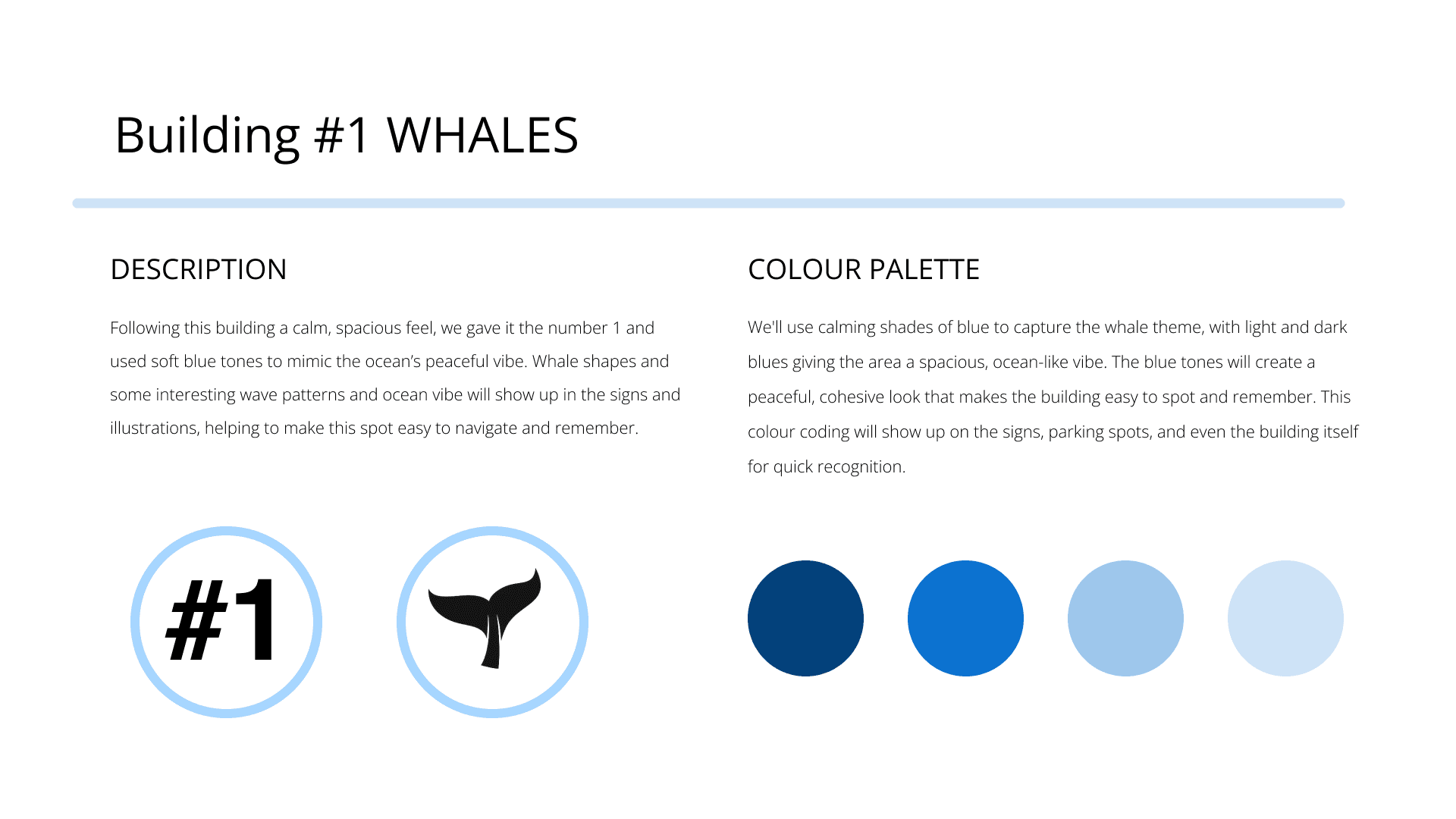
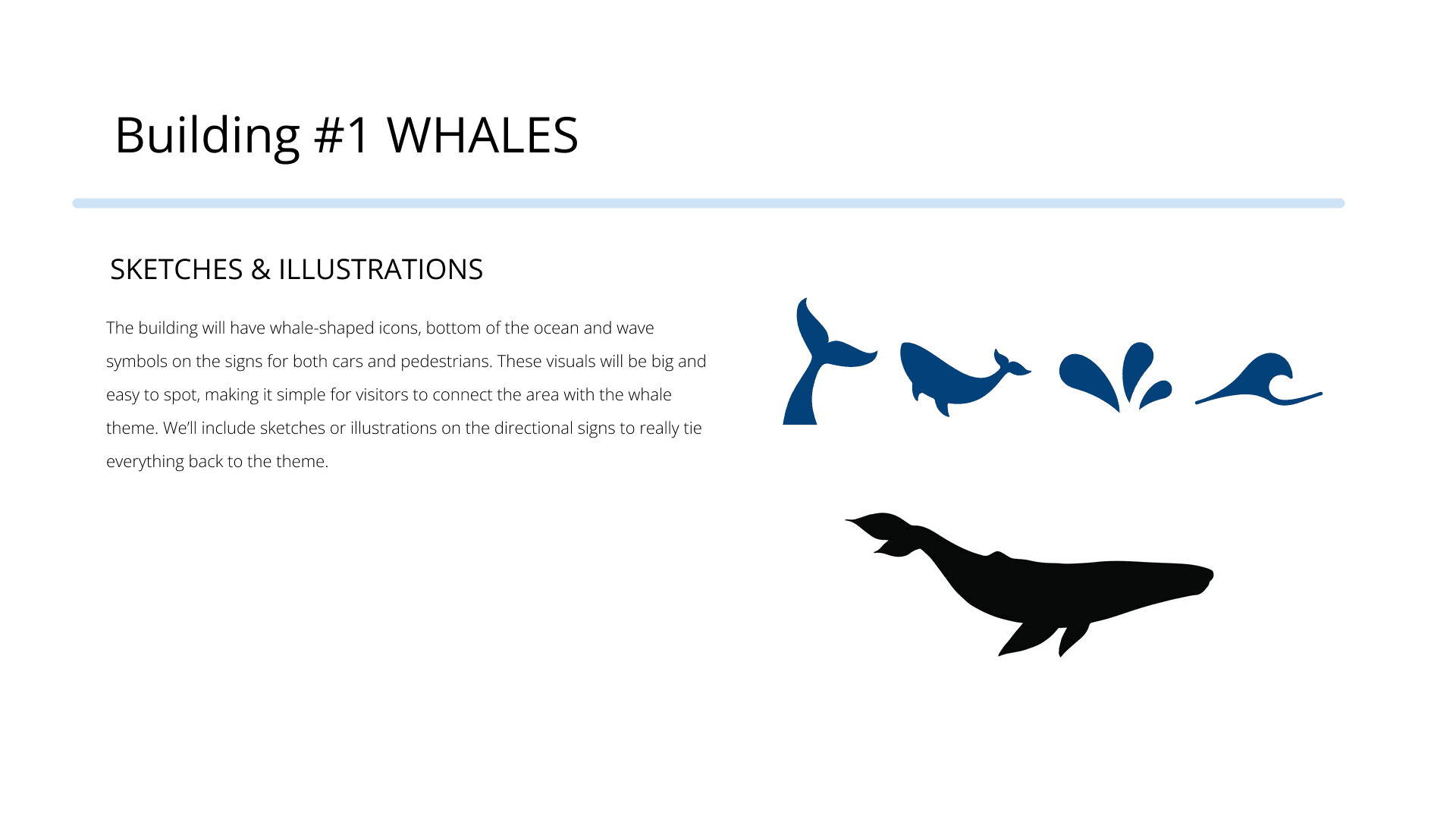
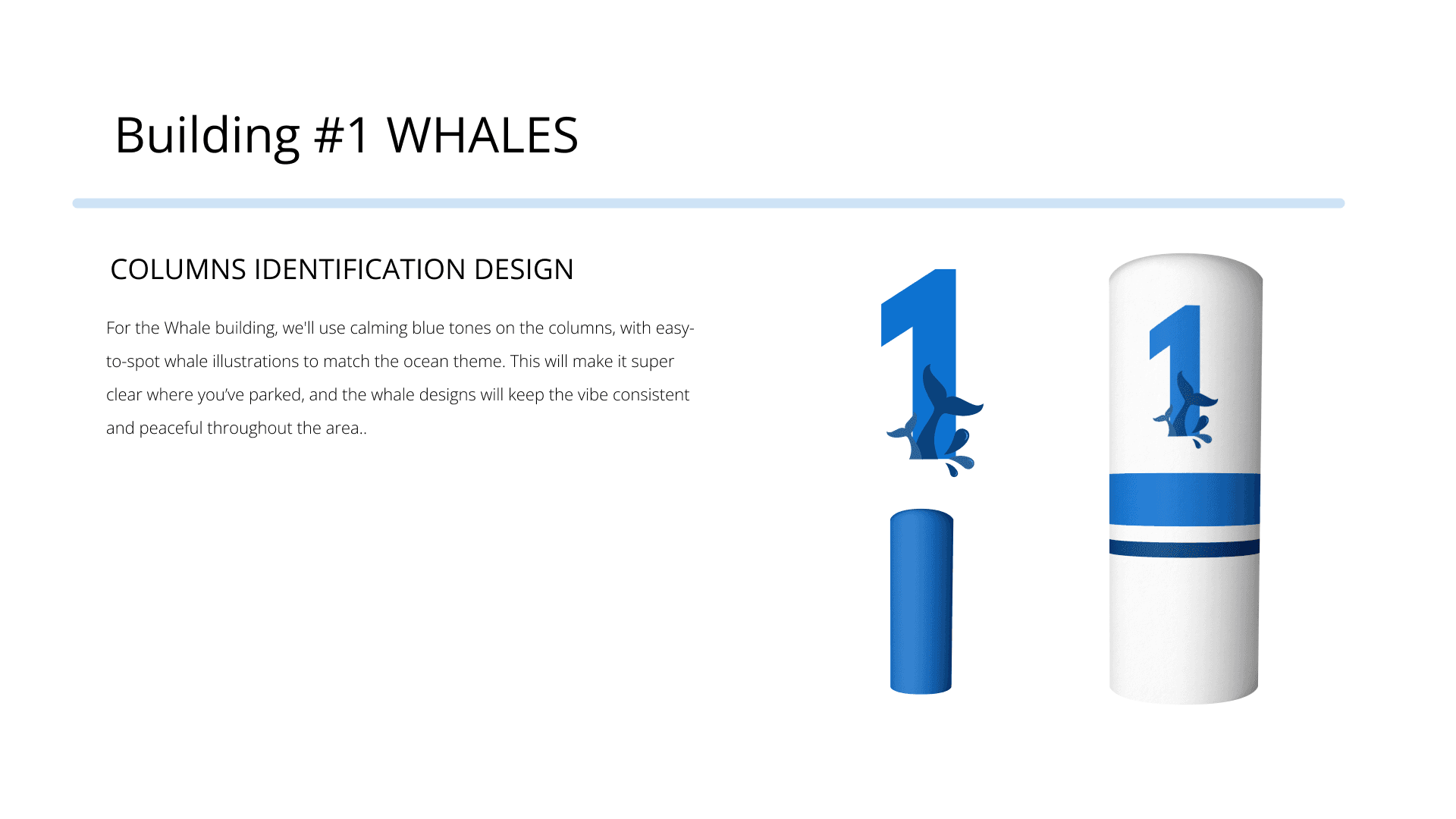
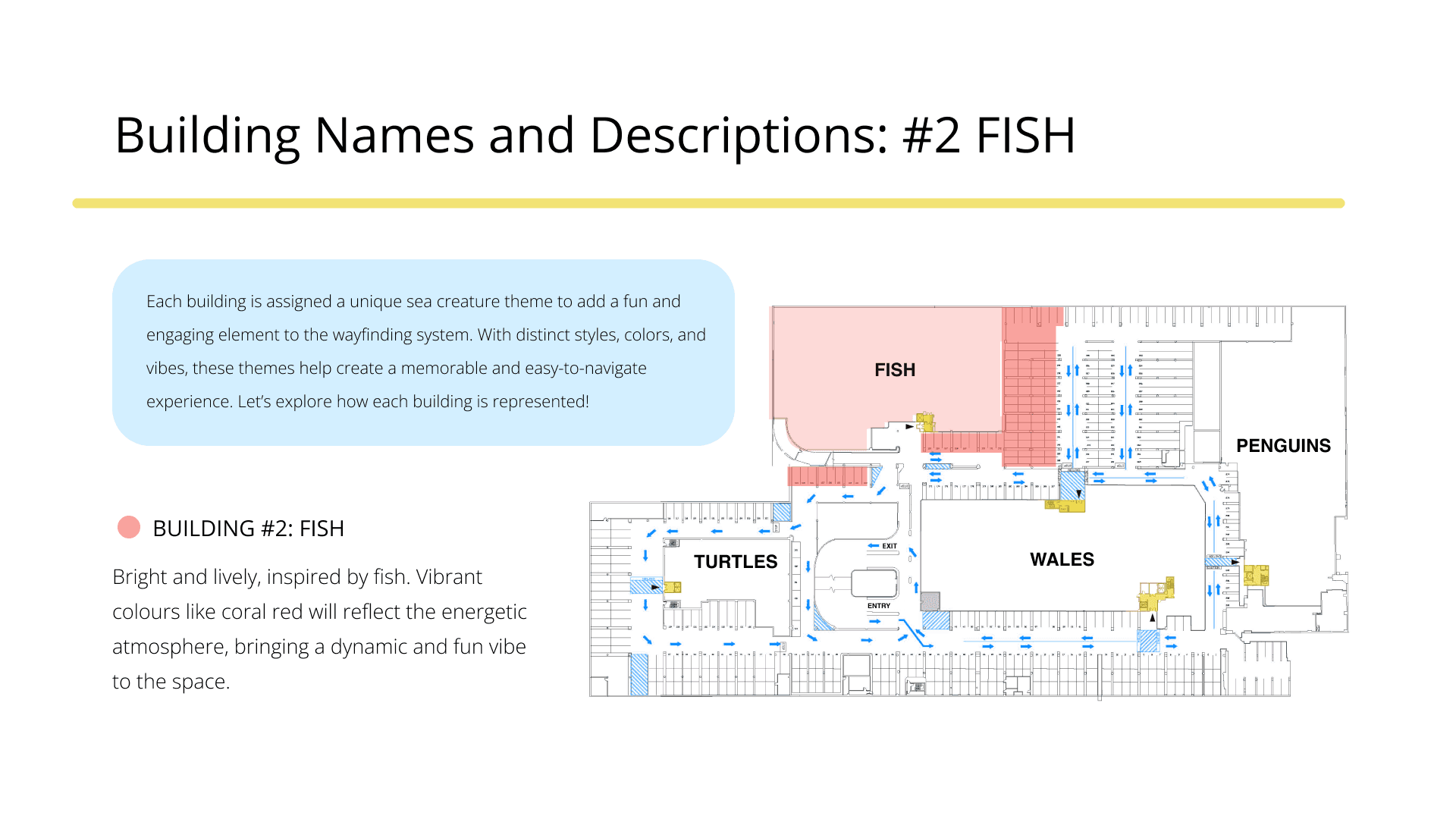
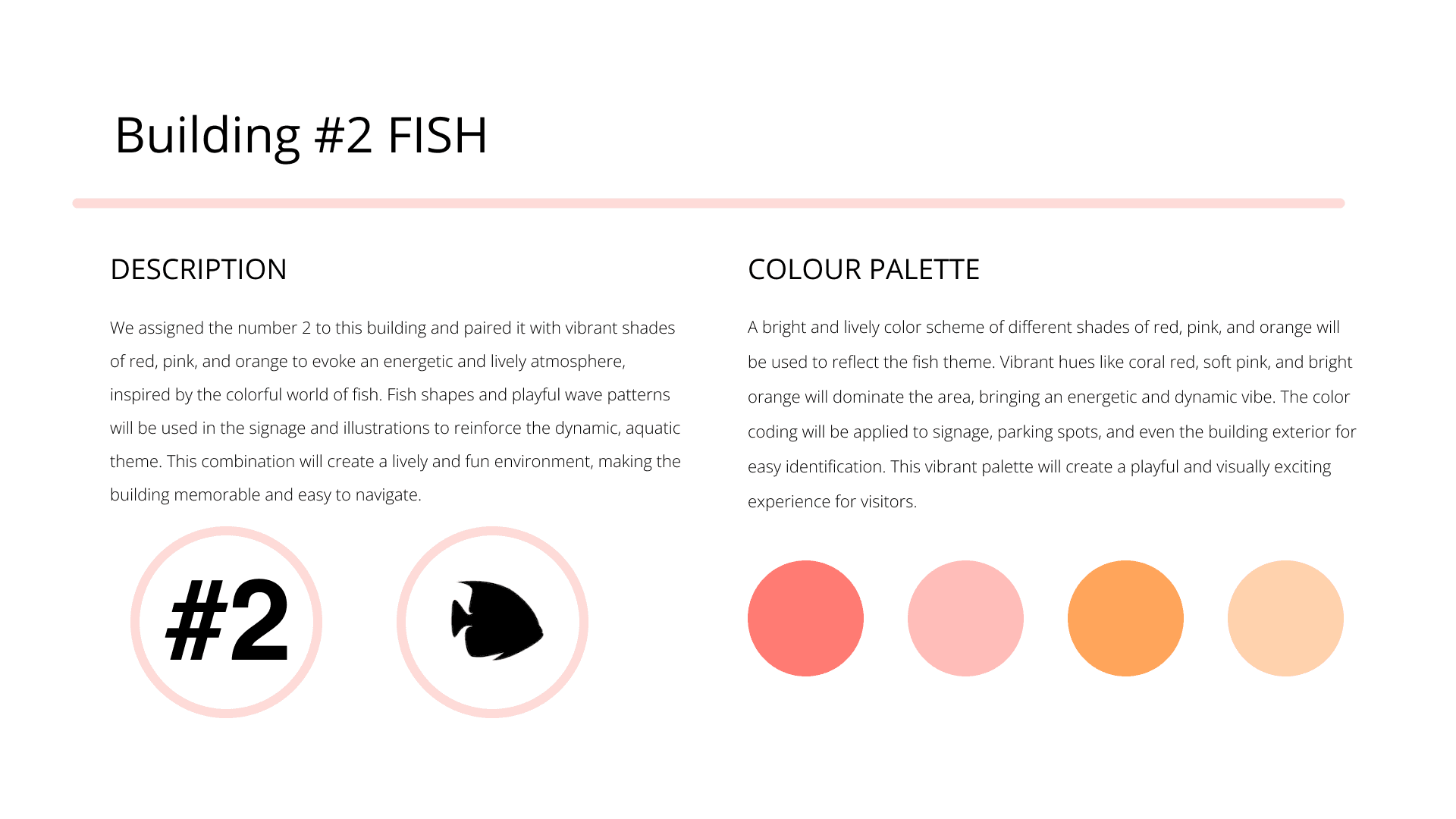
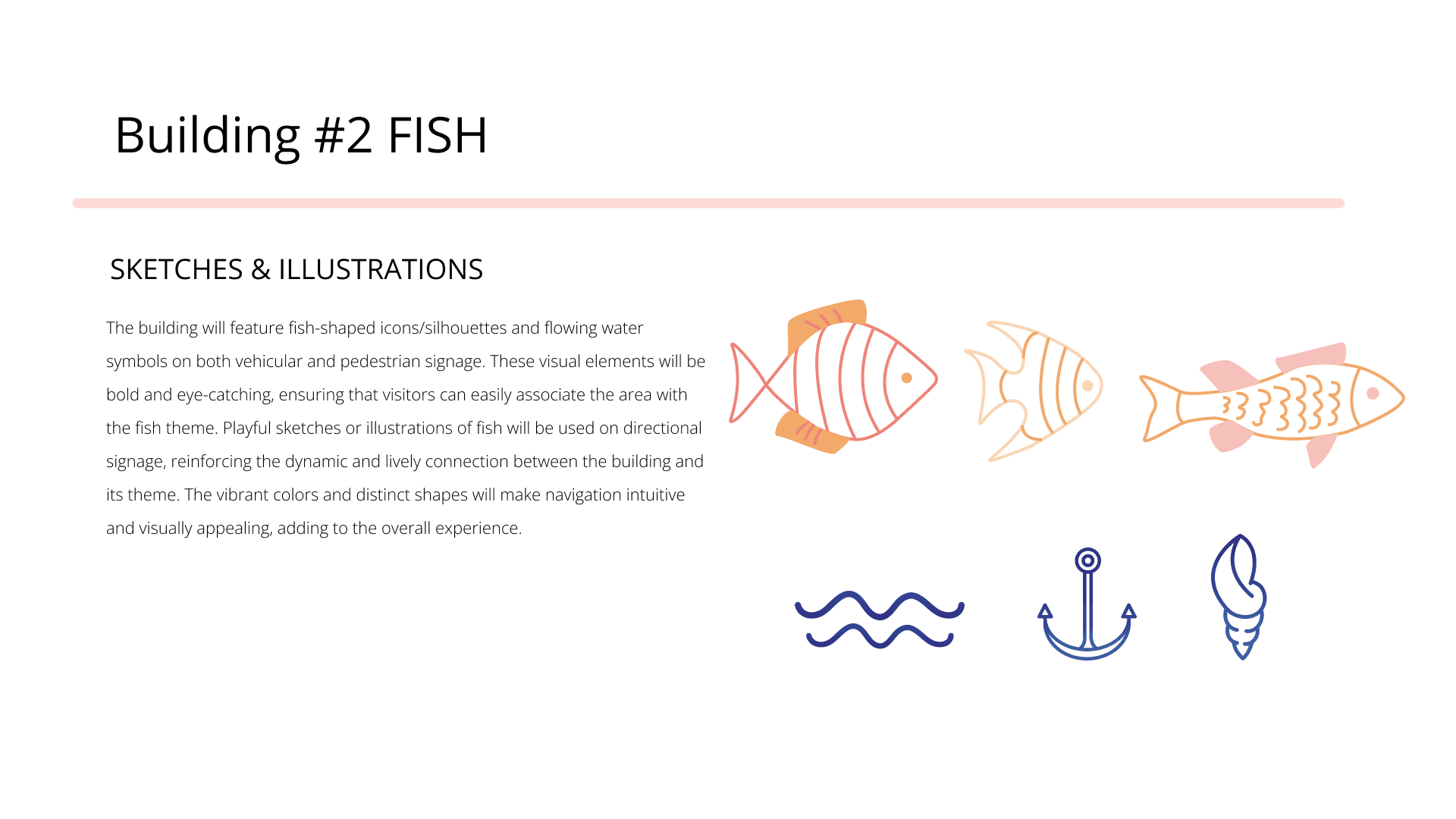
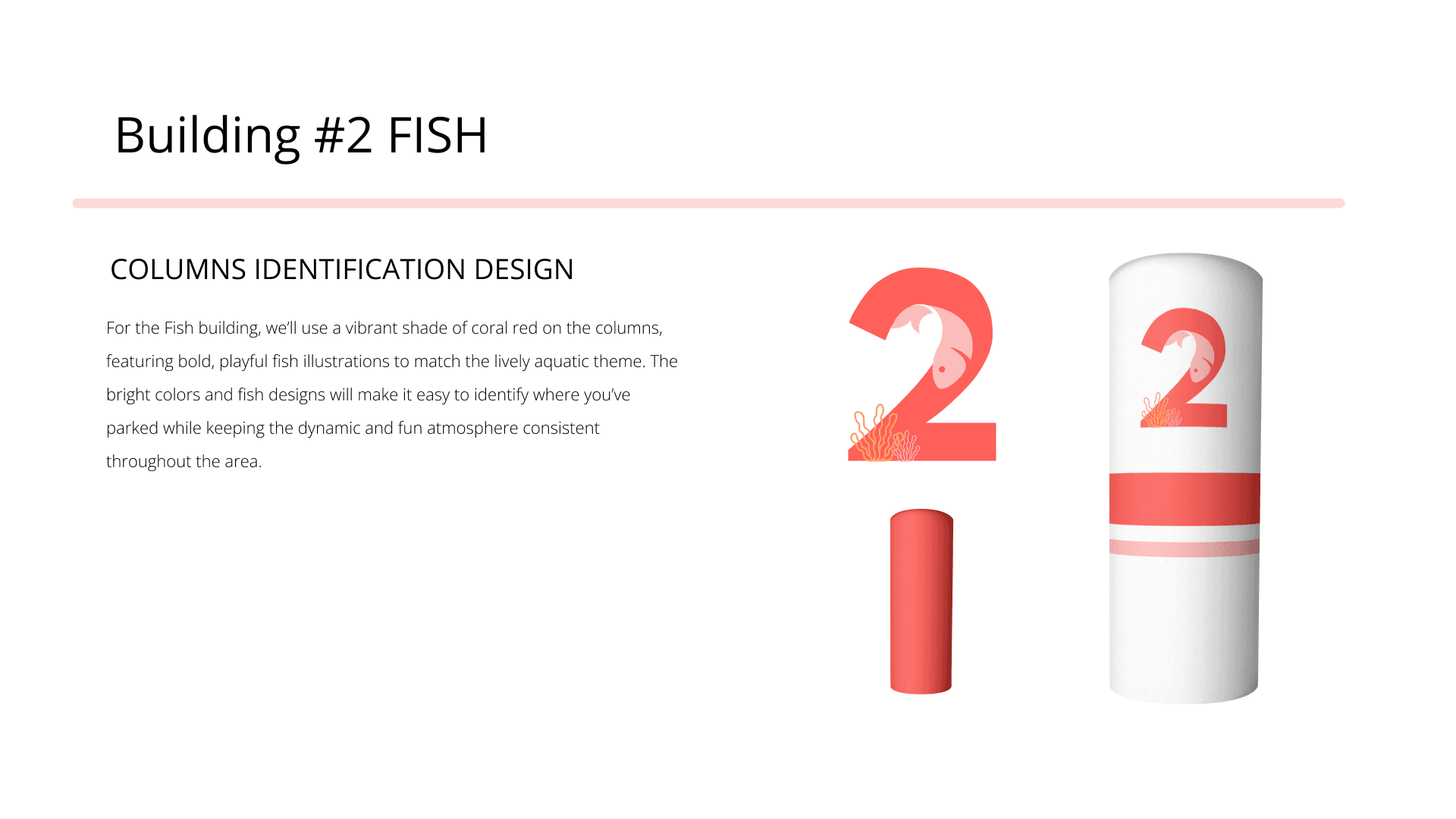
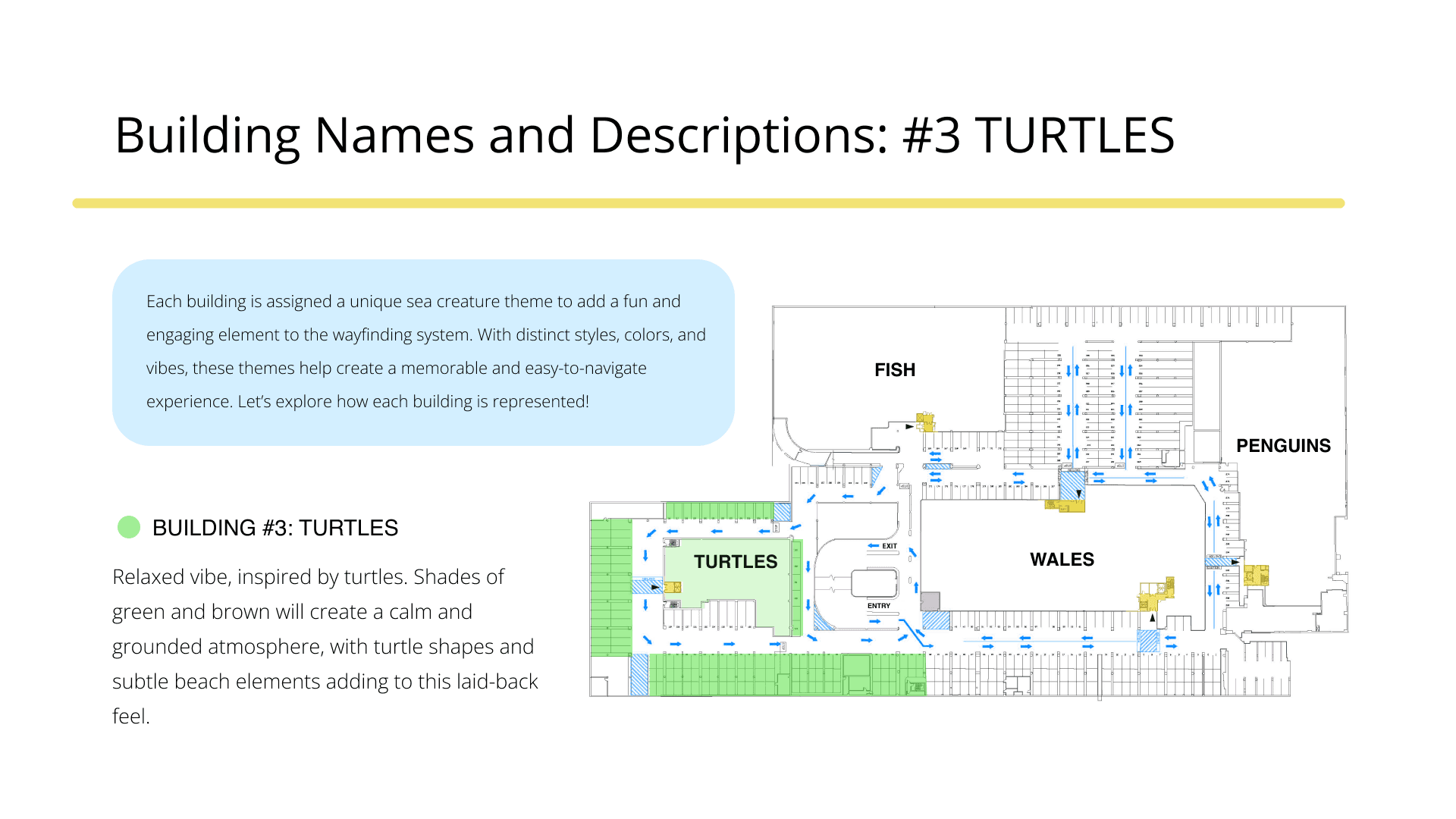
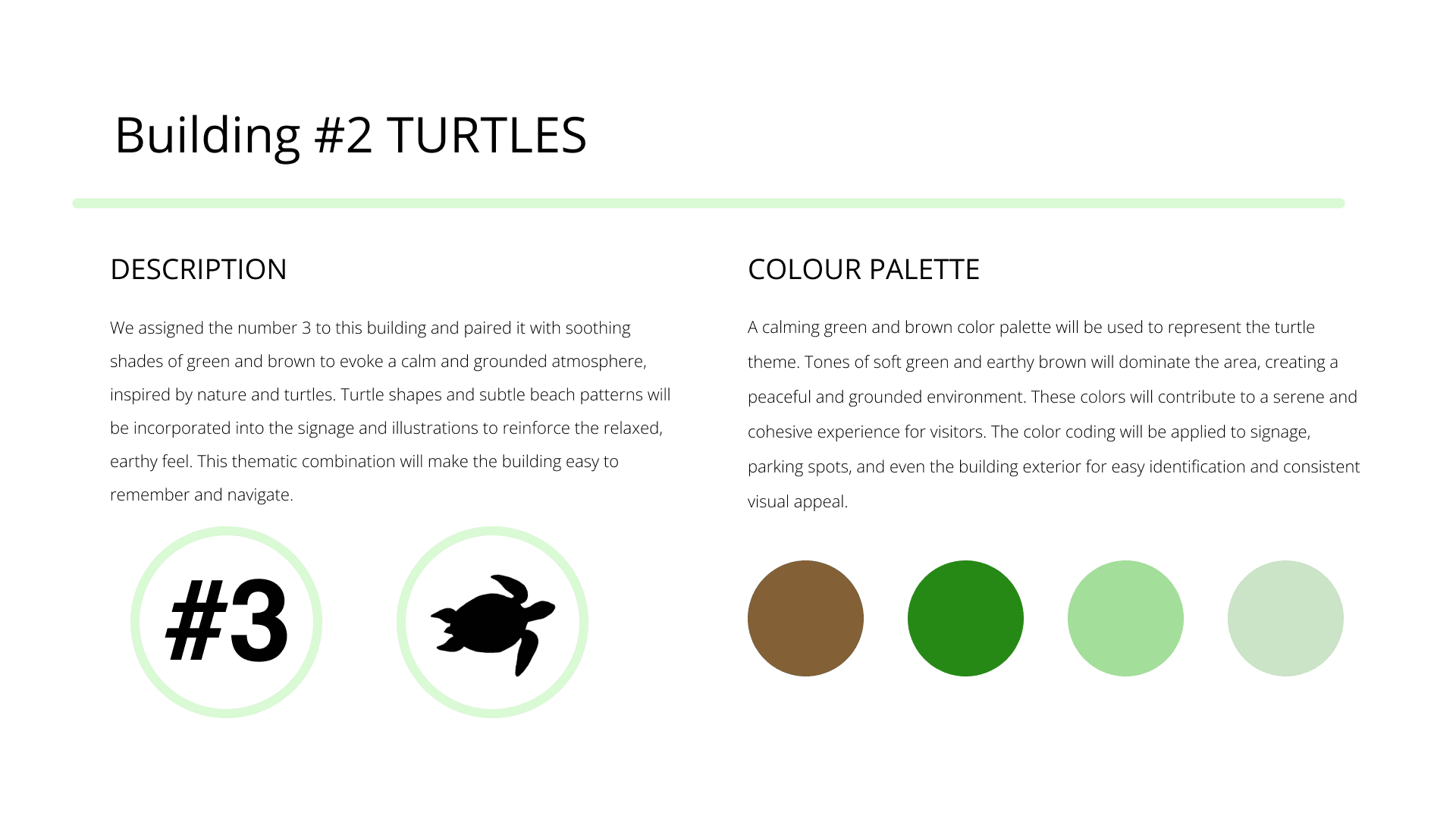
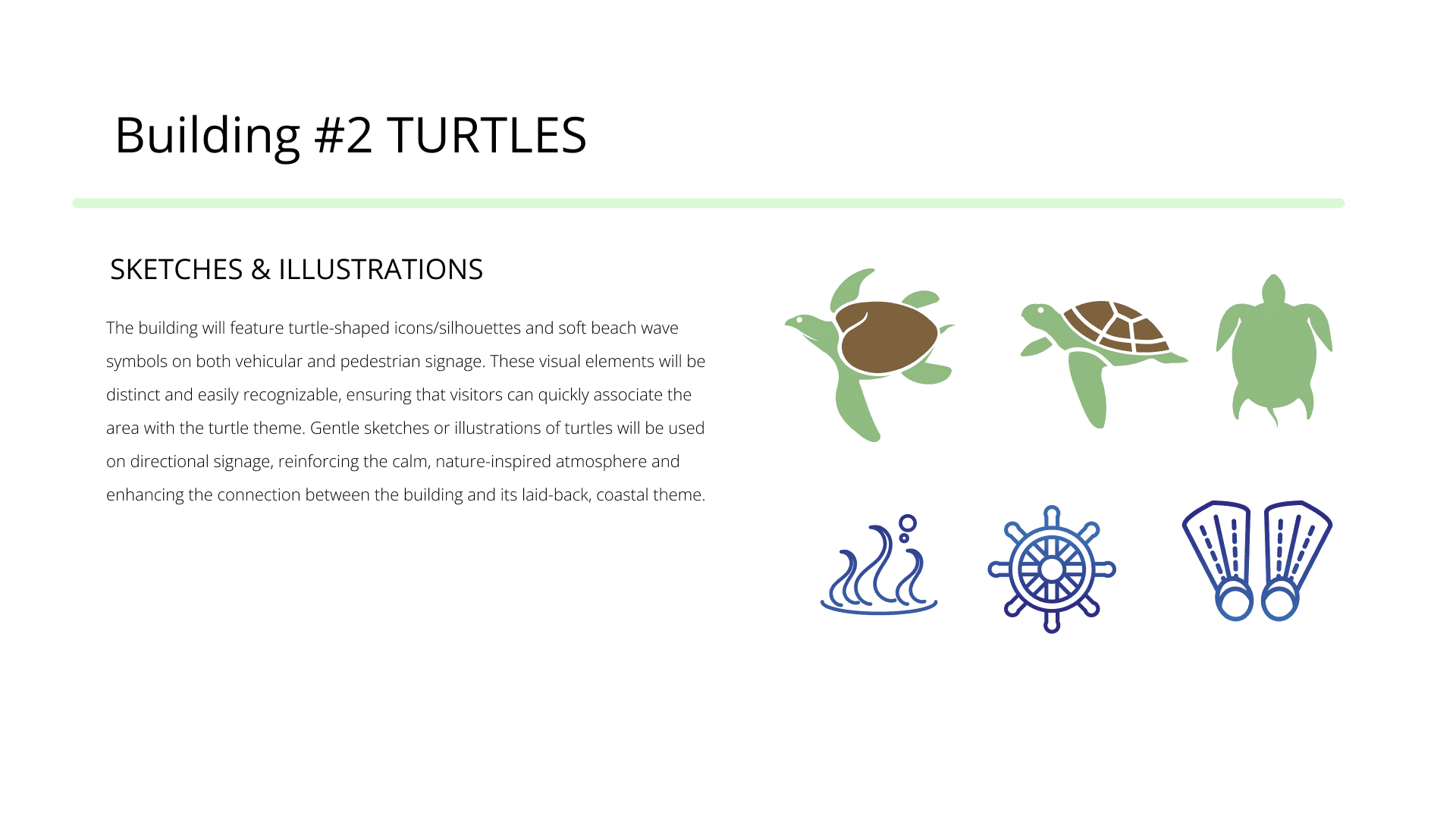
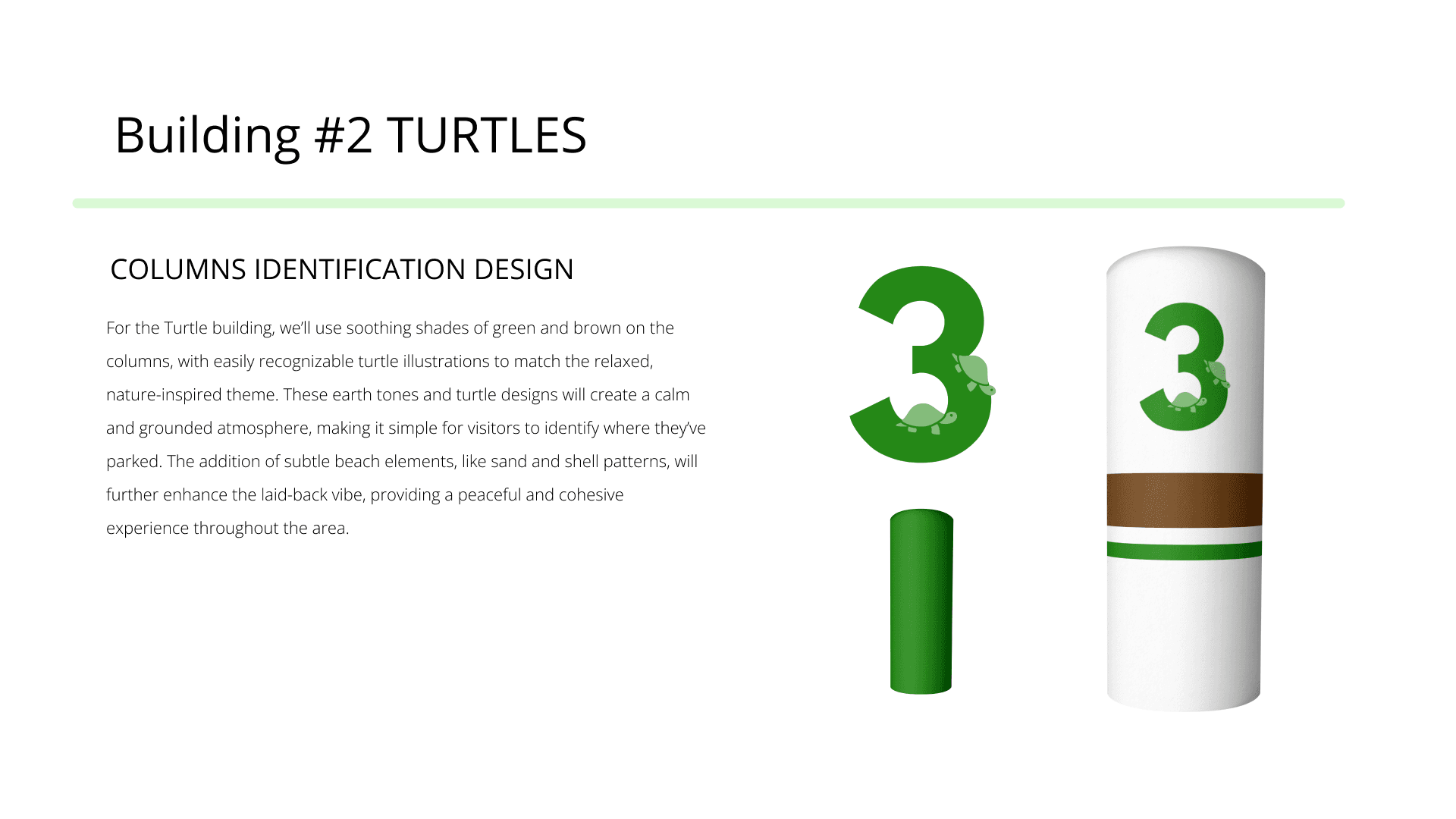
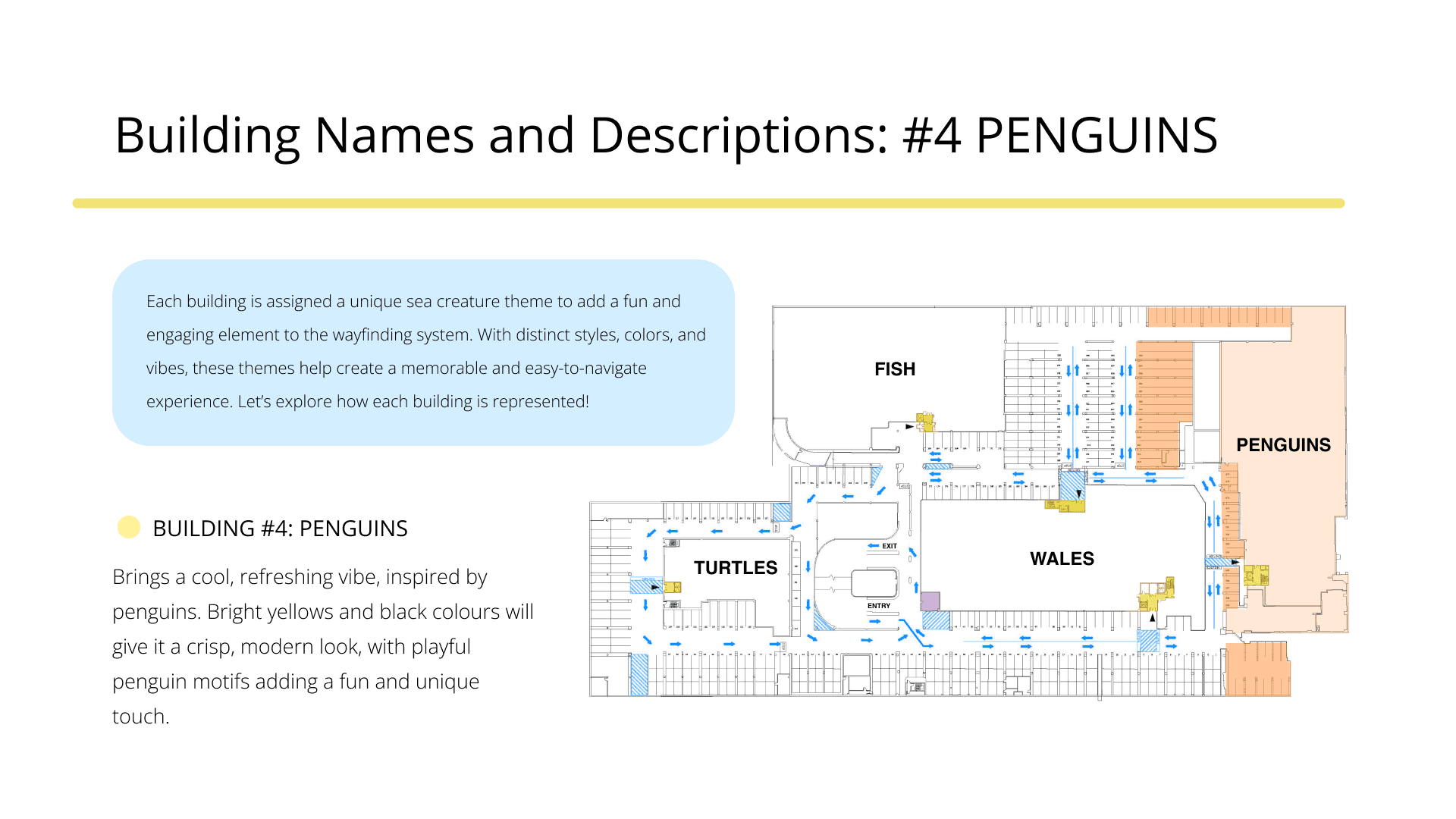
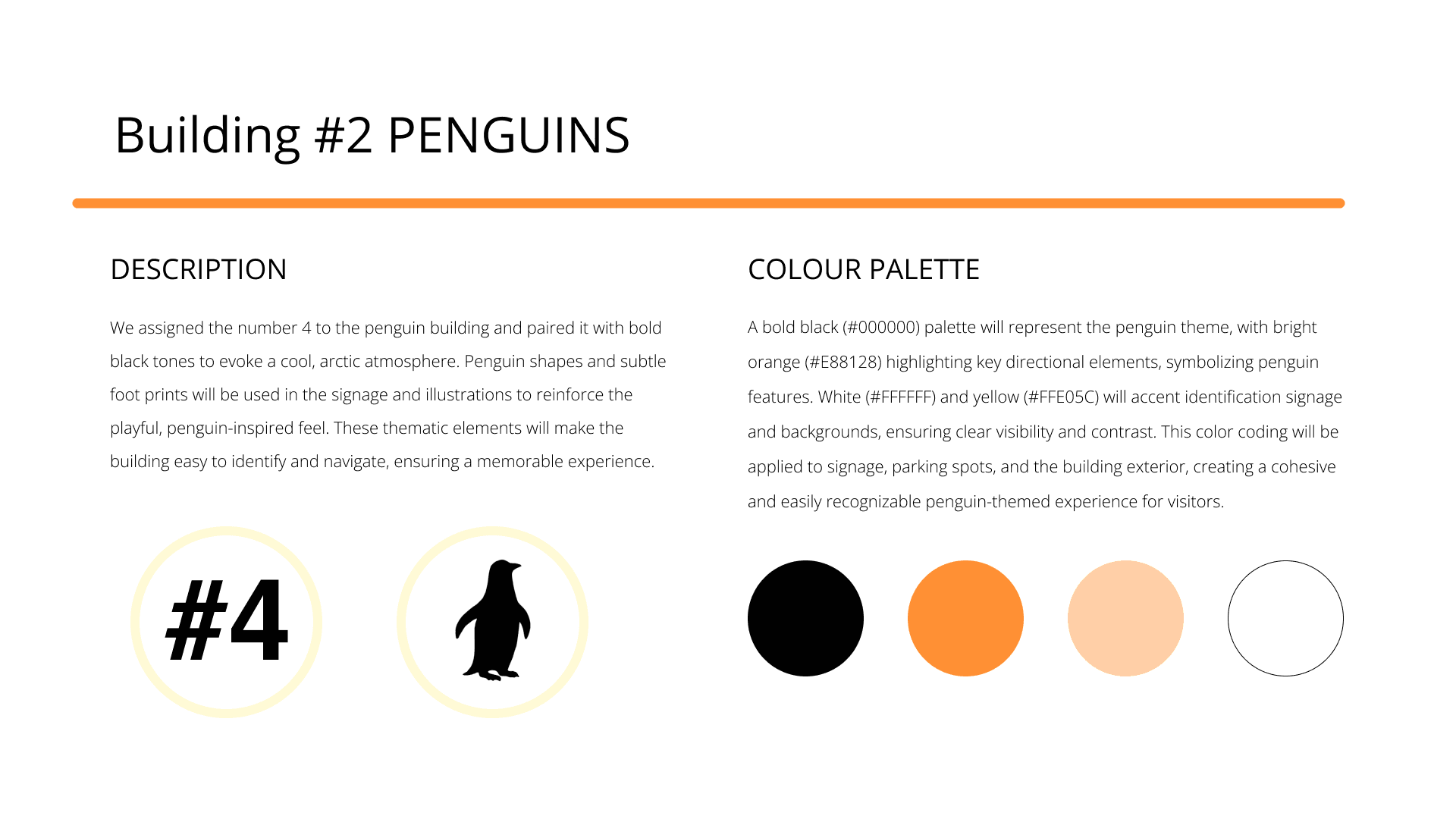
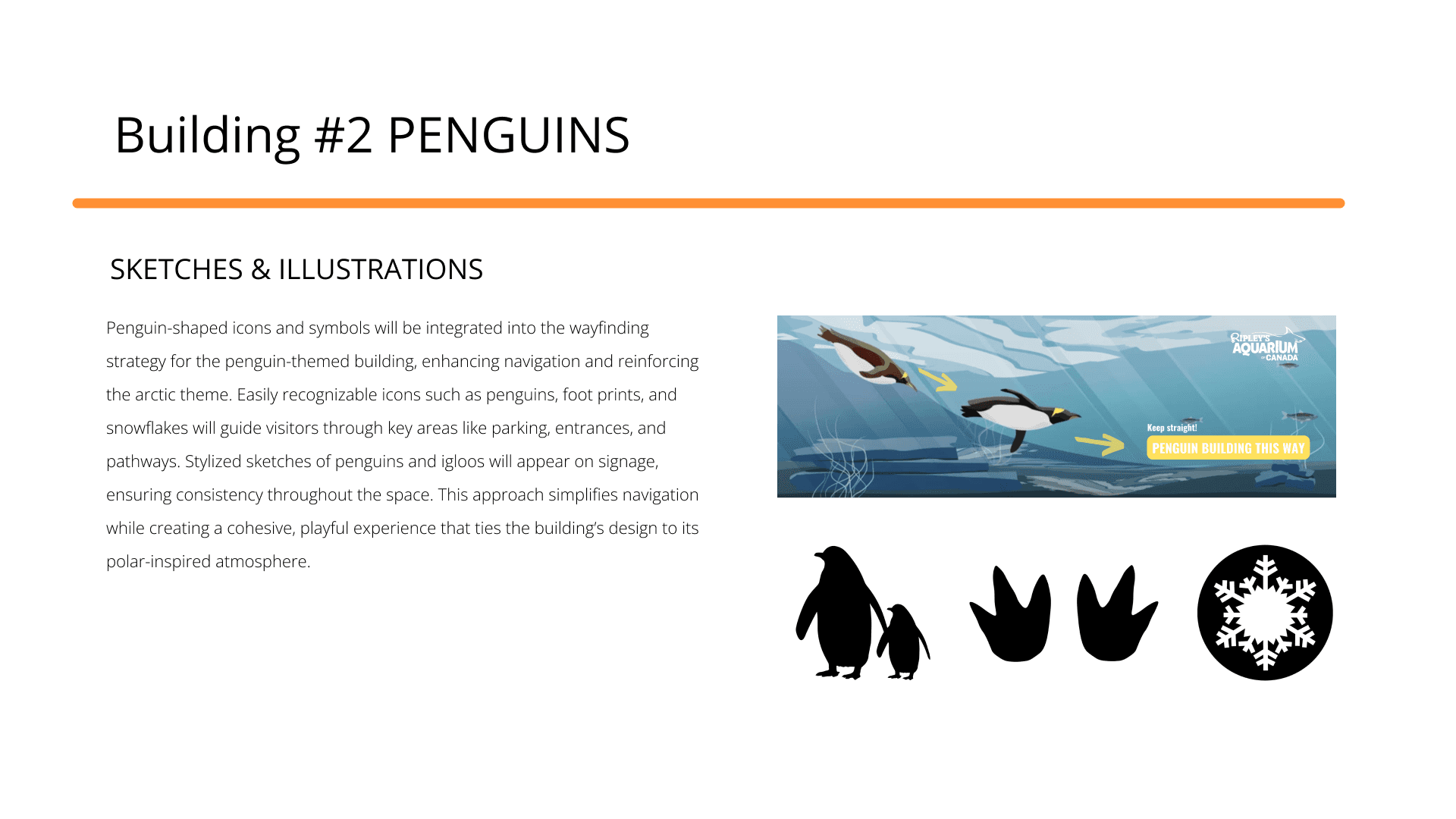
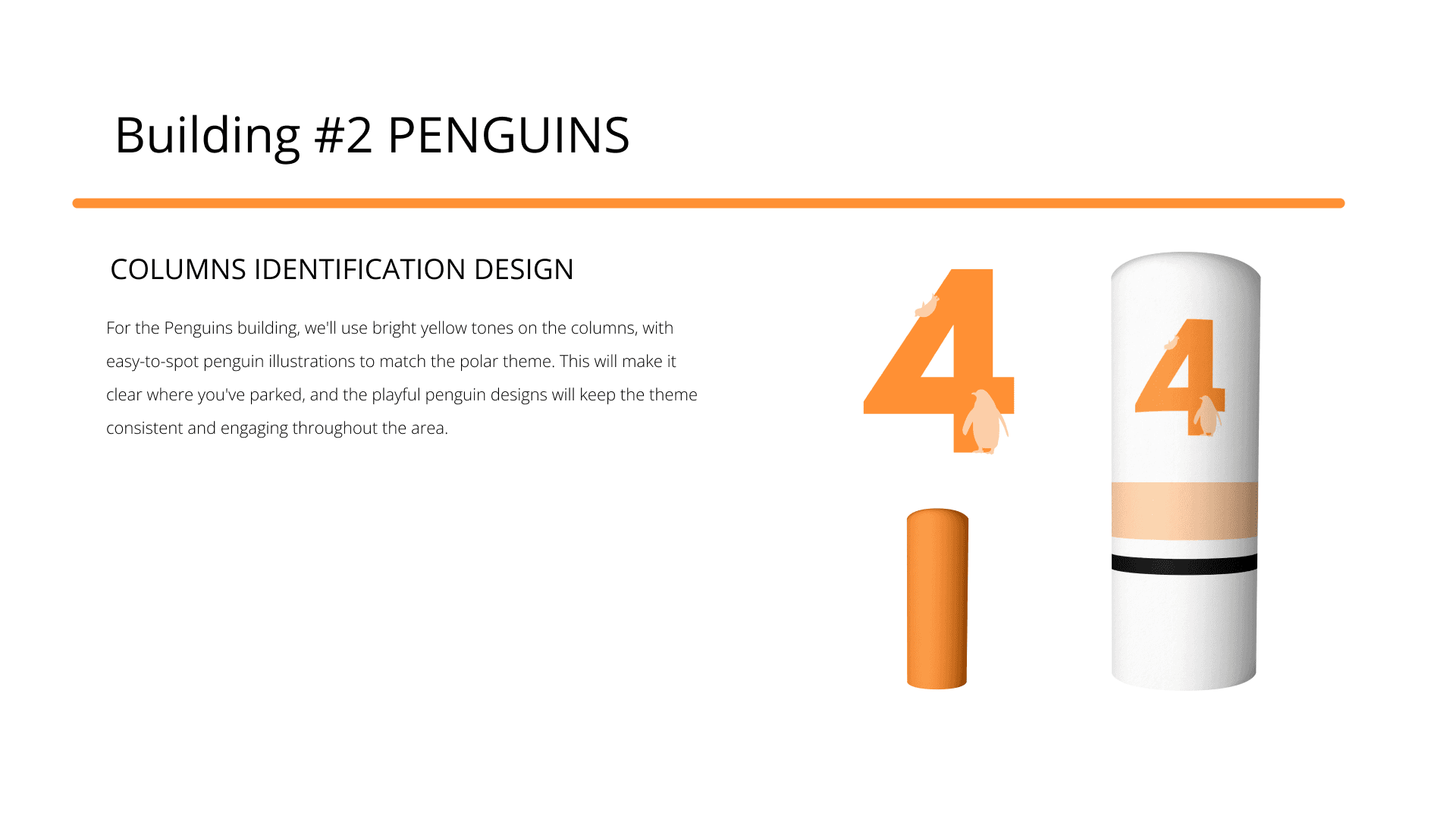
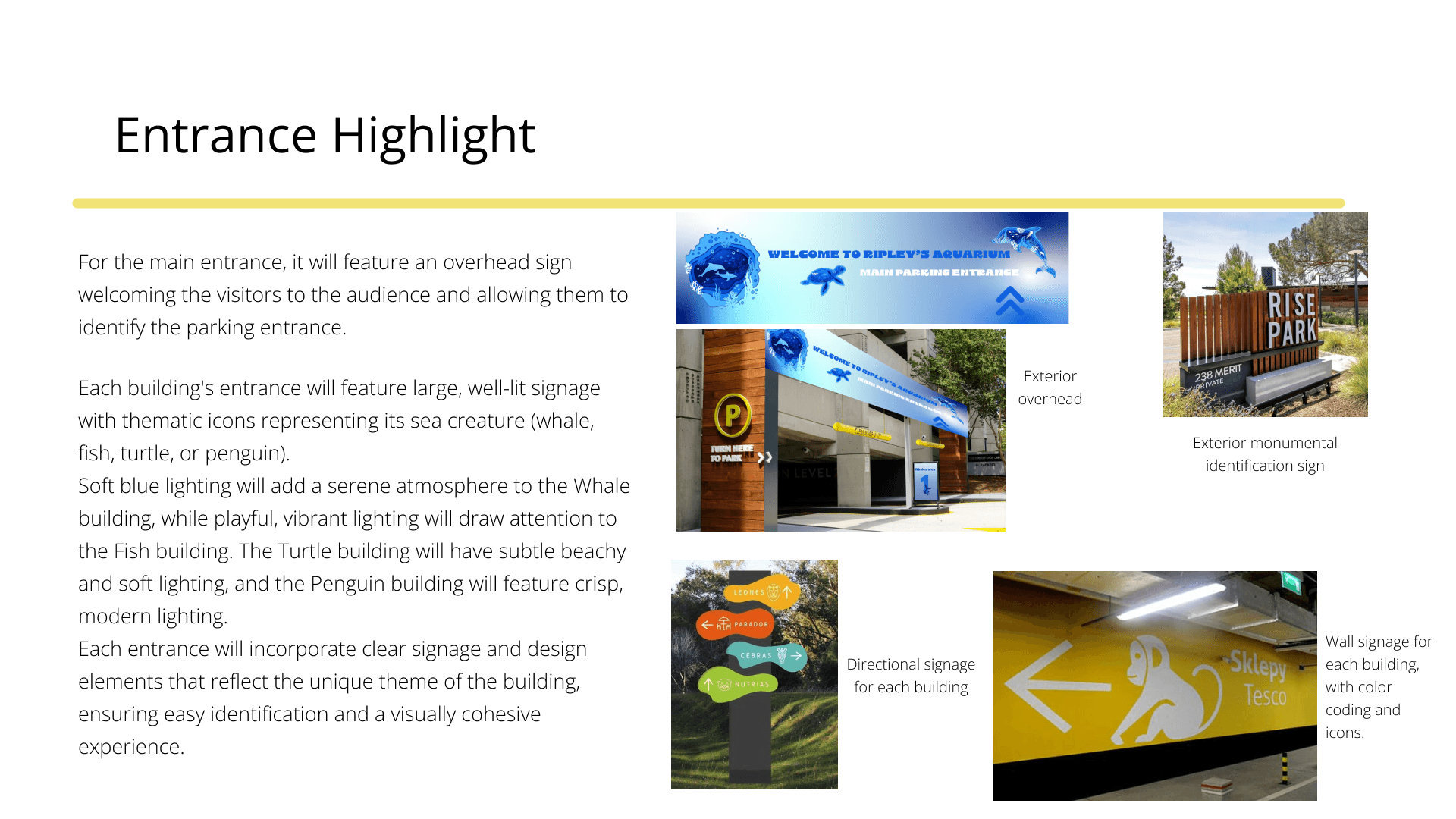
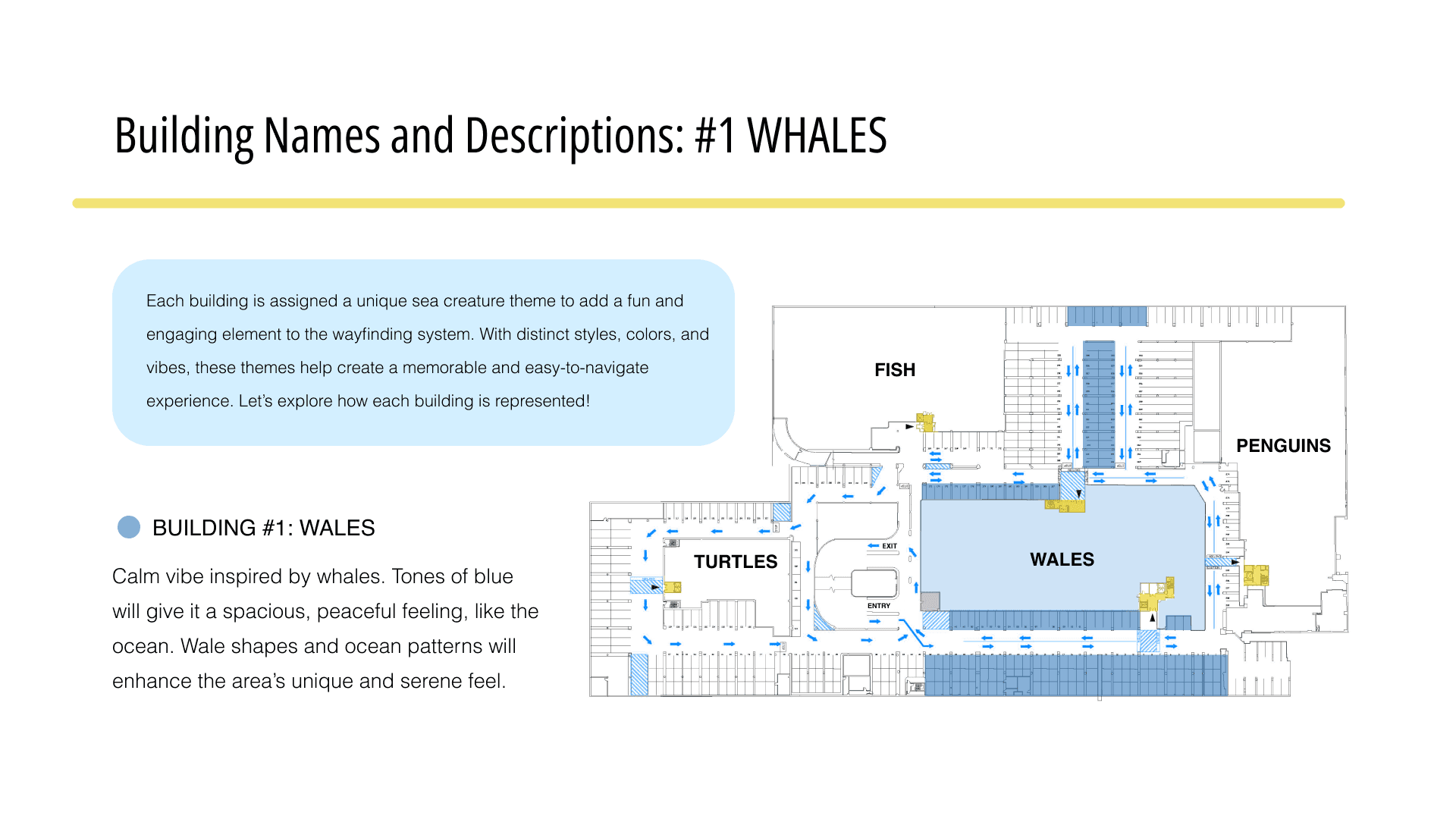
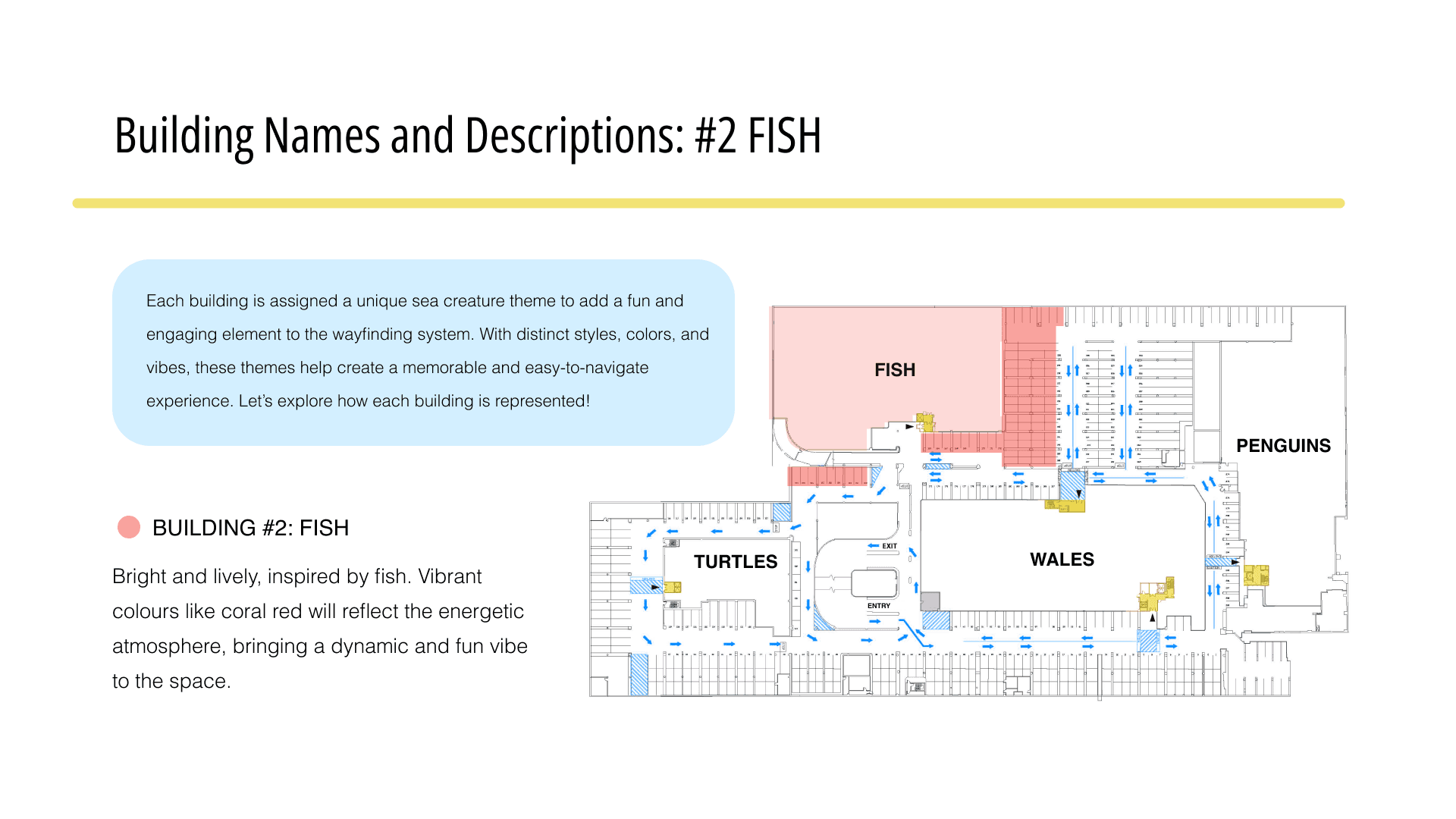
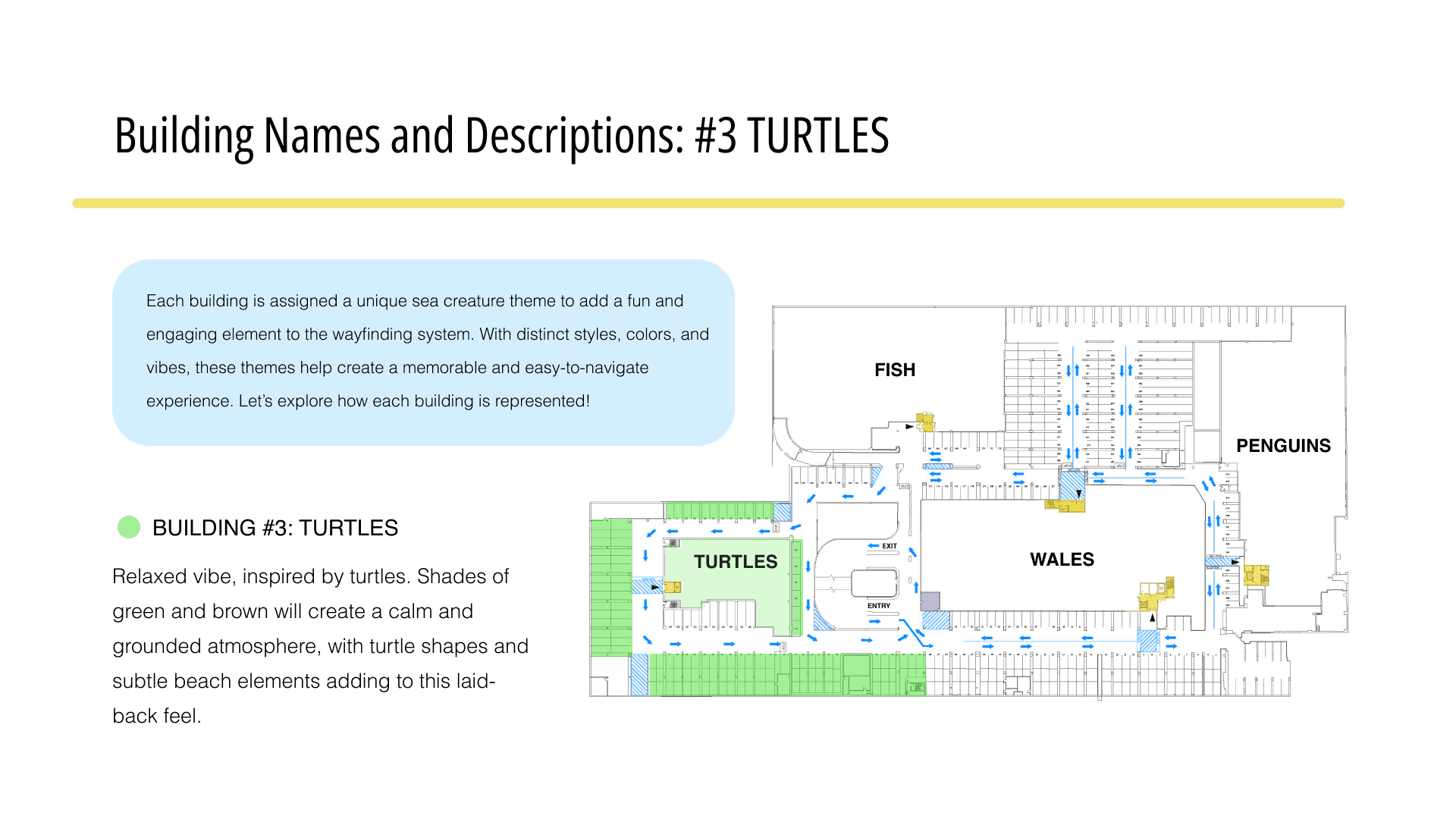
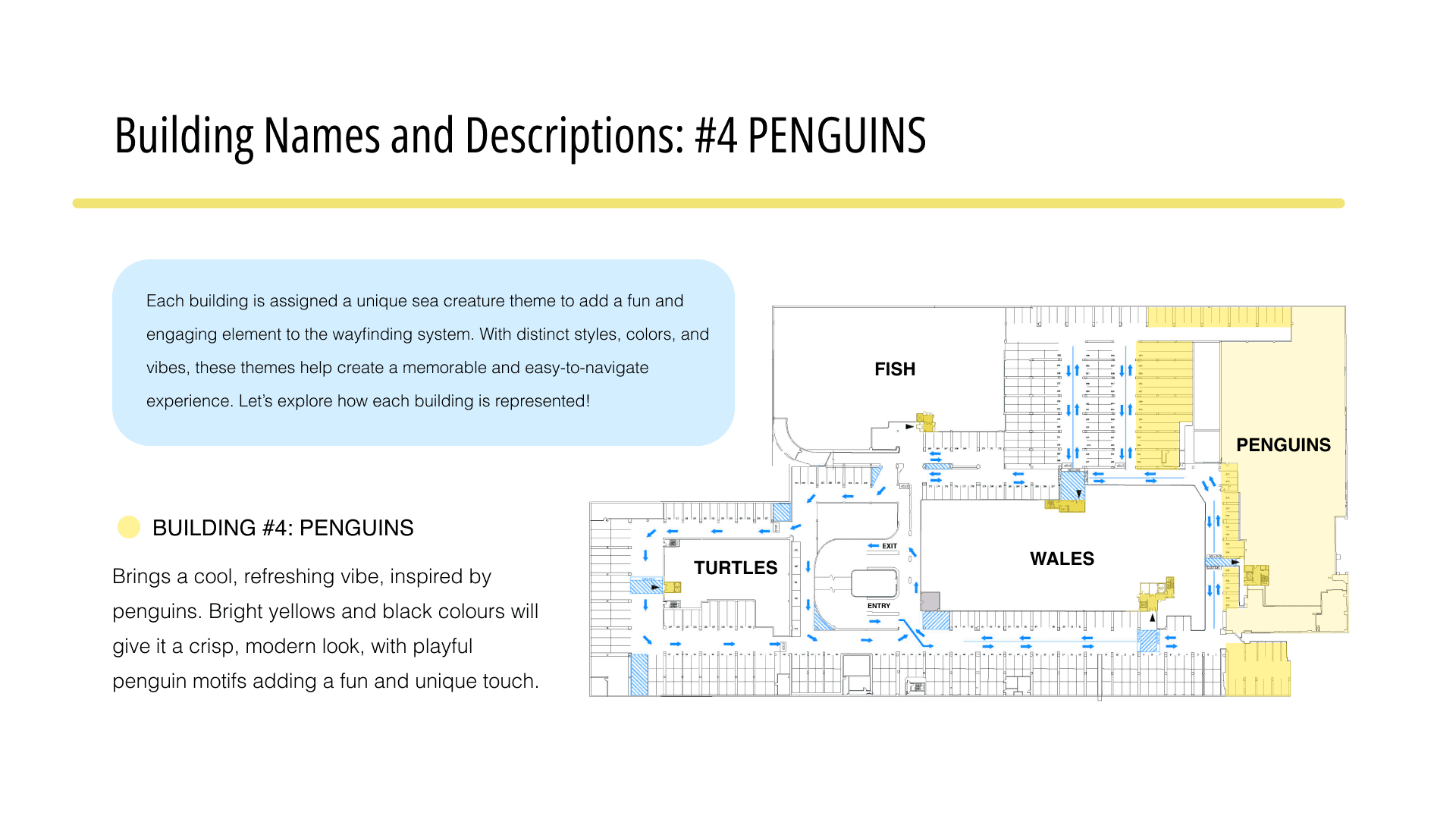
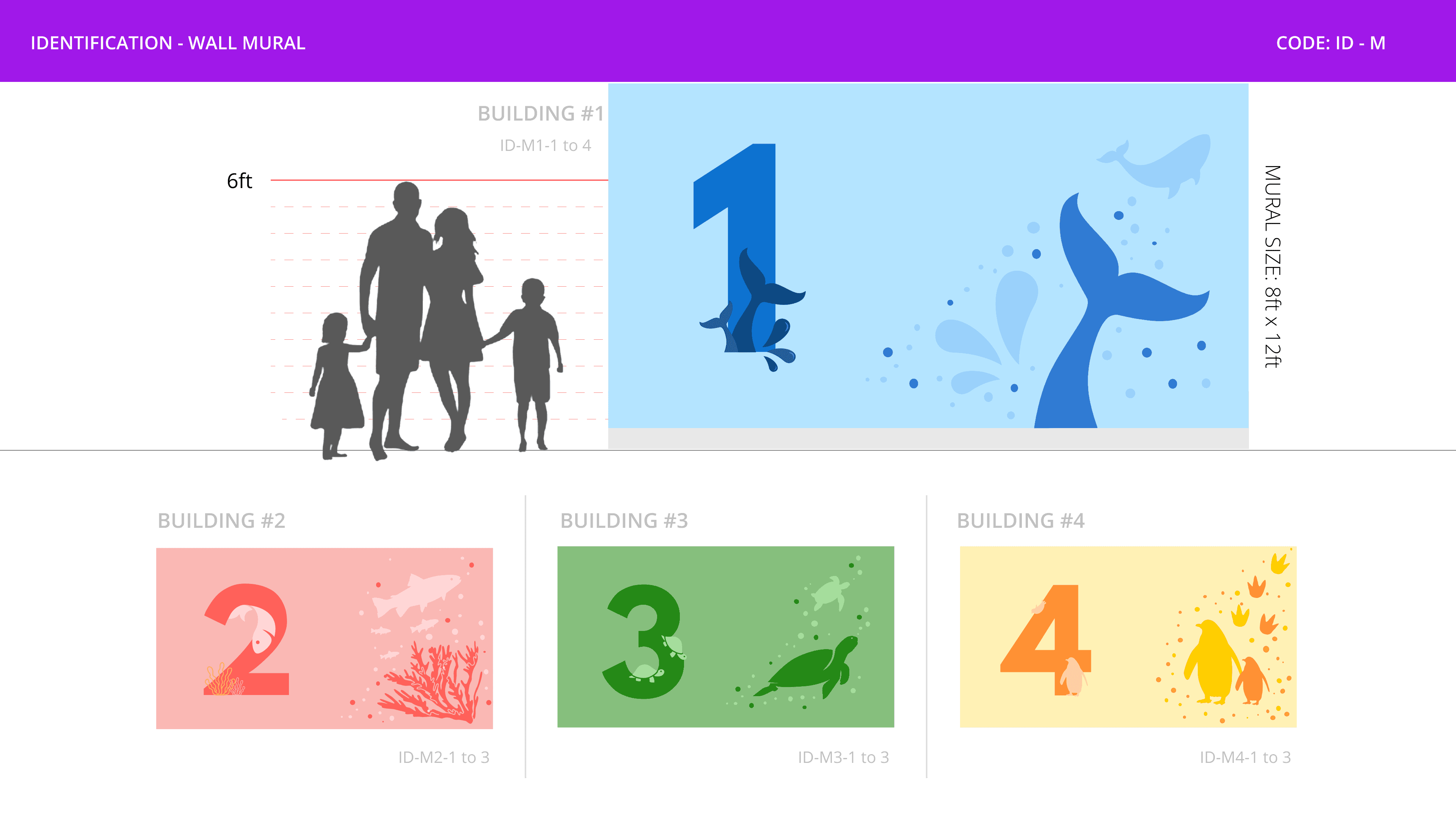
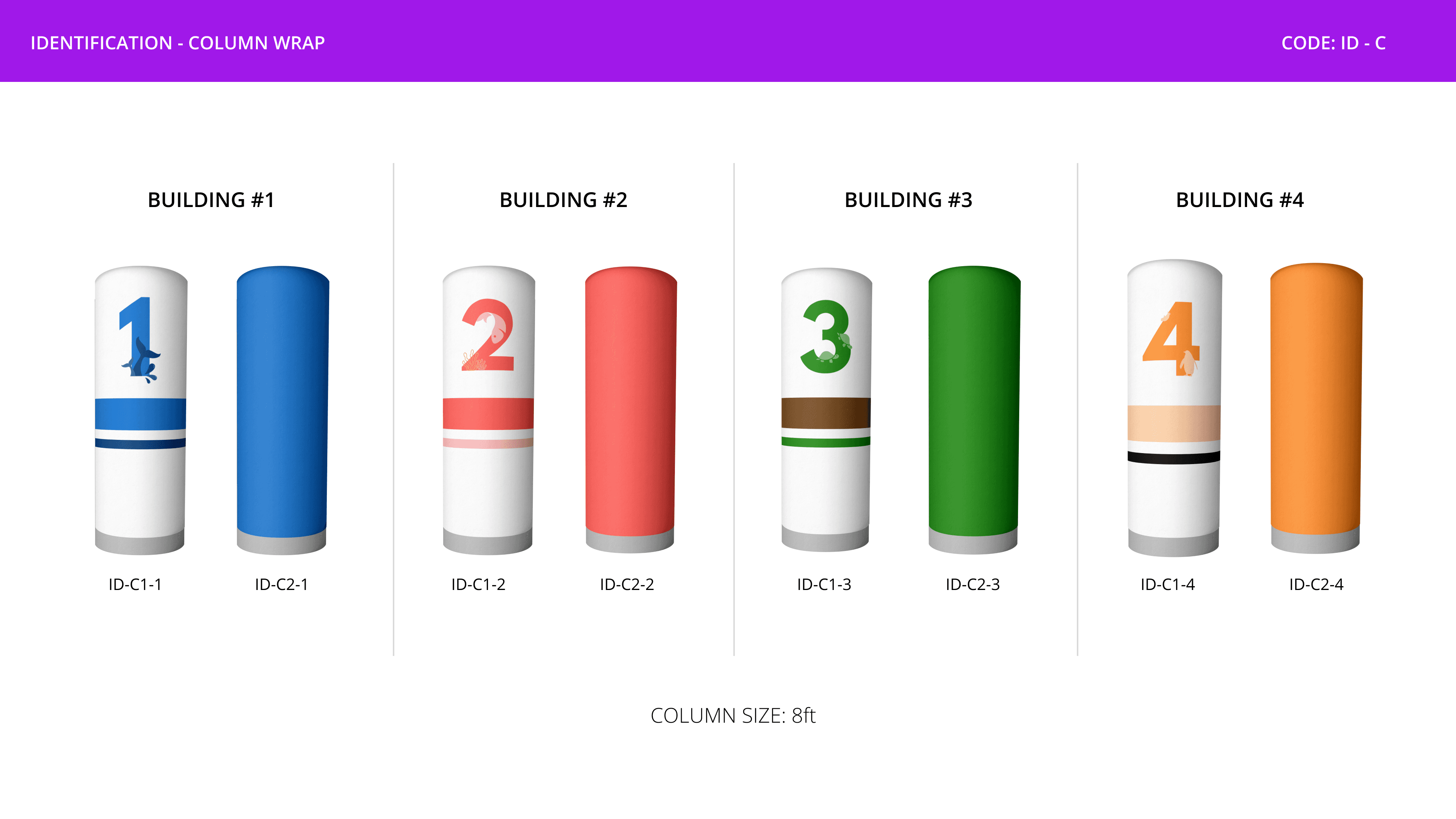
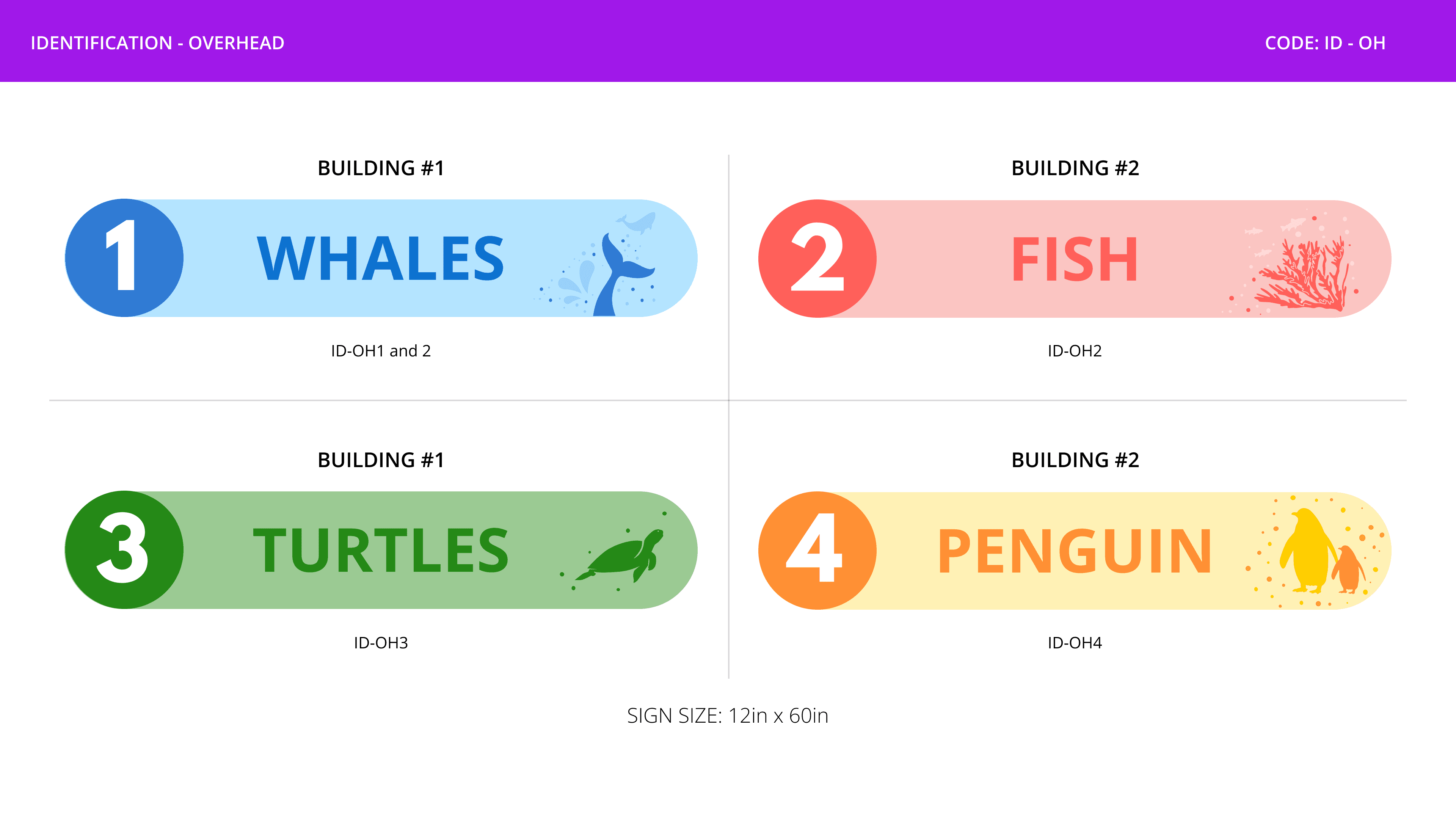
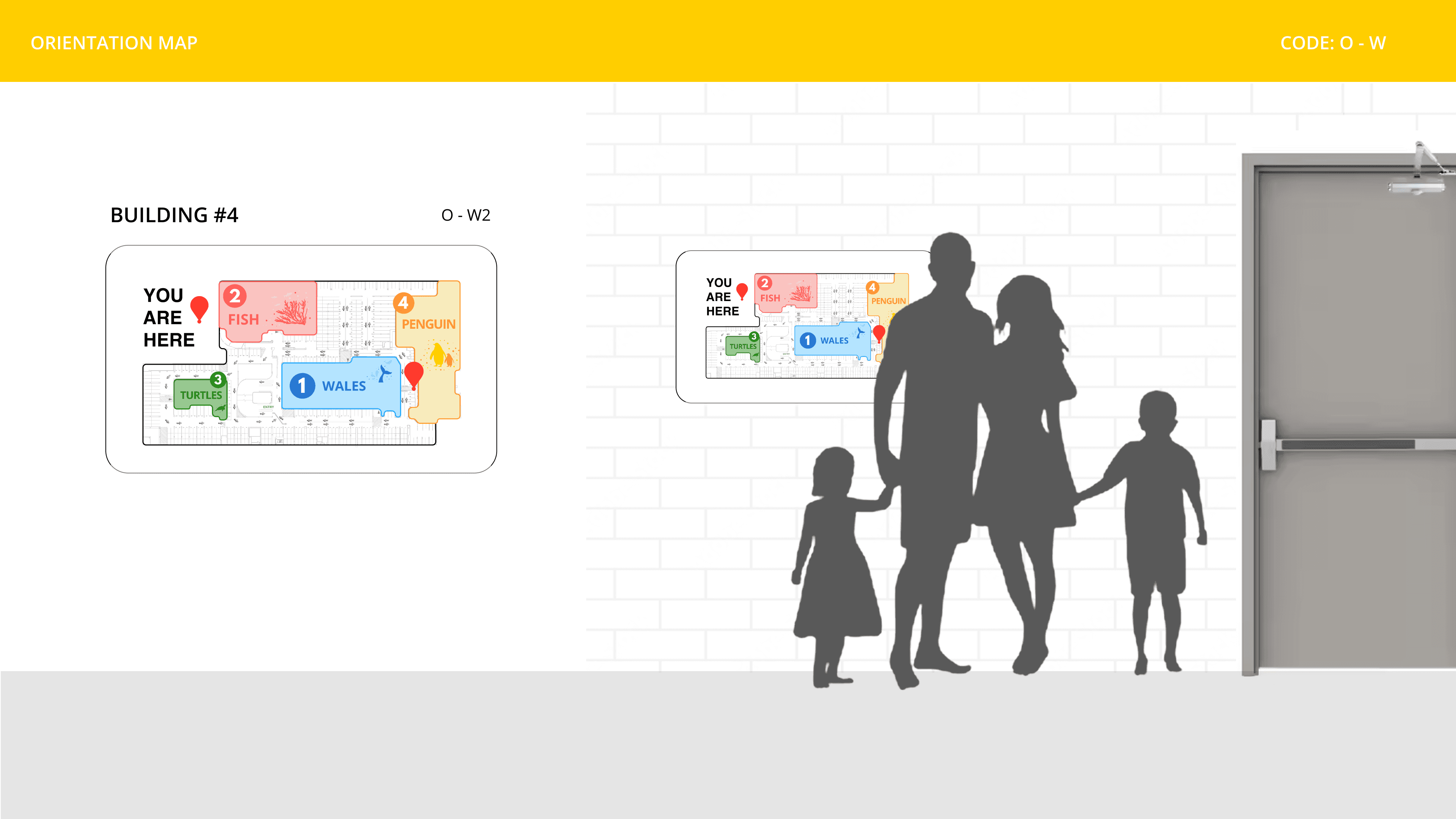
The building overview helped define levels, zones, and key transition areas. Understanding the overall structure allowed for more strategic sign placement and clearer navigation. We also created thematic building zones Whales, Fish, Turtles, and Penguins each with its own palette and illustrations.
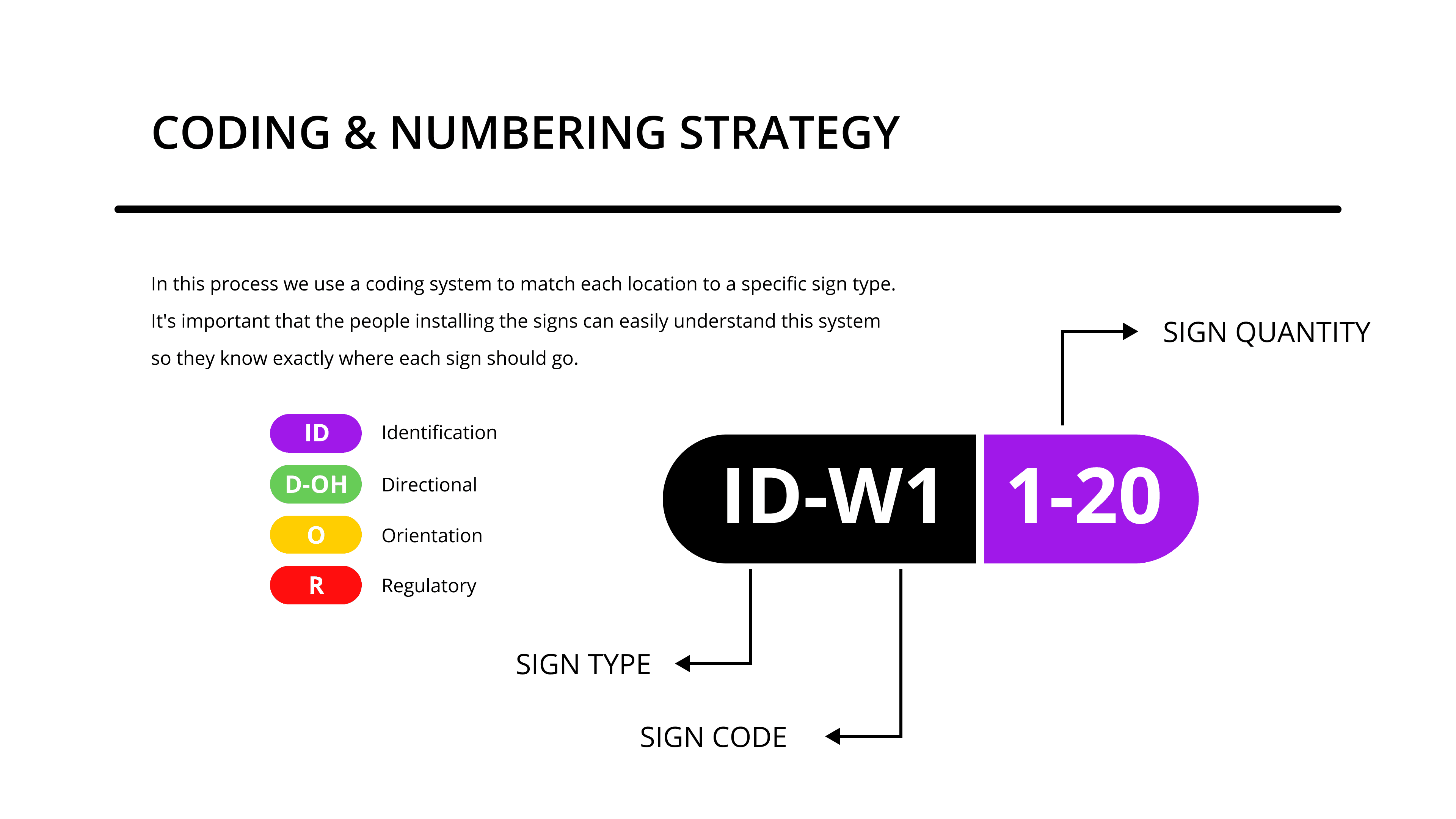
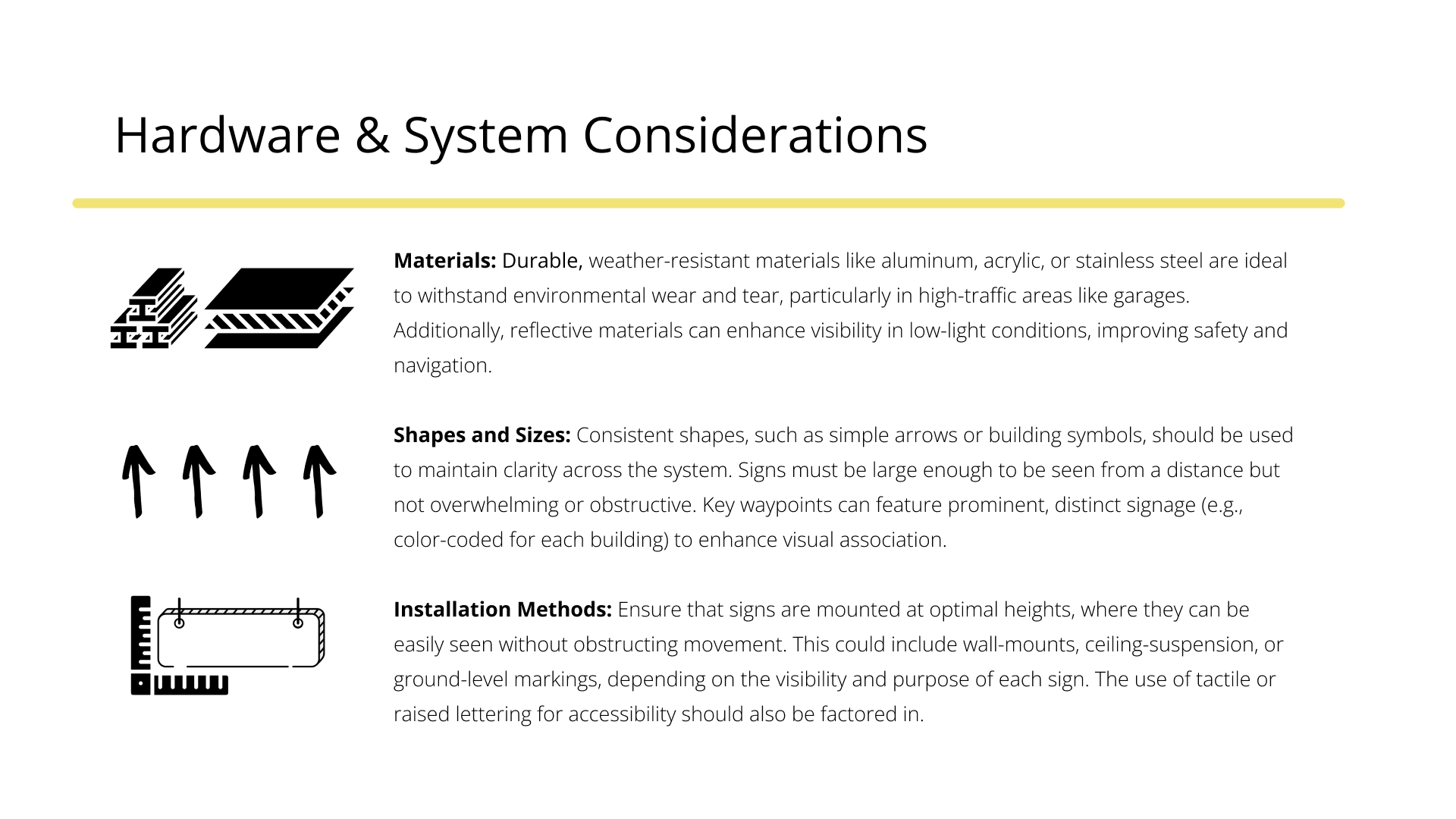
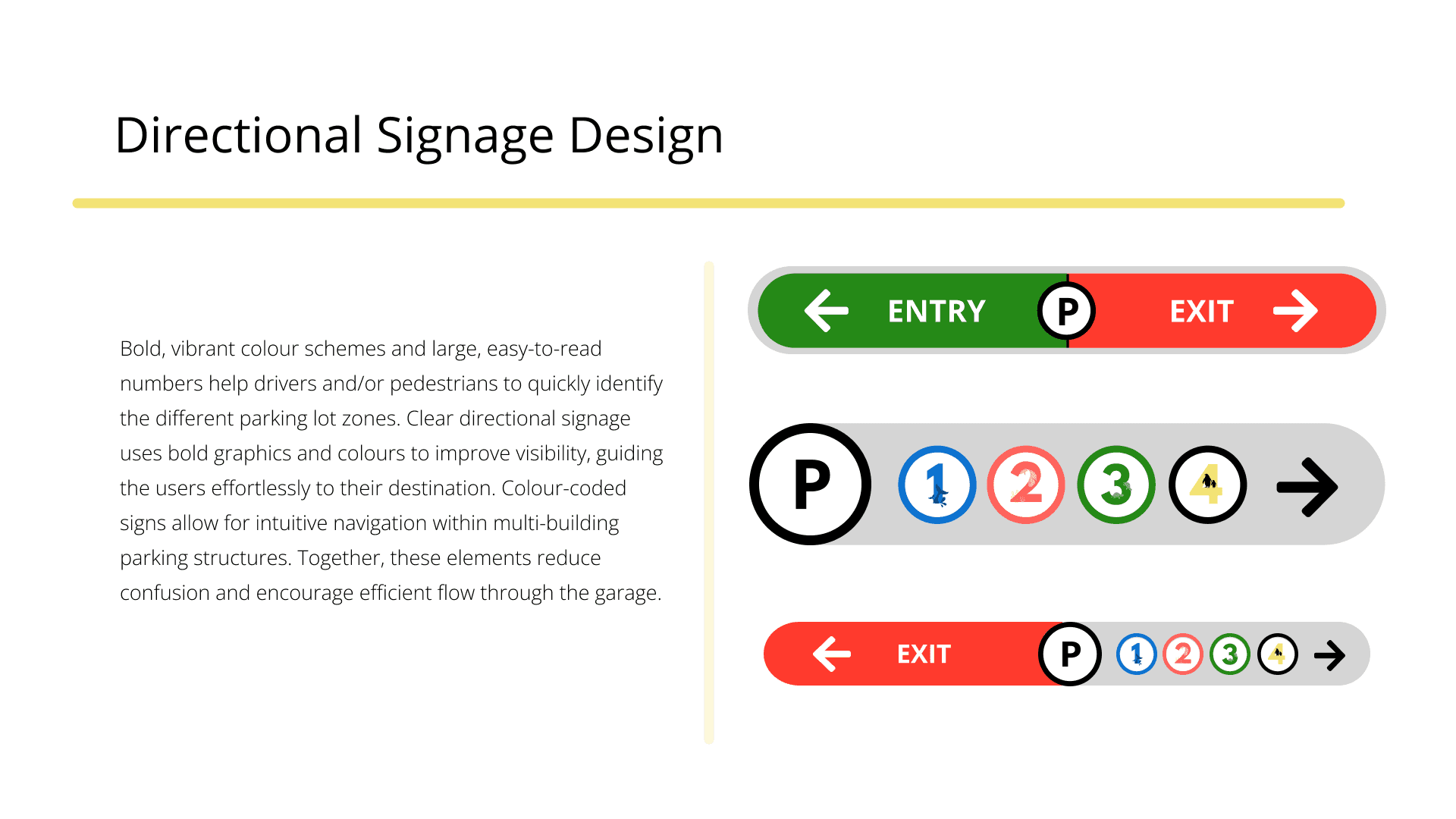
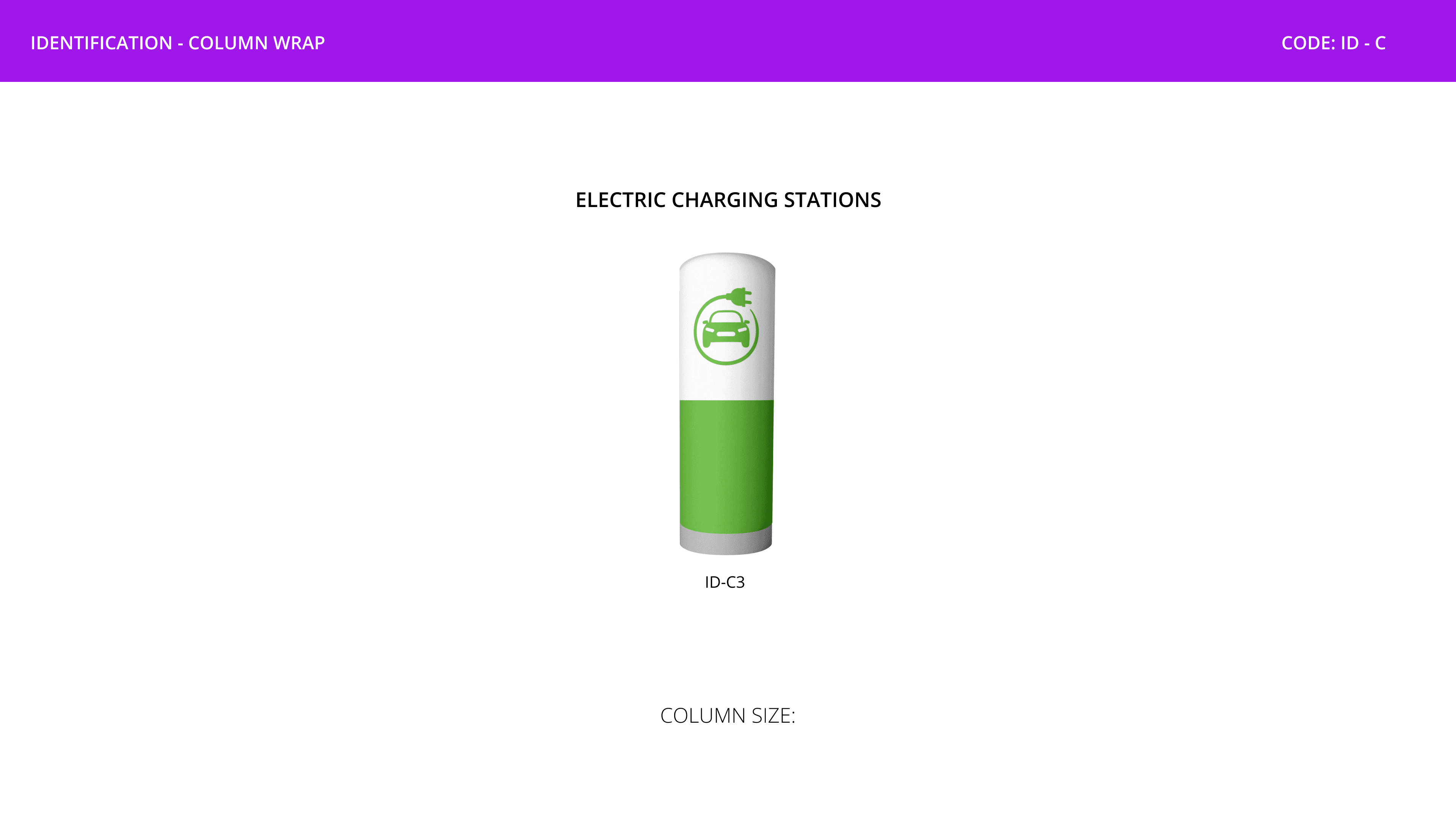
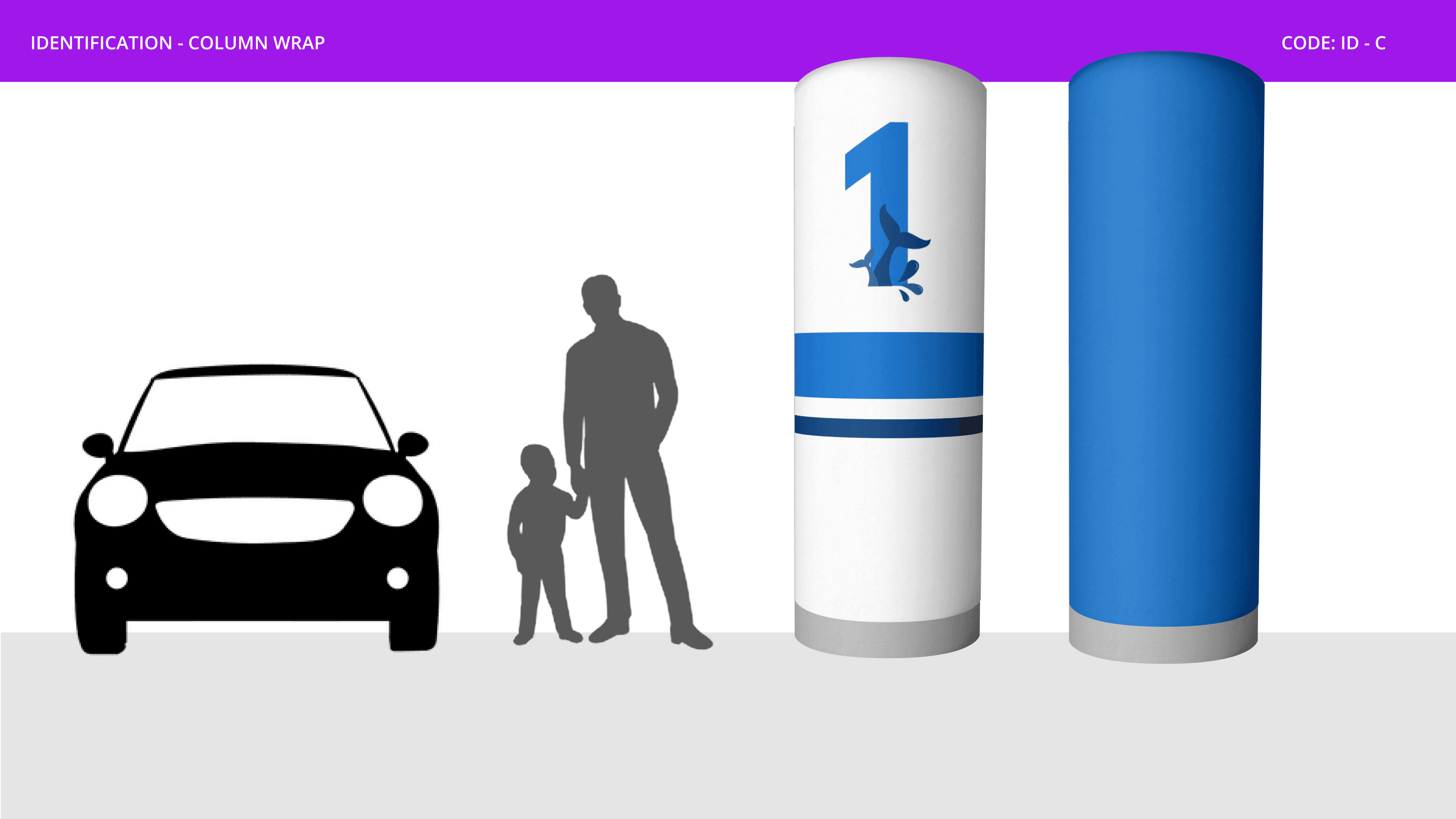
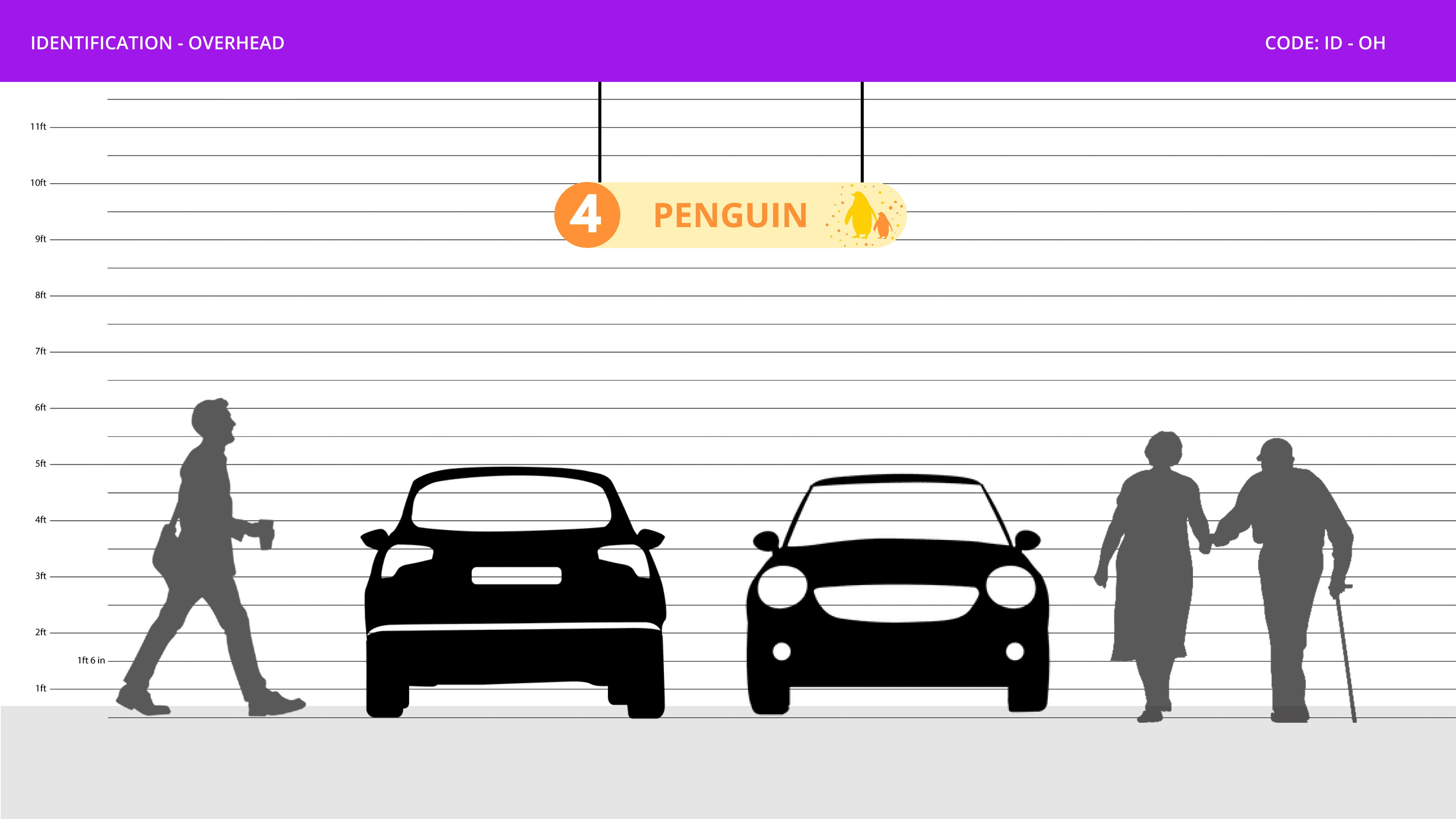
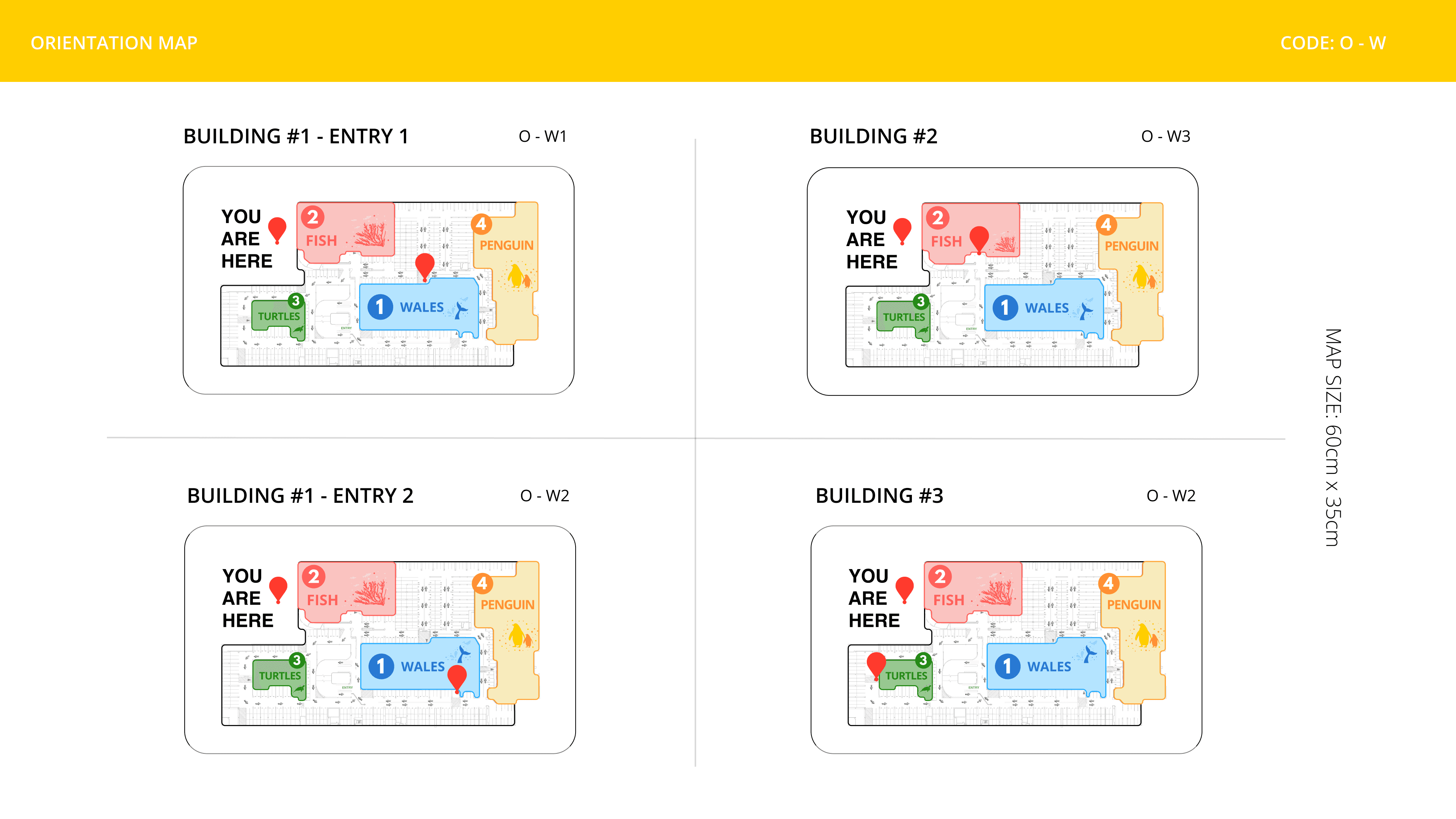
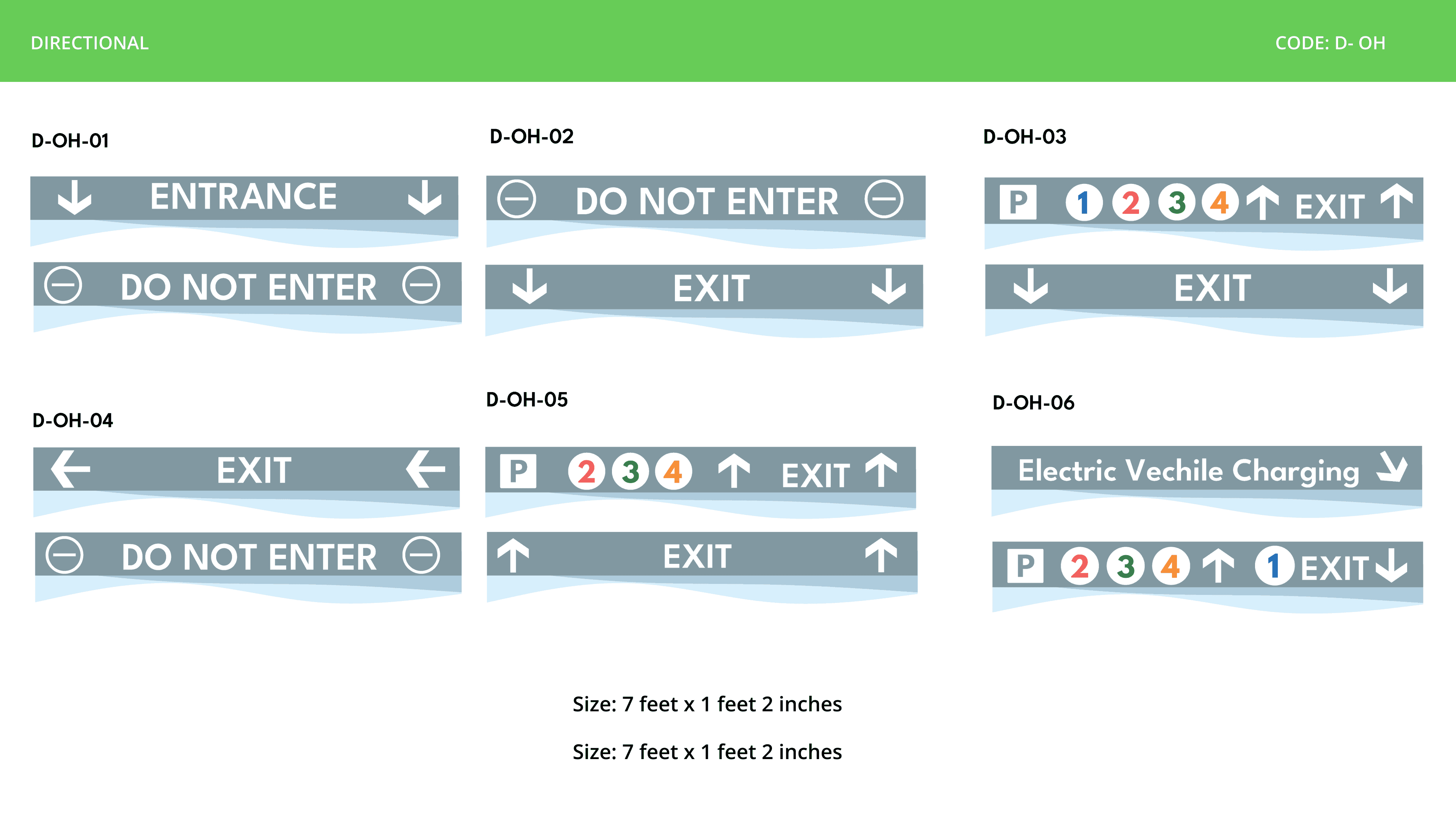
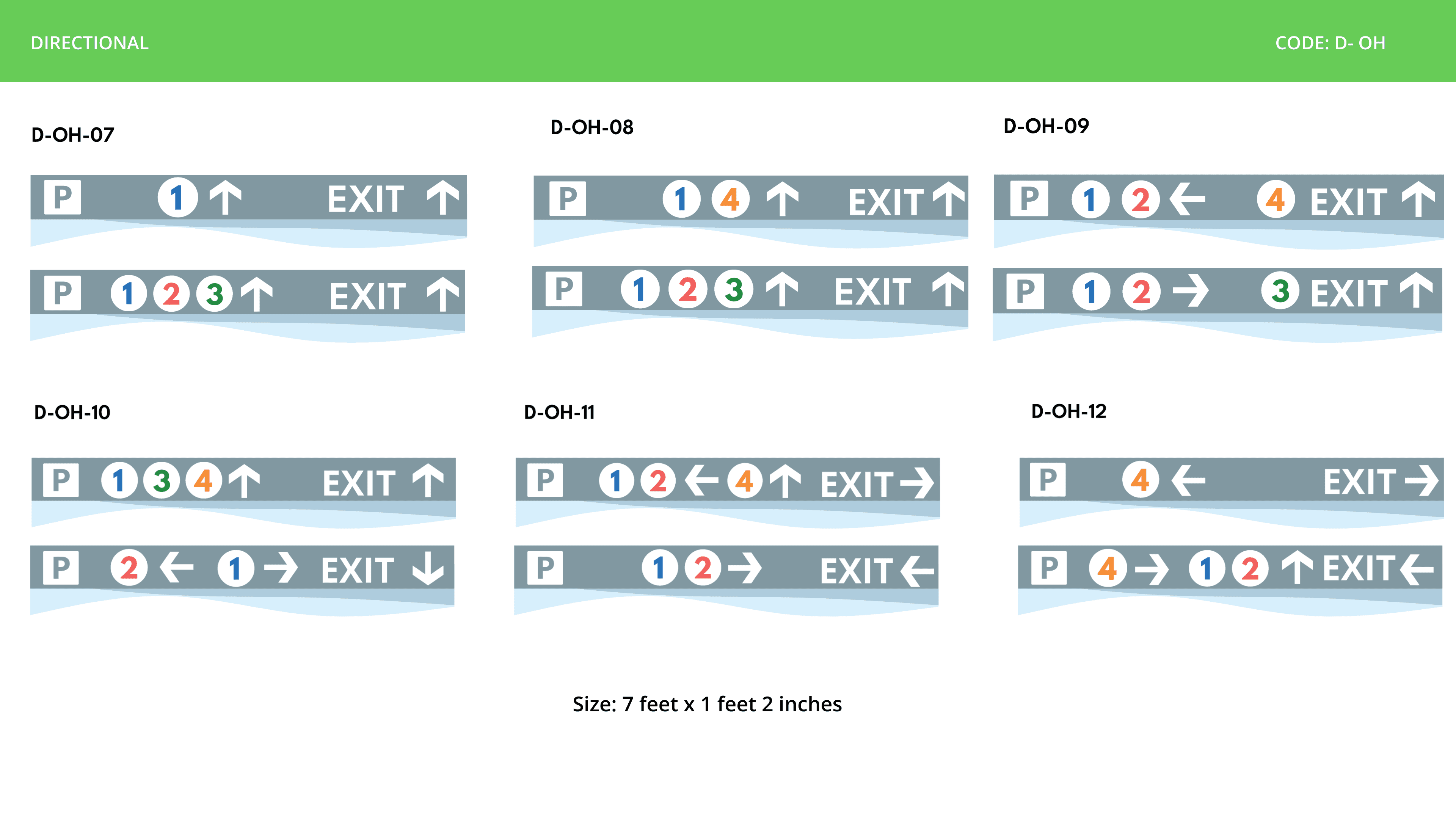
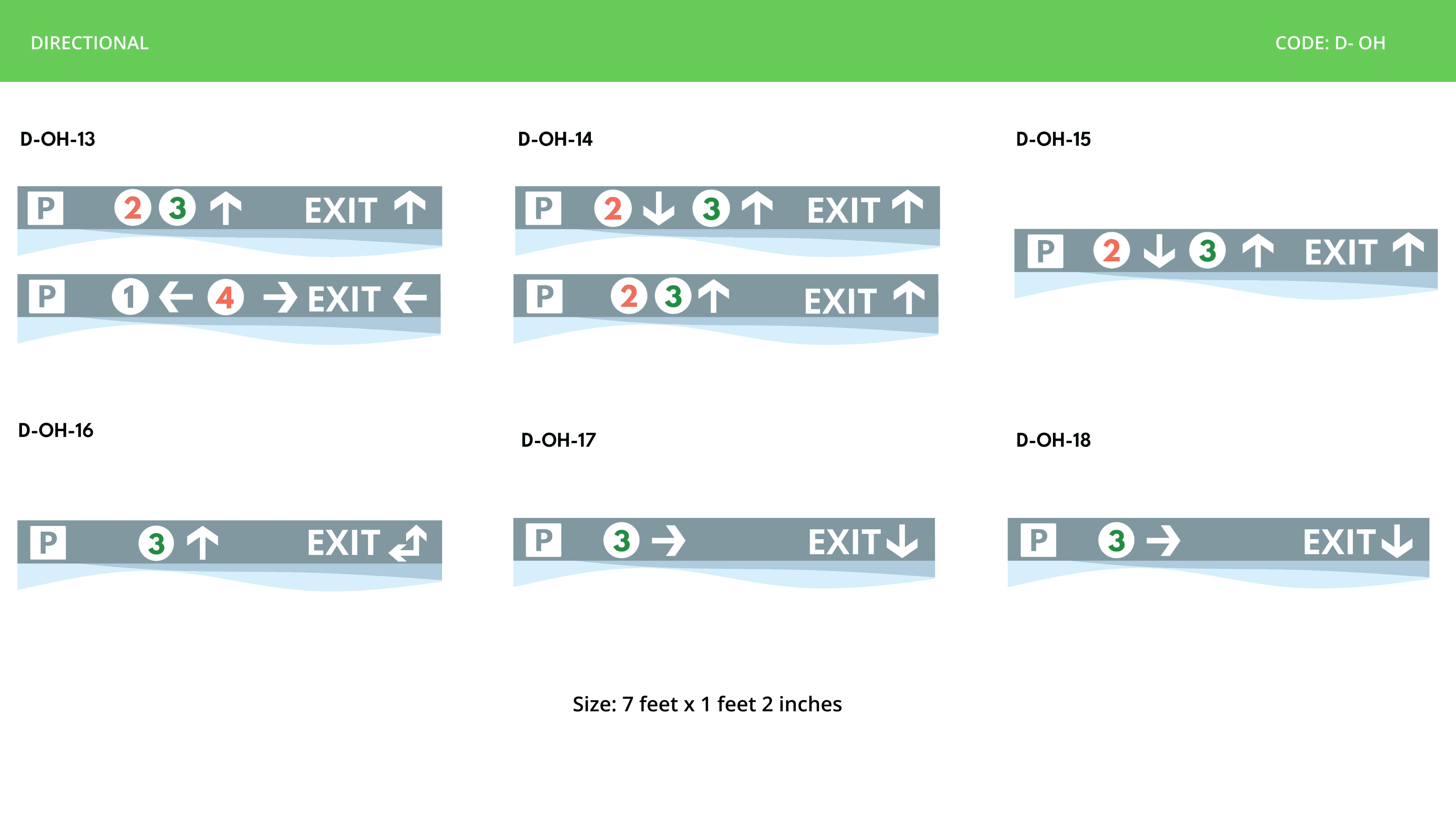
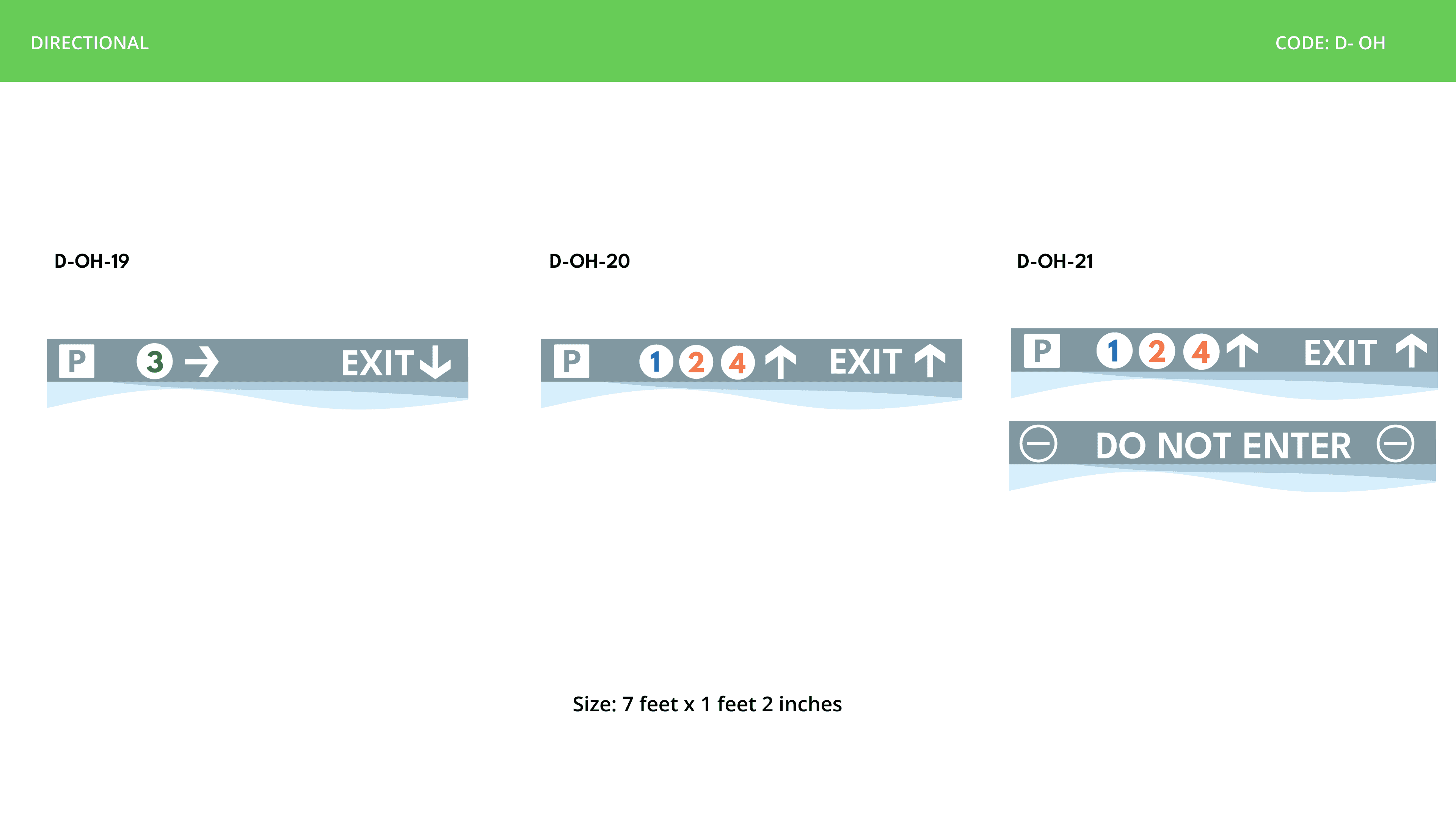
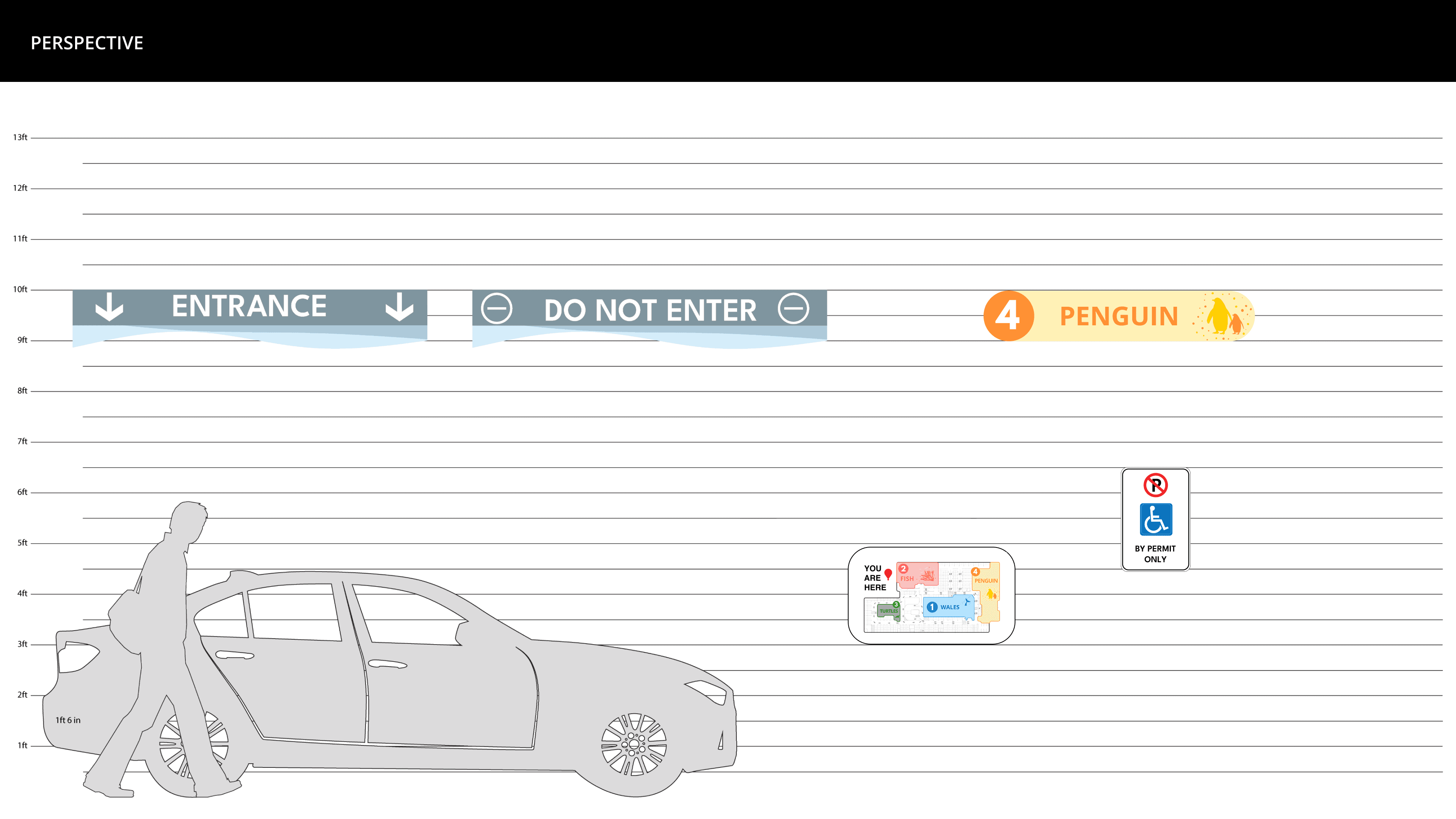
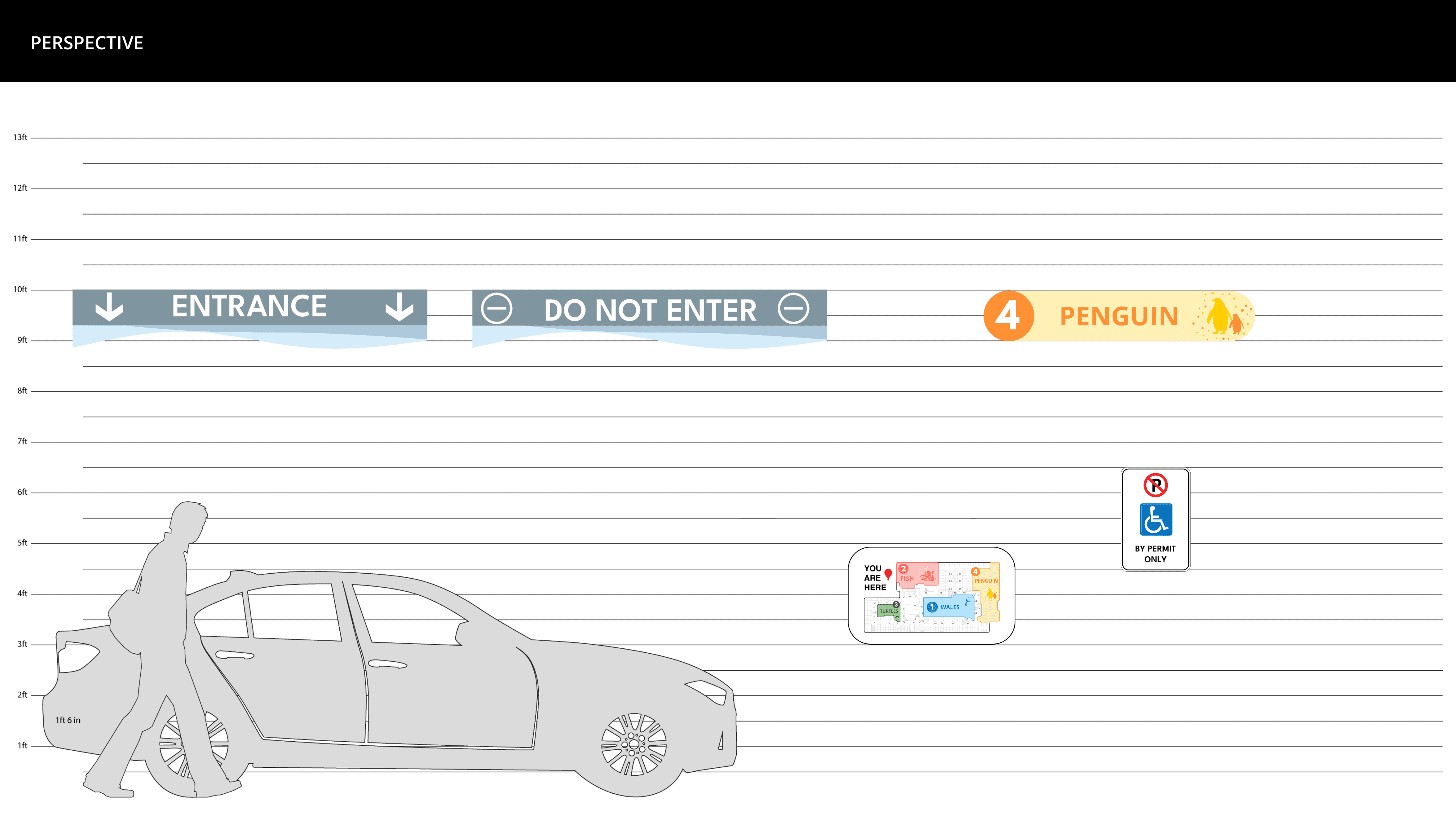
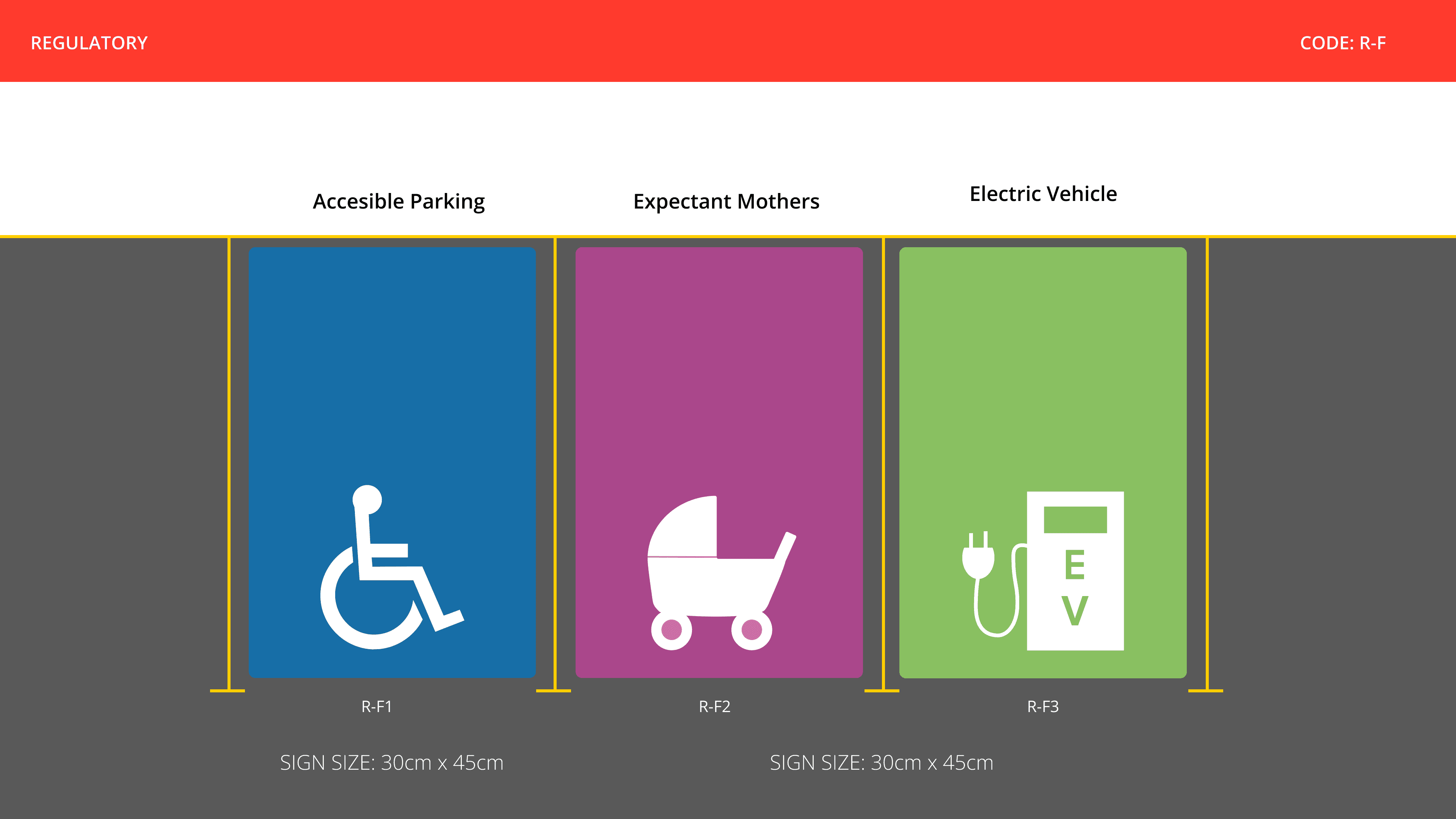
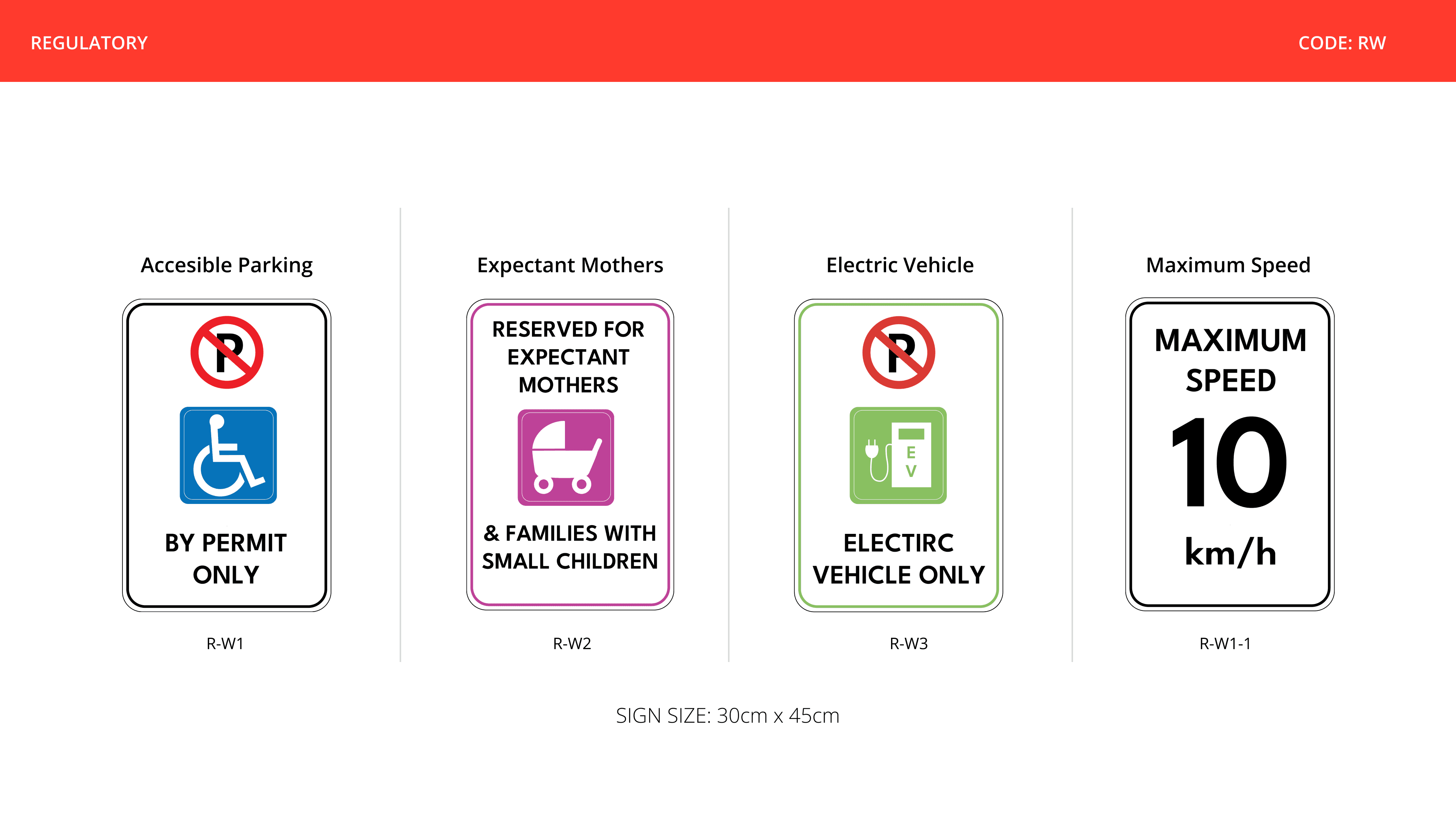
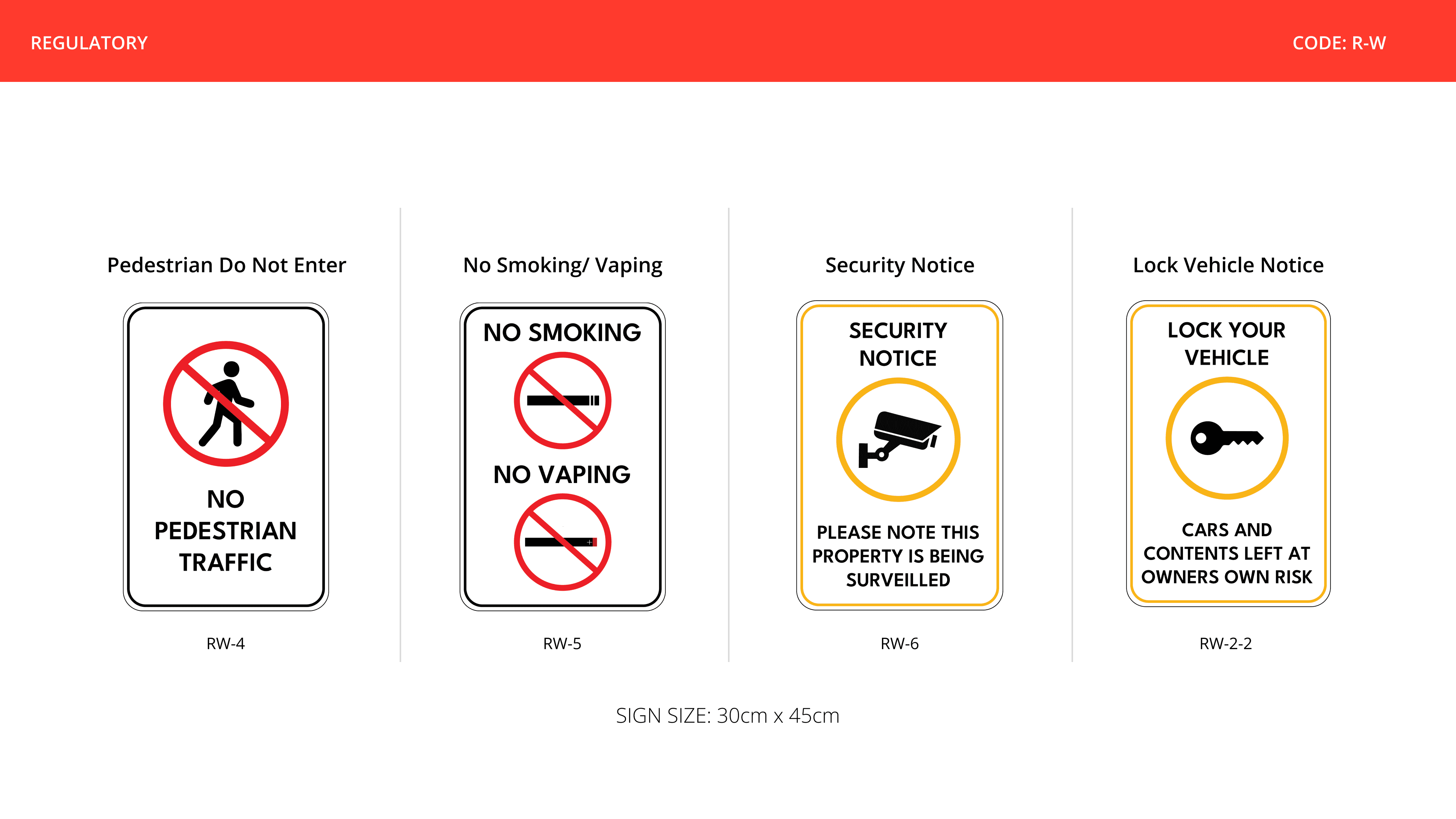
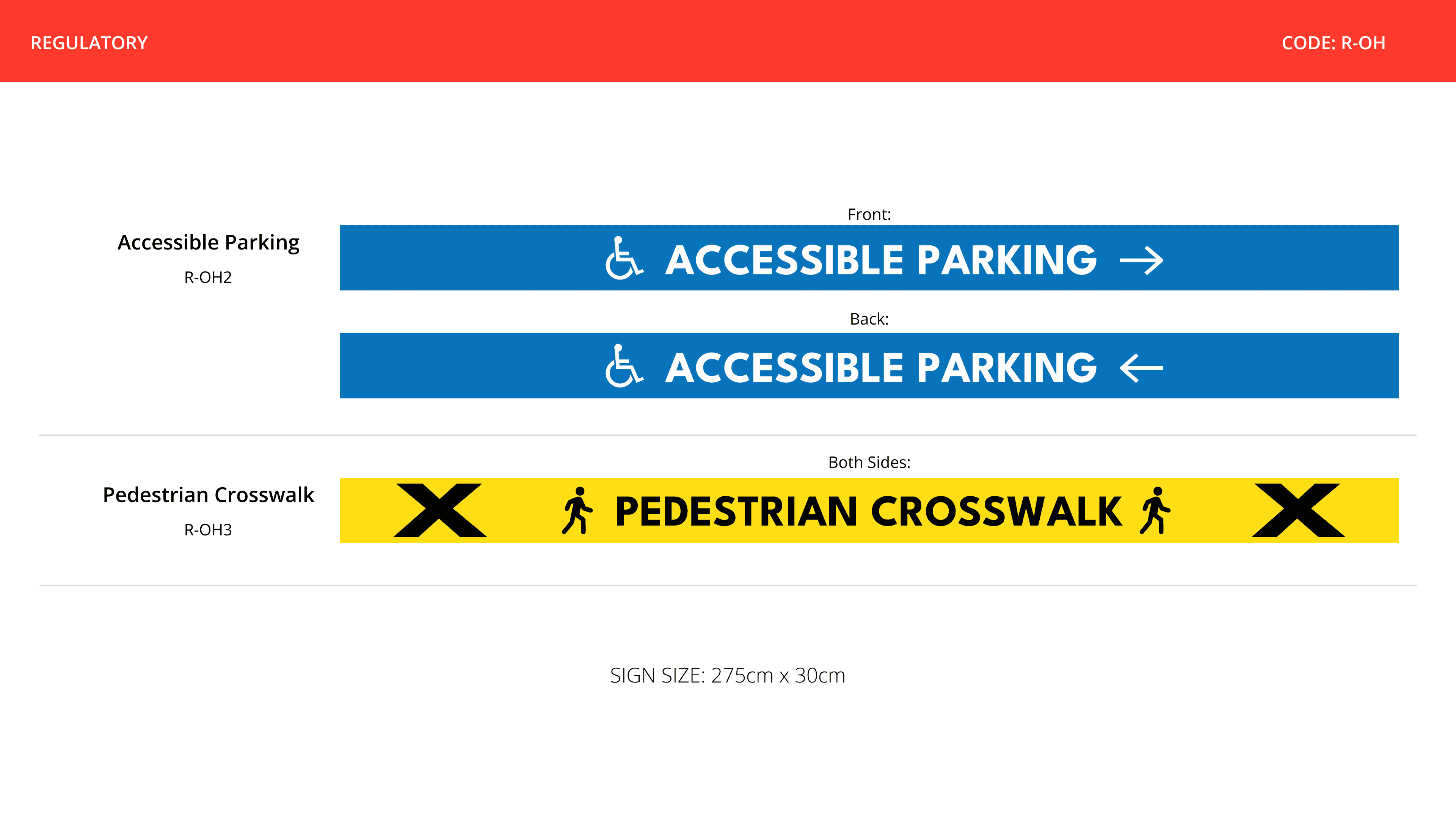
This phase focused on developing the visual system and signage categories, including directional, identification, orientation, and regulatory signs. Consistent typography, color coding, and iconography were used to support clarity and recognition.
The final system creates a more confident arrival experience by guiding visitors clearly from parking to destination. Thoughtful placement and visual consistency ensure intuitive navigation throughout the space.
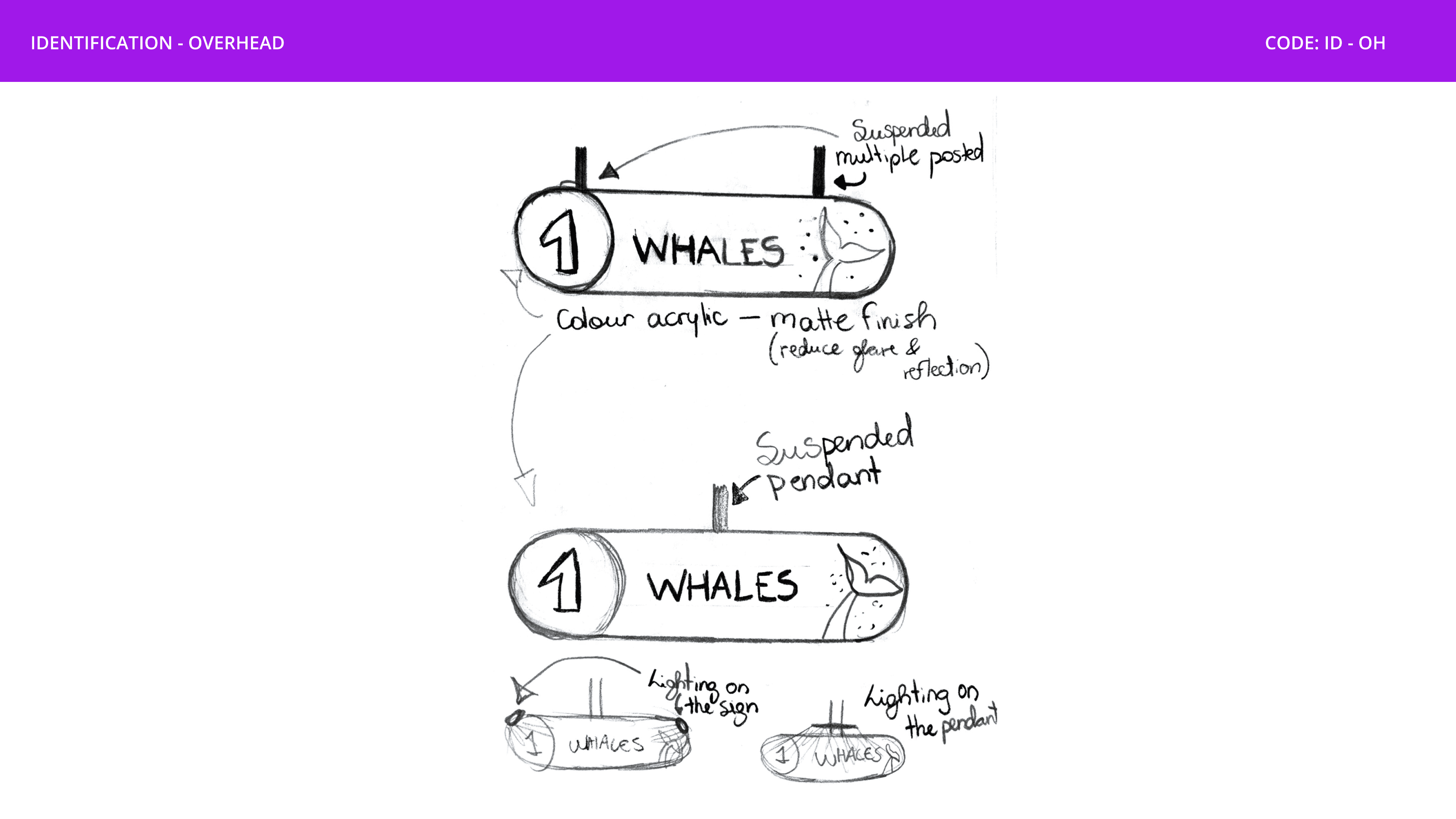
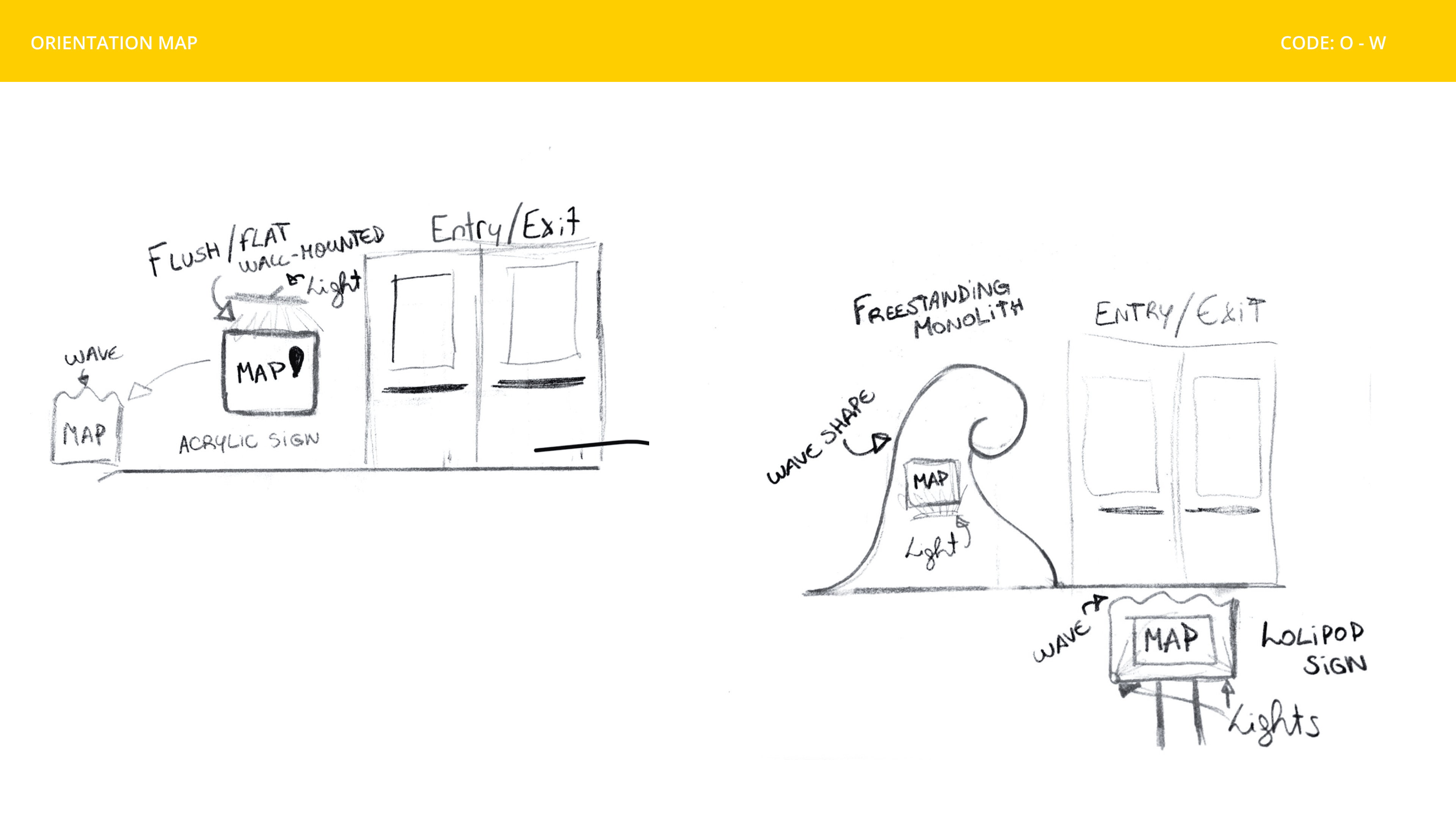
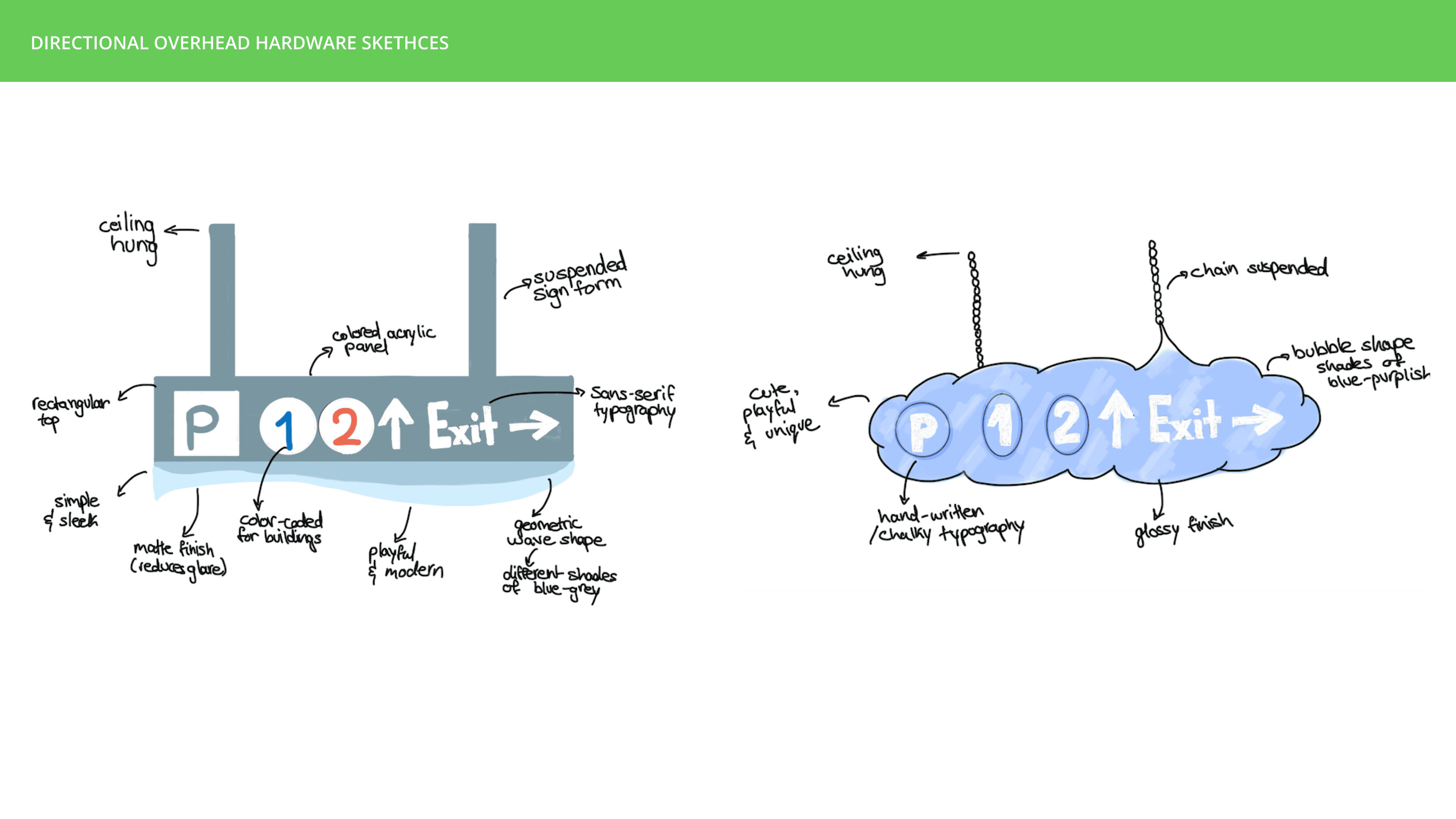
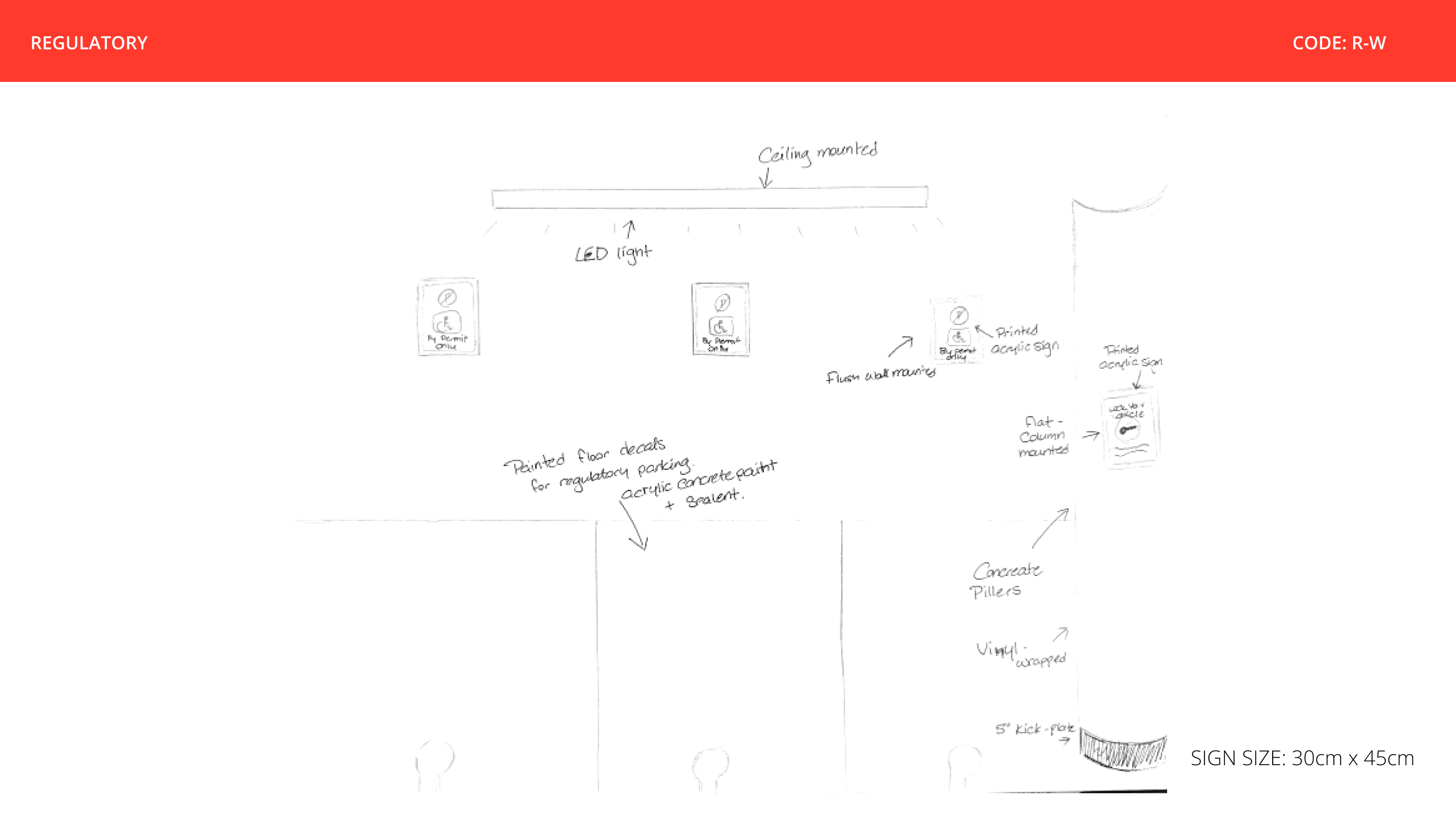
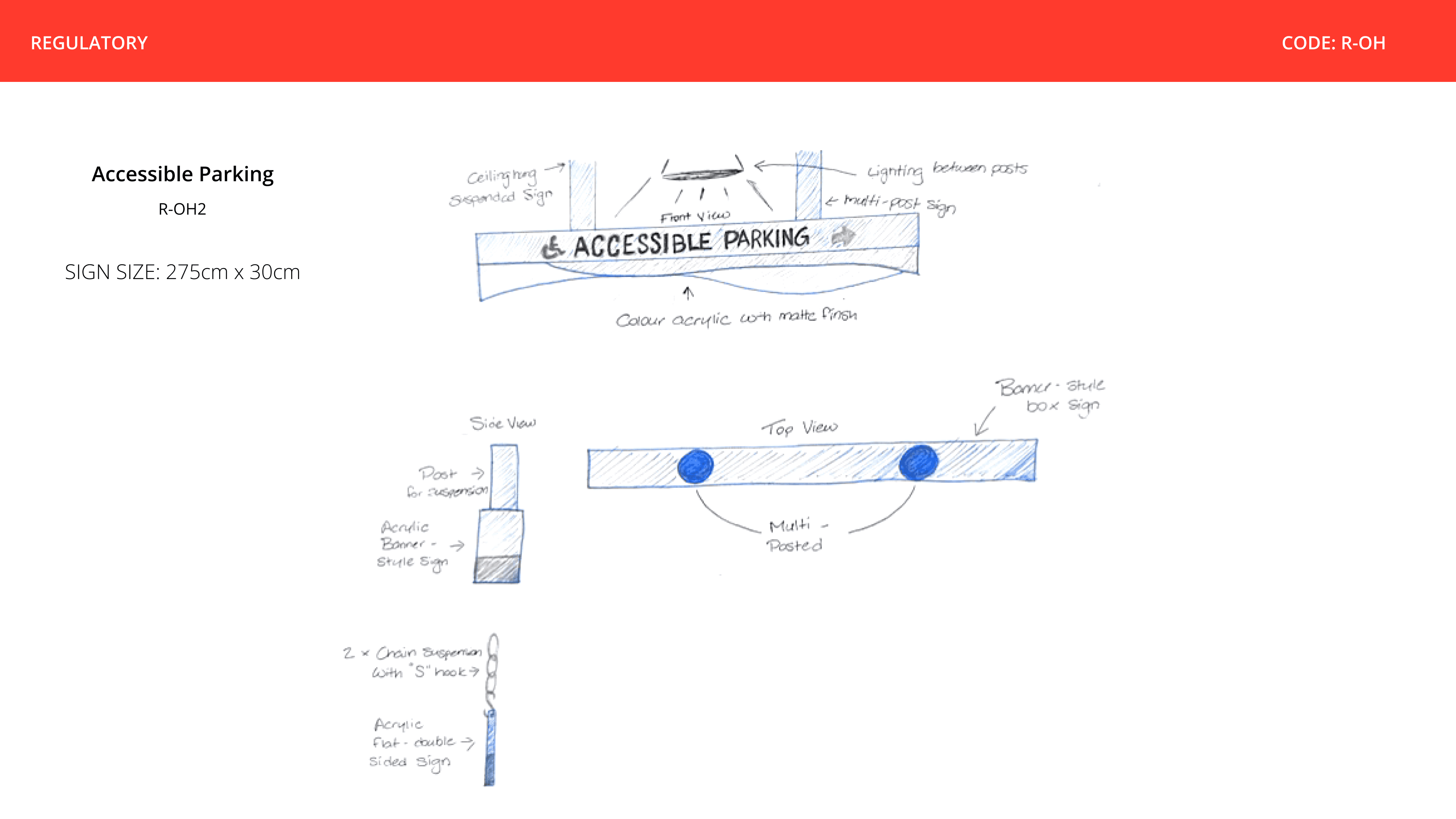
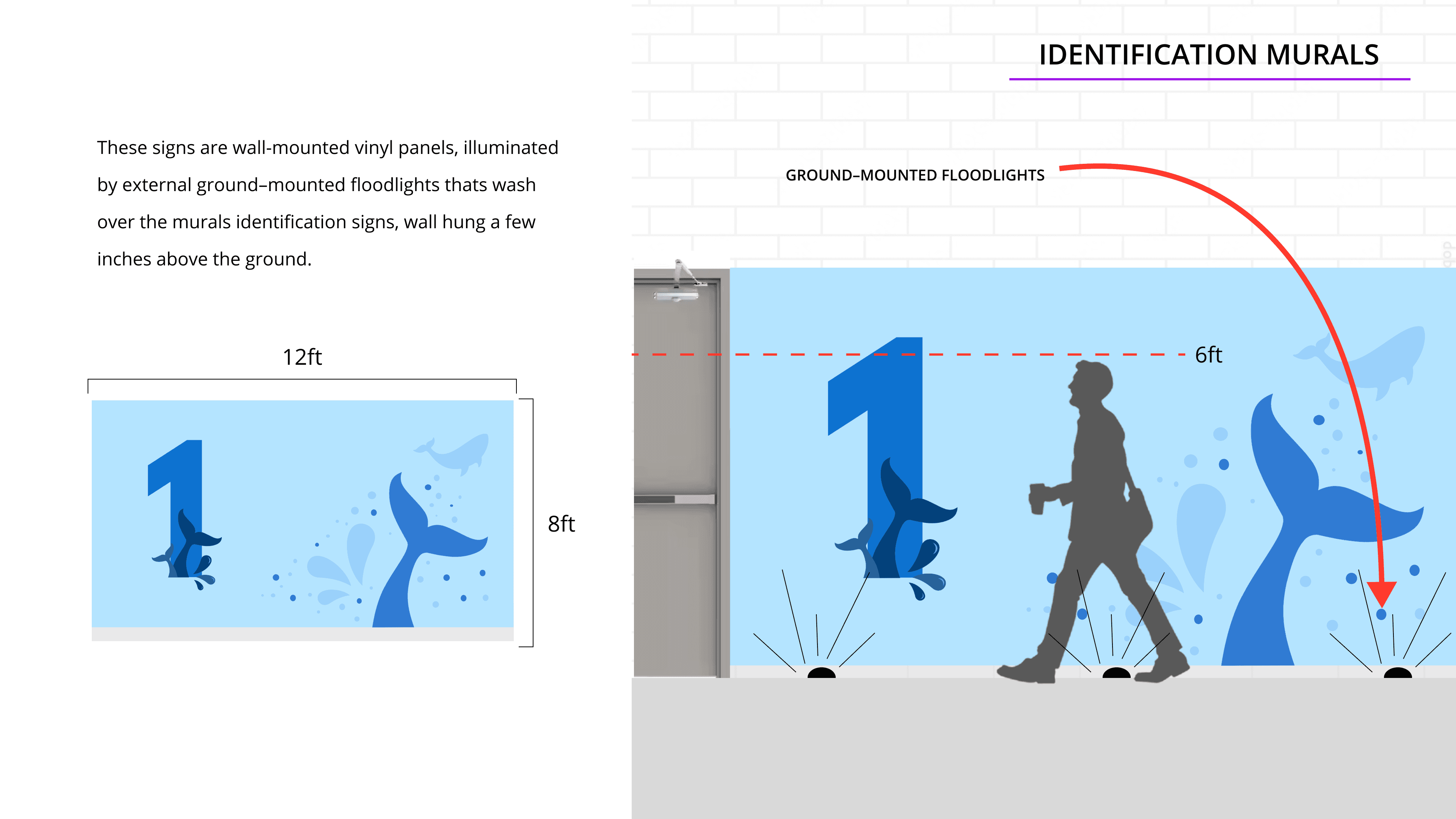
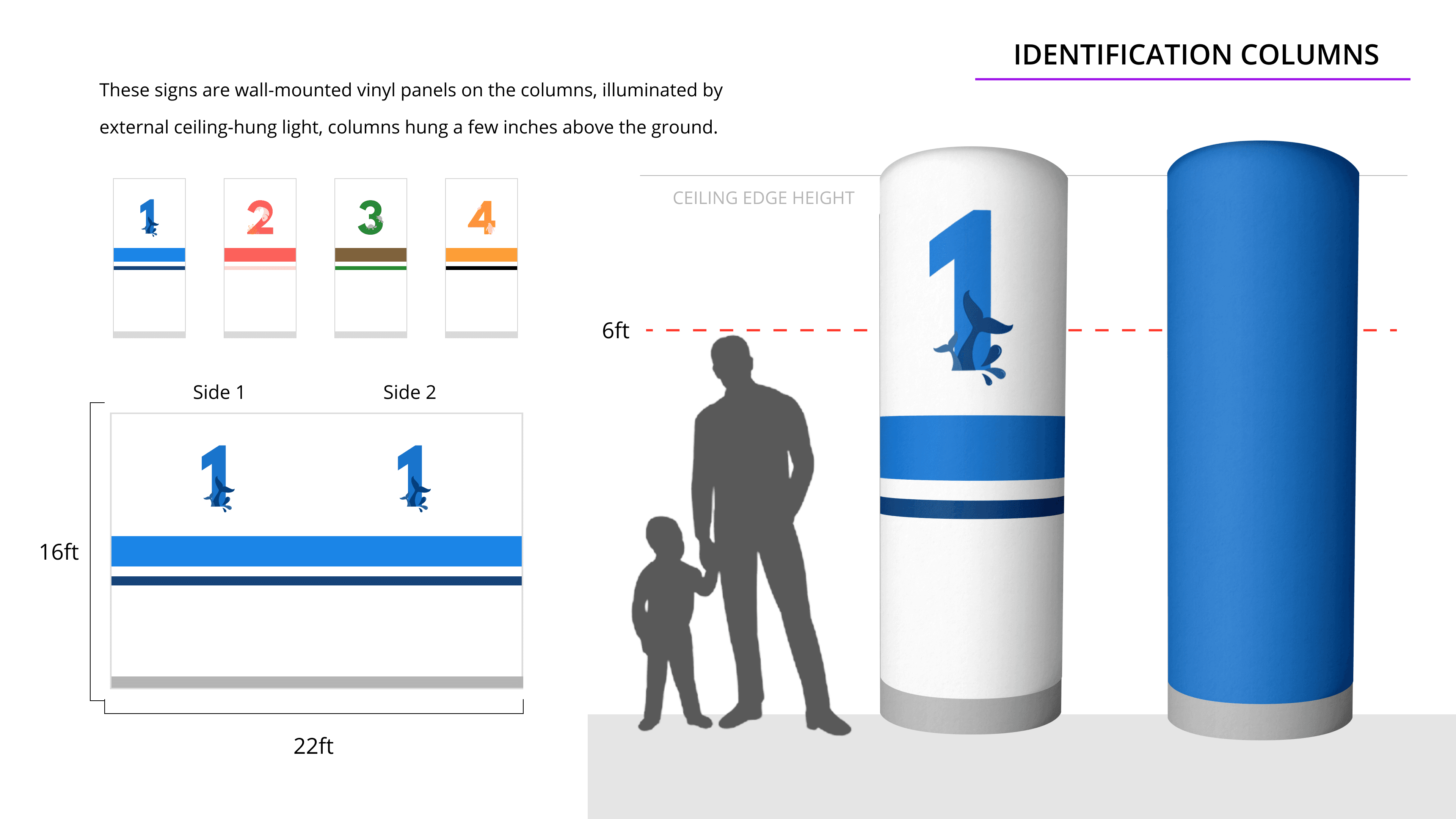
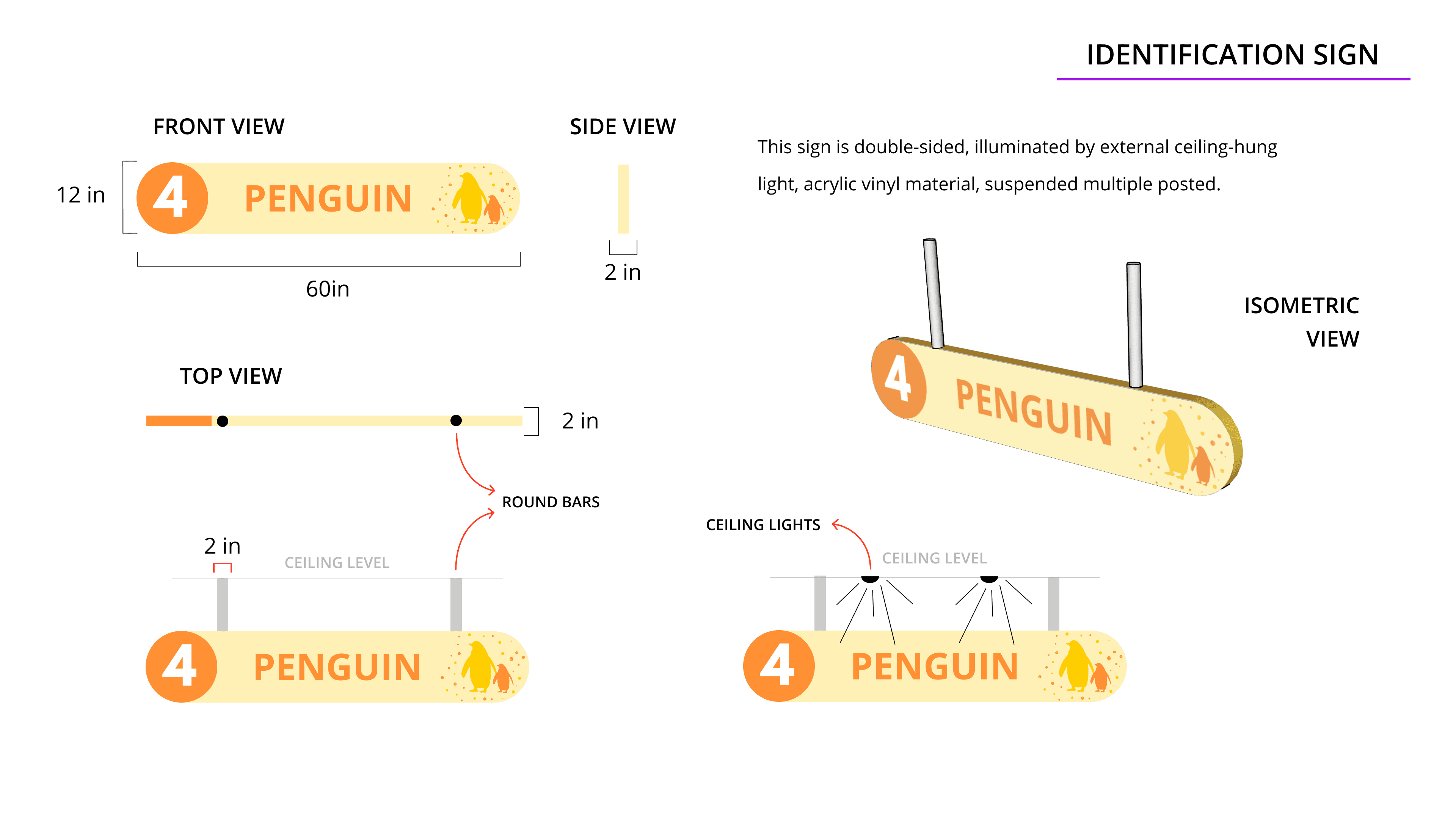
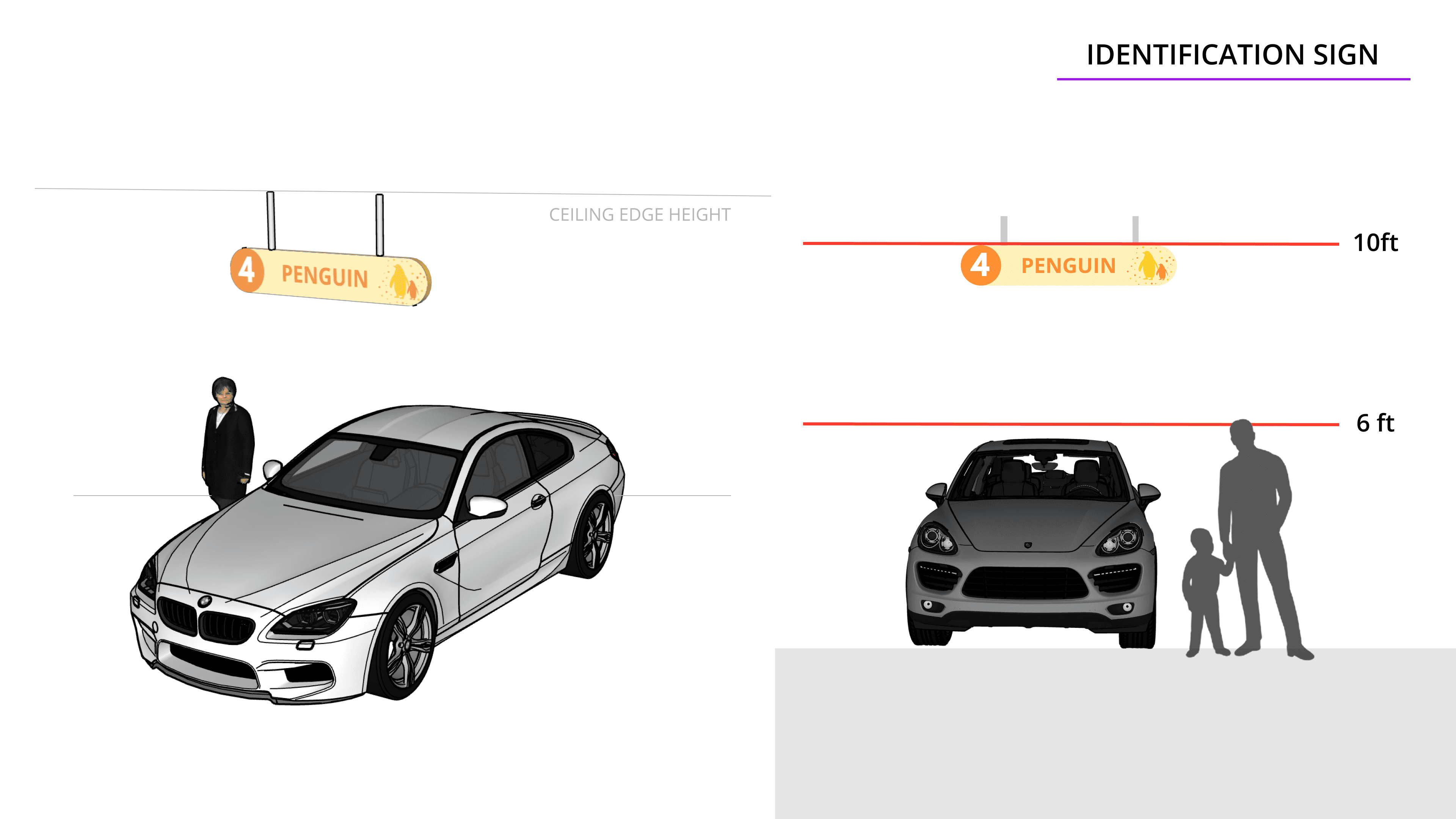
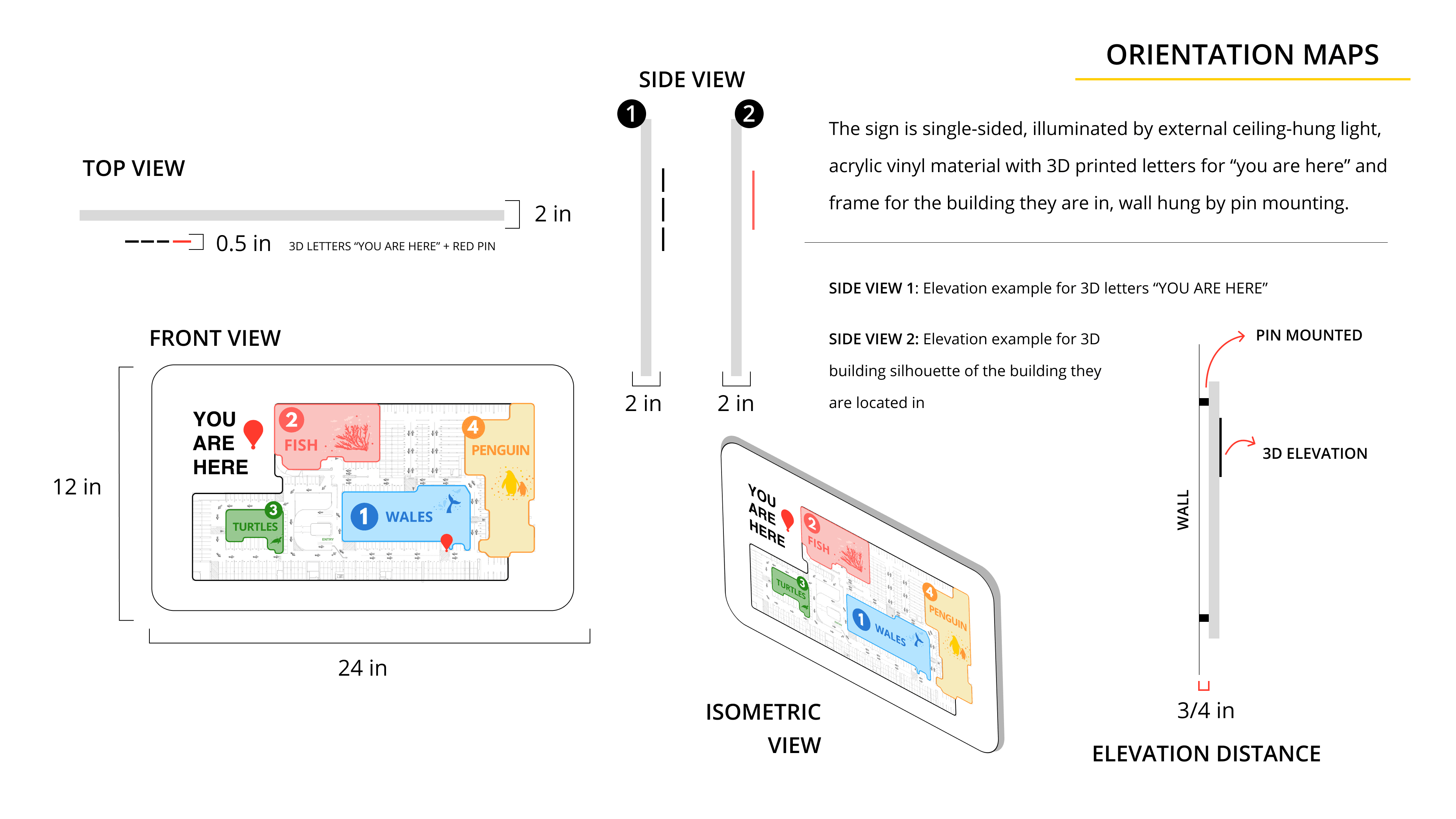
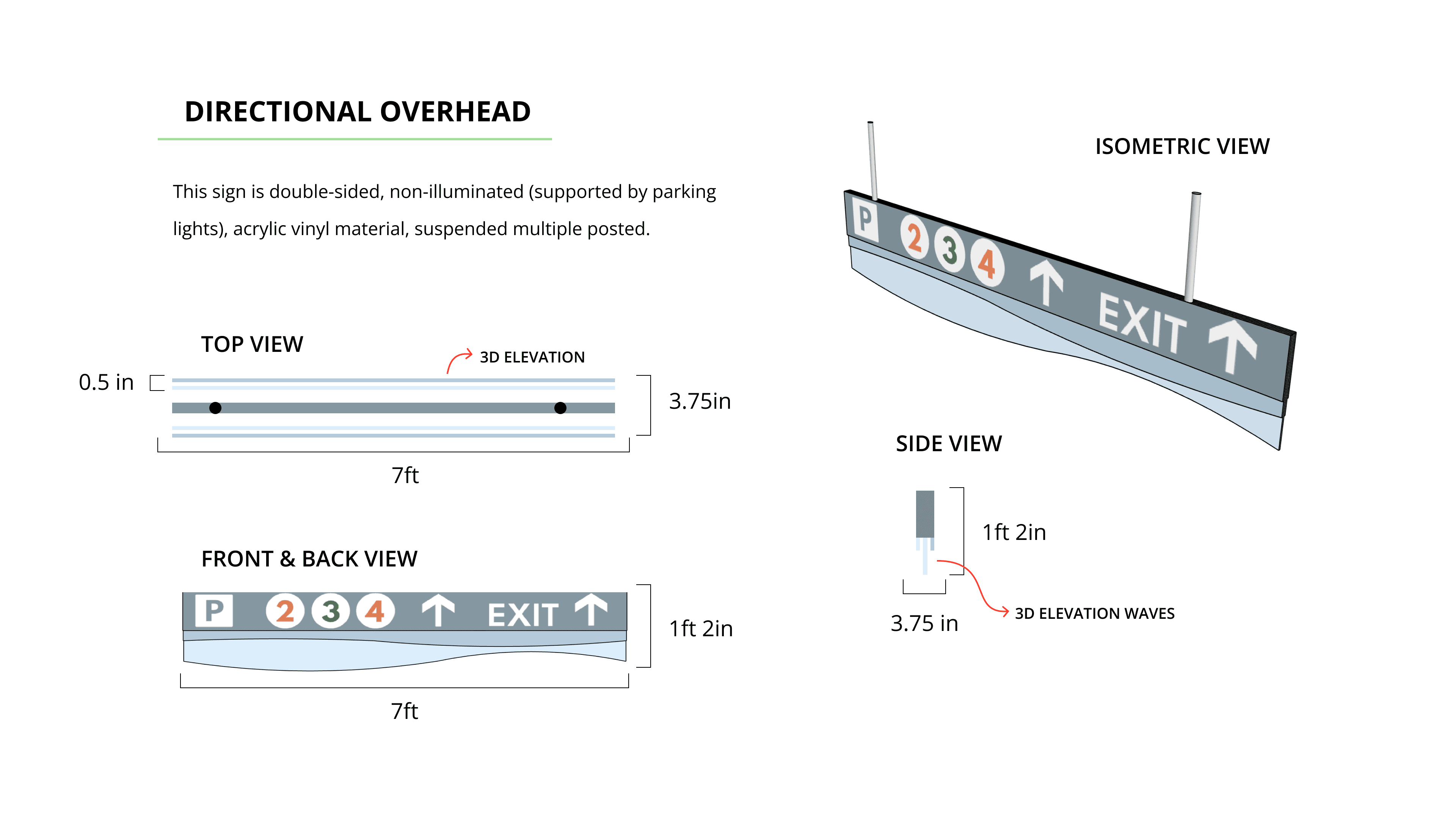
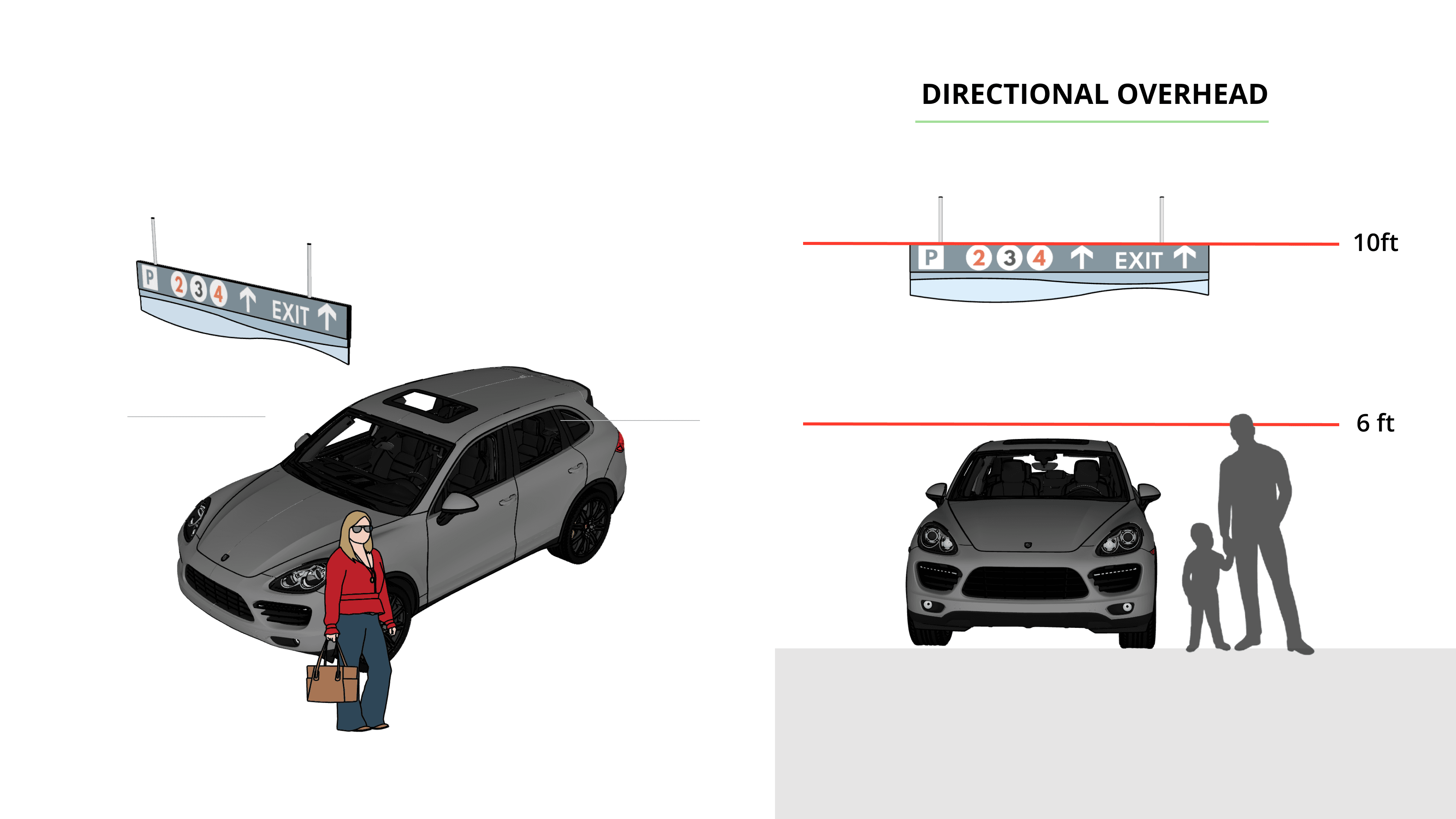
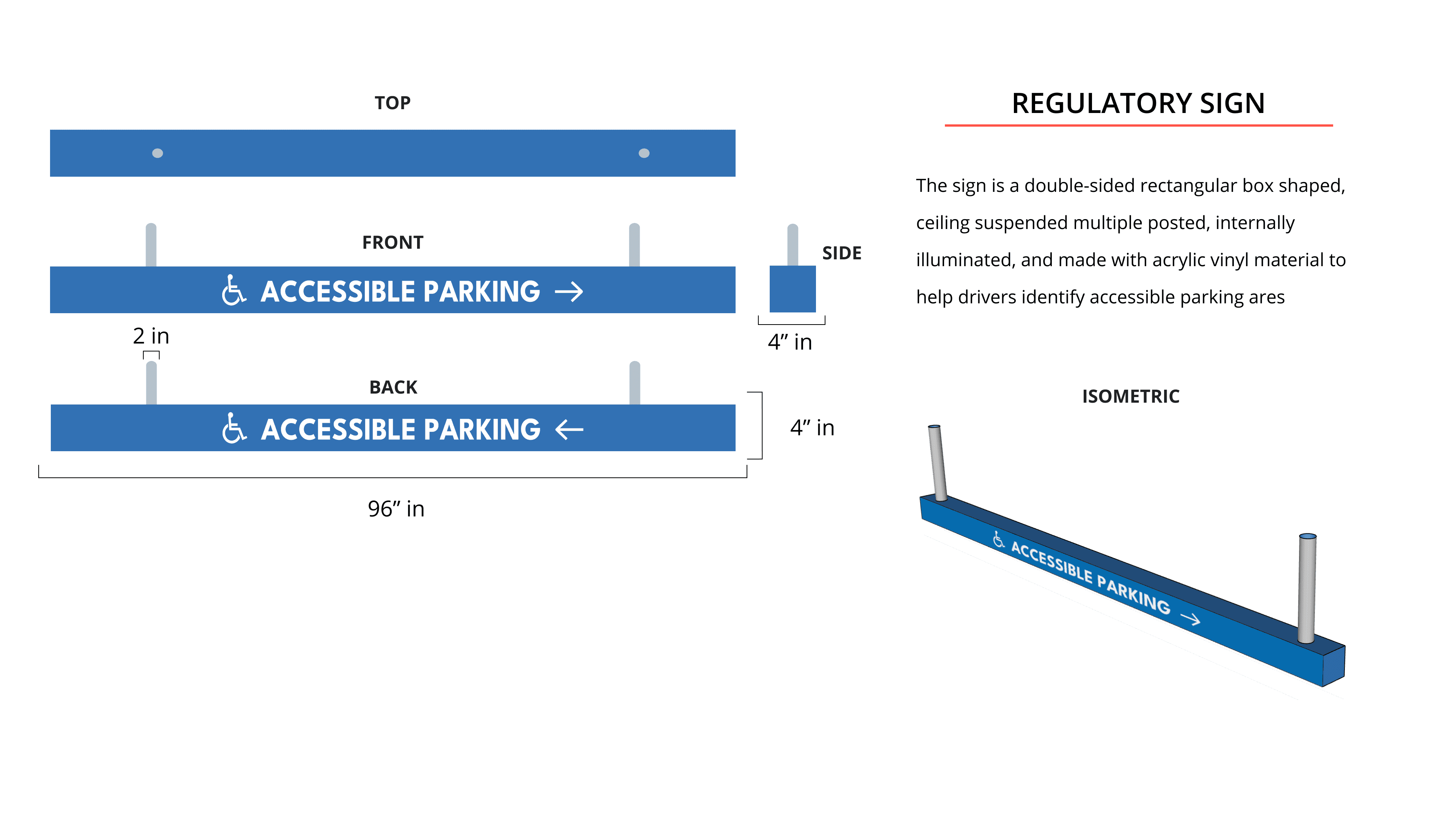
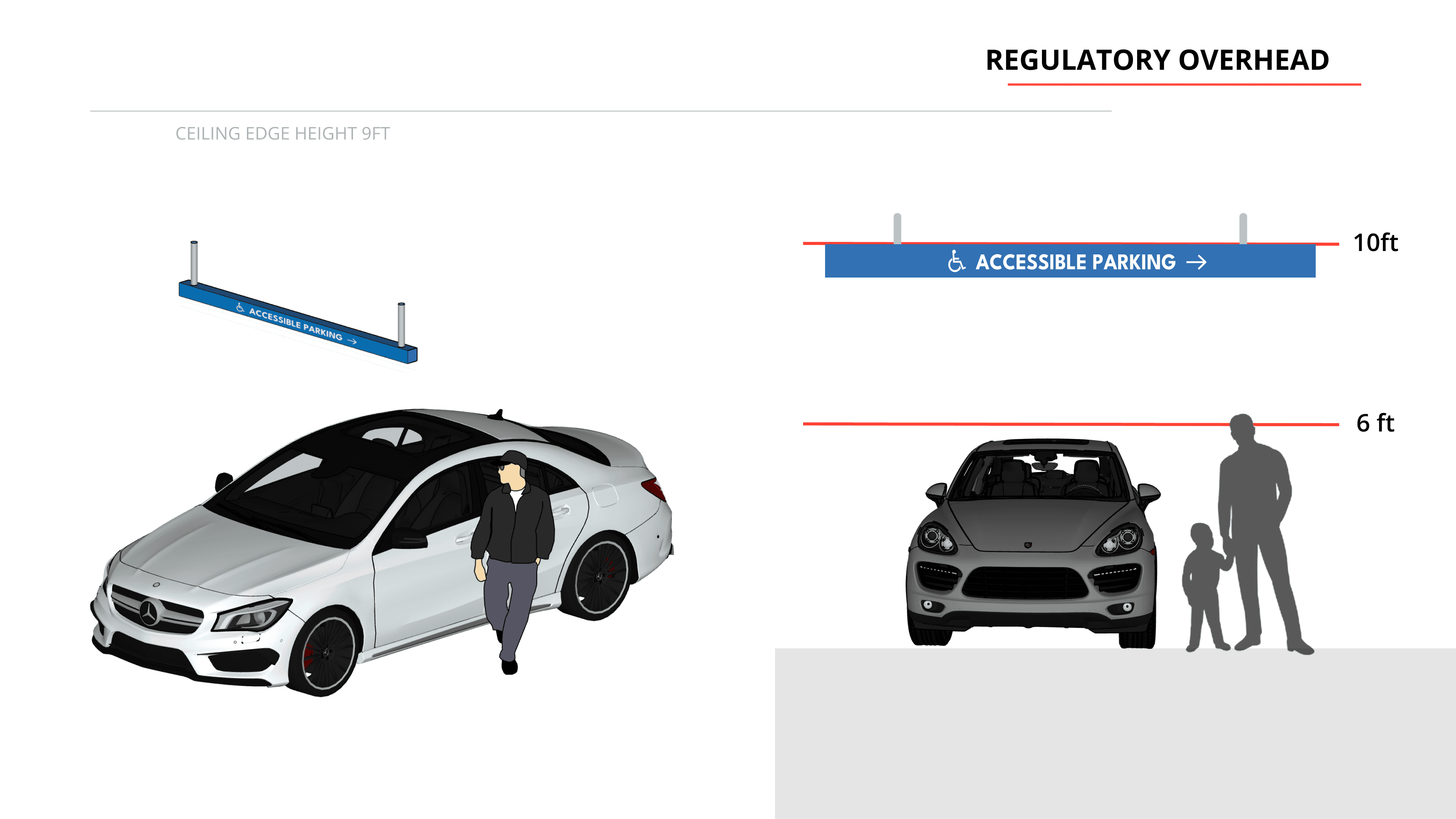
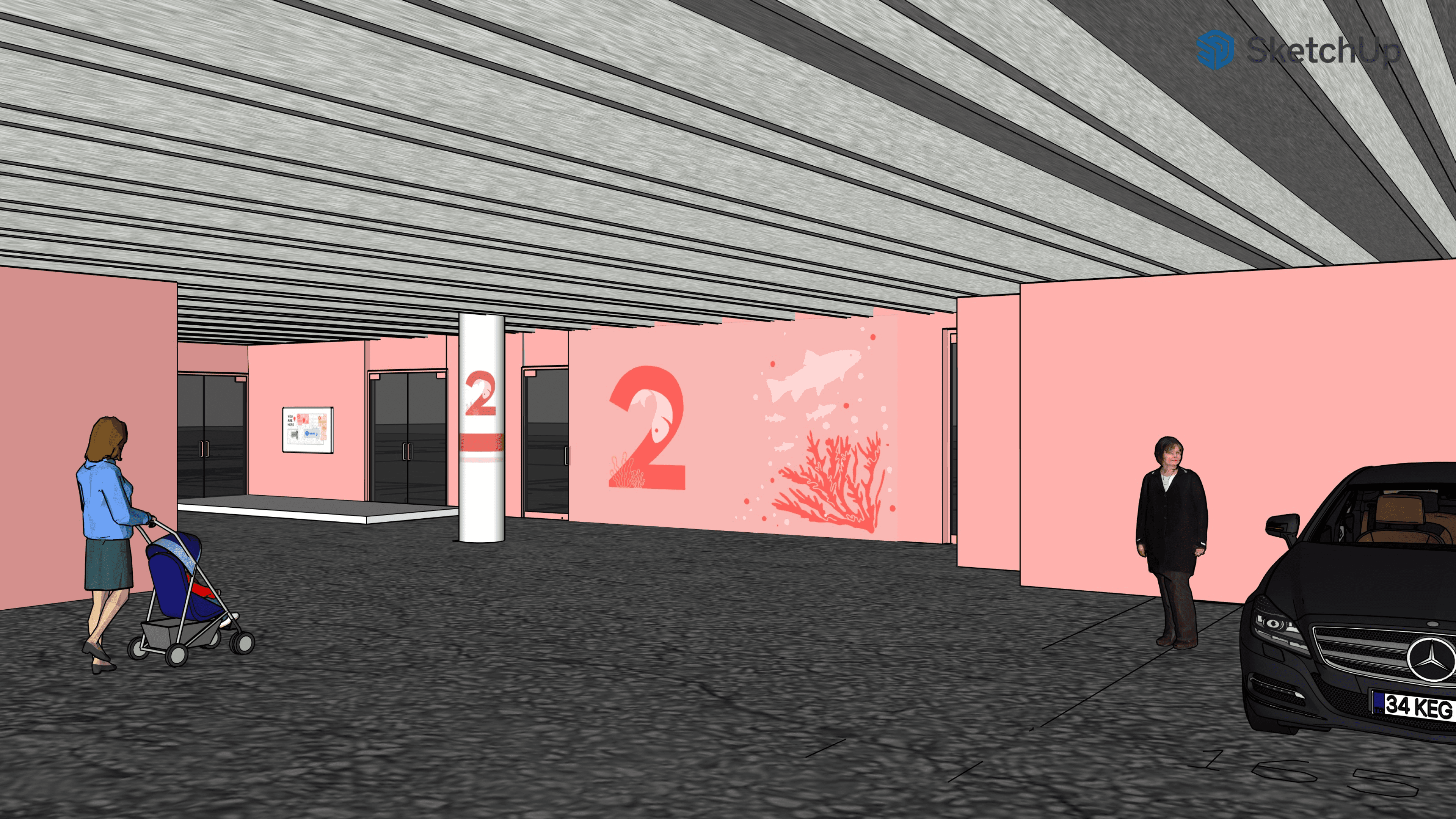
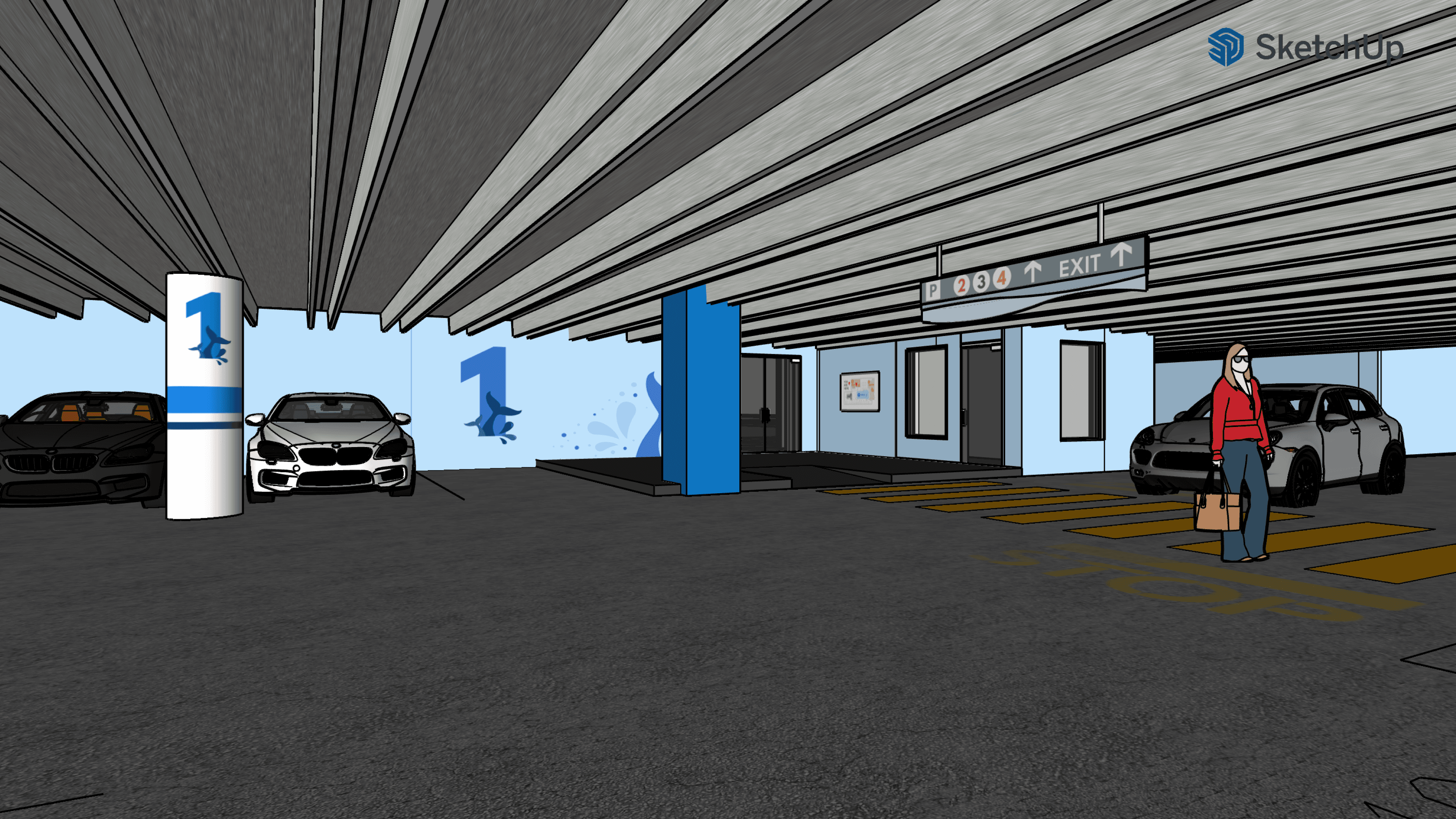
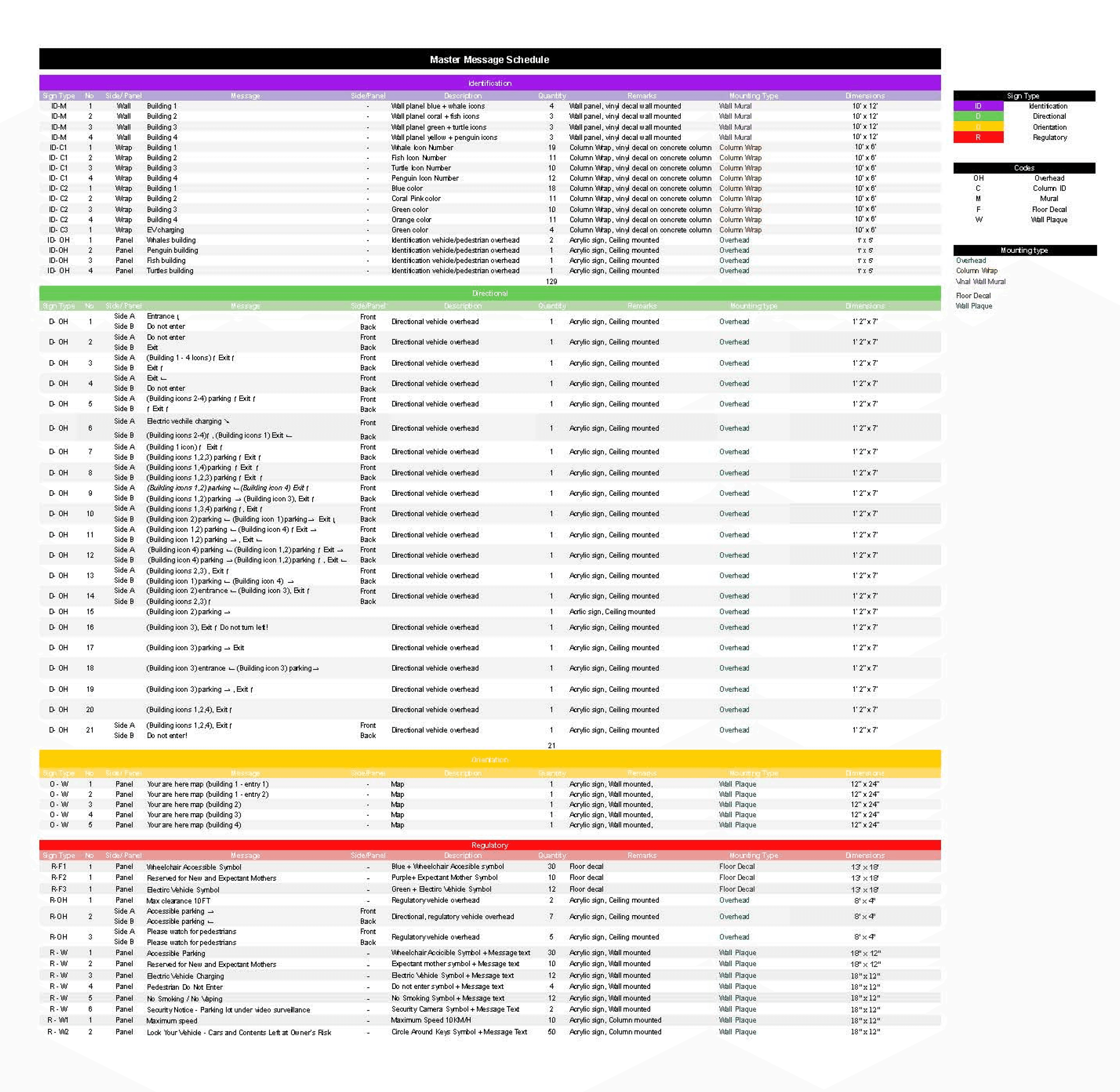
This schedule outlines all signage used within the wayfinding system, including directional, identification, orientation, and regulatory signs. It serves as a comprehensive reference that ensures consistency in messaging, placement, and visual hierarchy across the entire parking structure.
Credits
a collaborative project by:
Celina Soudani, Emma Smith, Luisa El Hawat
Conceptual academic project developed in 2024. Ripley's Aquarium referenced for educational purposes only.
Master message schedule