
REFLEKT for Aritzia
Conceptual UX/UI · Retail Experience Design · AI-driven Interaction · 2025 · Retail industries
Reflekt is a conceptual retail experience that reimagines in-store shopping through emotional intelligence and personalization. It introduces an AI-powered identity mirror that analyzes mood, color, and intention to help users discover a style that reflects who they are, not just what they wear.
Problem
Physical retail has not evolved with personalization.
The spaces remain largely static and transactional, offering the same experience to every shopper. While online platforms leverage personalization algorithms, in-store environments lack emotional connection and identity-driven interaction.
Modern consumers seek self-expression, affirmation, and personalization. Therefore, the gap between digital personalization and physical personalization in retail is present.
Solution
A mirror that sees more than your reflection.
An AI solution which transforms retail from a place of product selection into a space of identity discovery, bridging digital personalization with physical experience.
My Role
Position:
Experience designer
Duration:
4 months
Responsibilities:
User research & insight synthesis, experience concept development, interface & interaction design, prototyping, and API integration.
Problem Summary
In-store shopping lacks personalization
Mood + color guidance improves confidence
Solution enhances decision-making
Target audience: Aritzia shoppers
Research highlights
Target Audience
Fashion-conscious shoppers
Experience-driven consumers
Individuals who value self-expression and identity
Key findings
Shoppers use fashion as a form of self-expression
Retail spaces feel visually appealing but emotionally disconnected
Personalization increases engagement and dwell time
We identified fashion-conscious young adults (20–35) as the primary audience, individuals who use fashion as a form of self-expression and emotional communication. While they are drawn to premium retail environments, many feel overwhelmed by choice and disconnected from traditional in-store shopping experiences.
Research revealed a strong desire for personalization that begins with mood and intention rather than products alone. These users want retail experiences that feel intuitive, emotionally aware, and reflective of their identity, highlighting an opportunity to design interactions that prioritize how people feel before what they buy.
+40%
+50%
+40%
Revenue growth
from personalization
-McKinsey & Company
Customers are disappointed
by the lack of support &
personalization
-Accenture
Increase in dwell time
from experiential retail
-Deloitte Digital
These figures highlight the growing importance of personalization and experiential design in modern retail. Industry research shows that emotionally engaging, personalized experiences increase customer satisfaction, time spent in-store, and overall brand value. This reinforces the opportunity for solutions like Reflekt to bridge identity, emotion, and interaction within physical retail environments.
Conceptualization
A mirror that sees more than your reflection.
Reflekt is an AI-driven smart mirror that reimagines in-store shopping through emotion and identity.
The experience begins with mood-based prompts rather than products, allowing customers to express how they feel before discovering styles that resonate with them. By combining mood selection, contextual questions, and visual analysis, Reflekt creates a personalized and intuitive retail experience rooted in self-expression.
Idea development
The Reflekt experience was designed as a simple, intuitive flow that follows how users naturally explore retail spaces. By guiding users through attraction, engagement, discovery, and connection, the system prioritizes emotion and identity before product, creating a seamless and human-centered interaction.
Key features
An intelligent mirror that listens, adapts, and reflects.
Context-Aware Dialogue
Reflekt begins with gentle, conversational prompts—such as shopping intention or occasion—to understand the user’s context. Each response shapes a personalized experience, allowing the interaction to feel natural and human rather than transactional.
Aesthetic Intelligence Engine
The system analyzes mood, tone, and visual cues to build an individual aesthetic profile. Instead of focusing solely on products, Reflekt interprets identity and emotional intent to guide the experience.
Mood Recognition & Emotional Adaptation
Reflekt responds to both explicit input and subtle emotional signals. Interface visuals, tone, and lighting adapt in real time to reflect how the user feels, creating a more empathetic interaction.
Wireframes
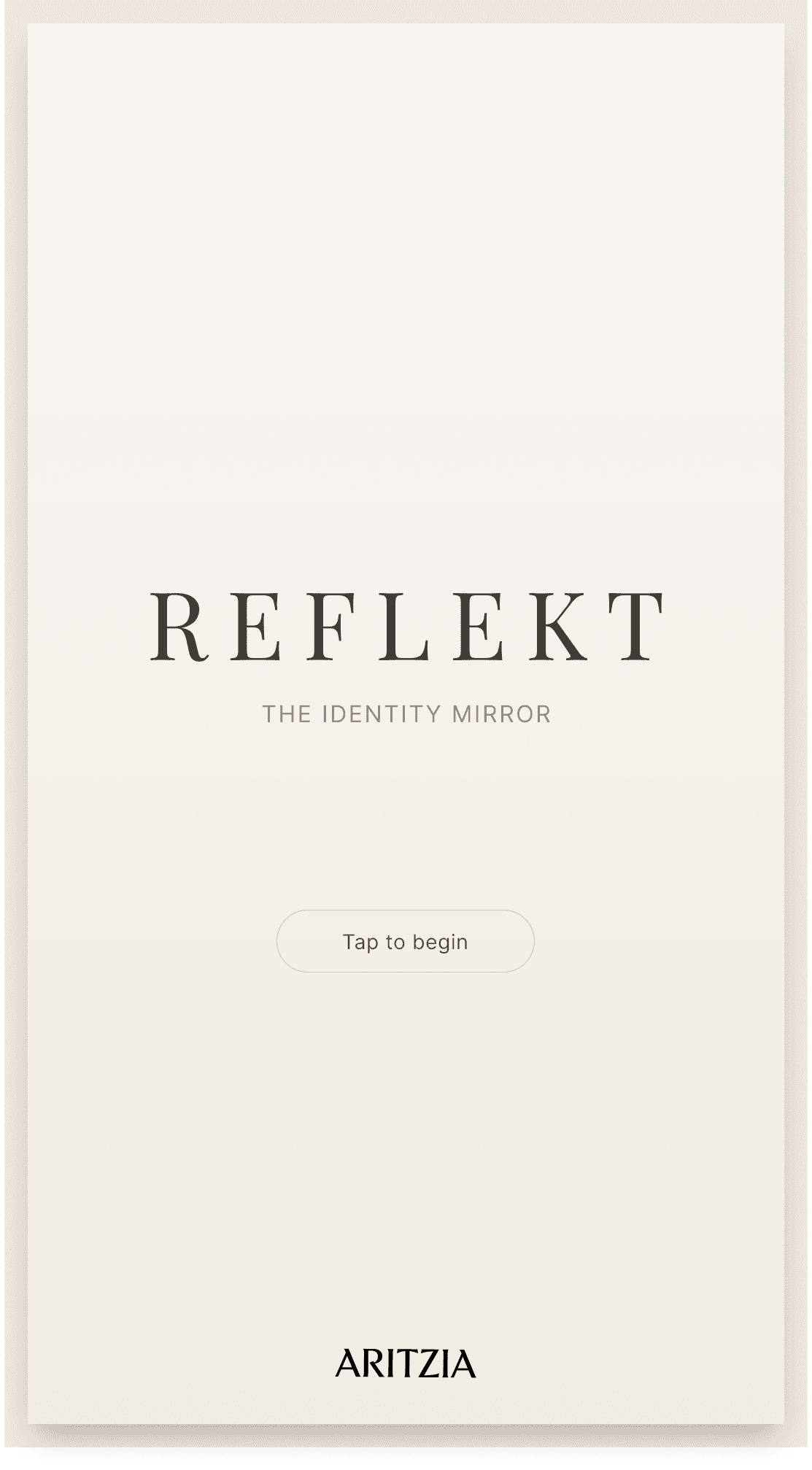
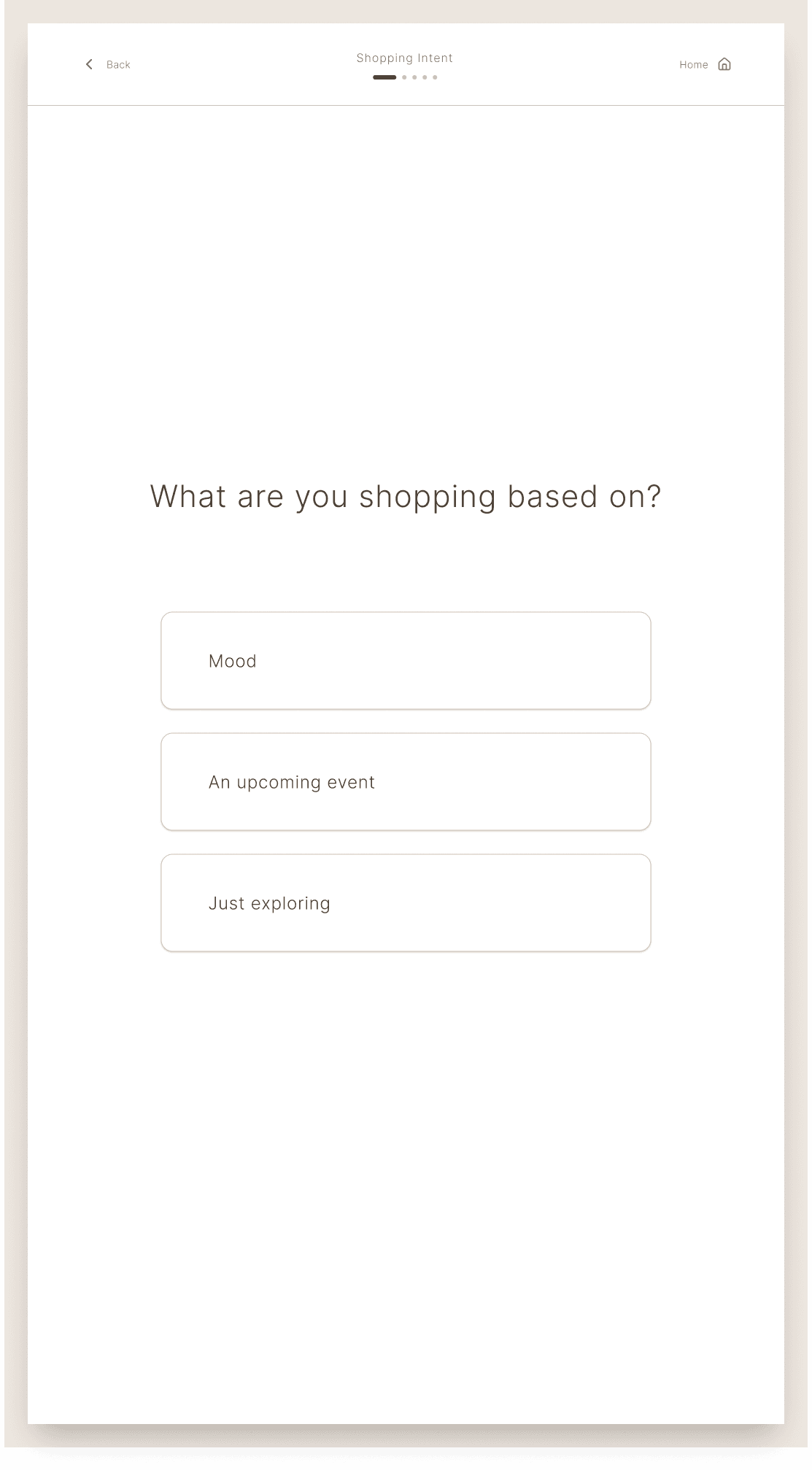
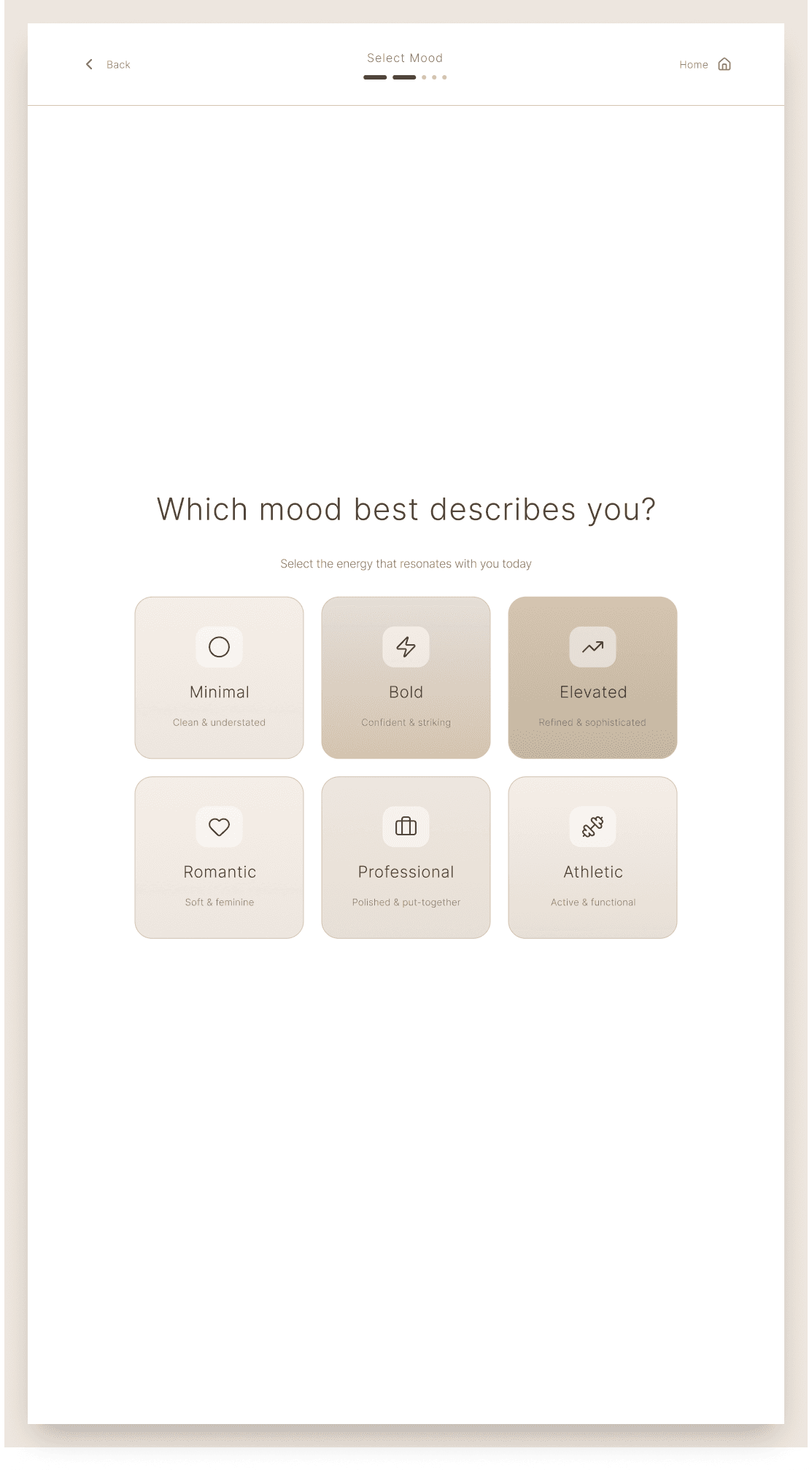
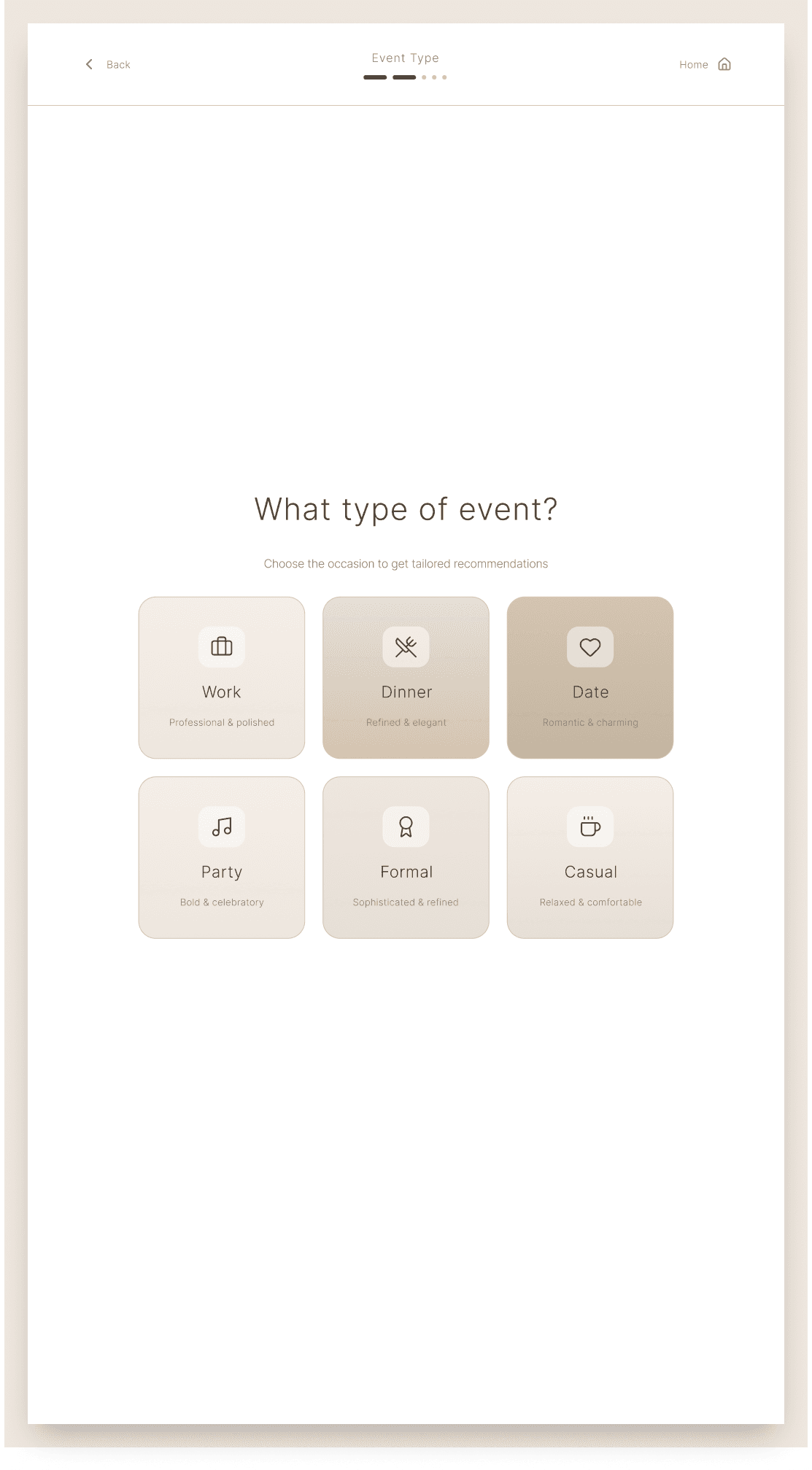
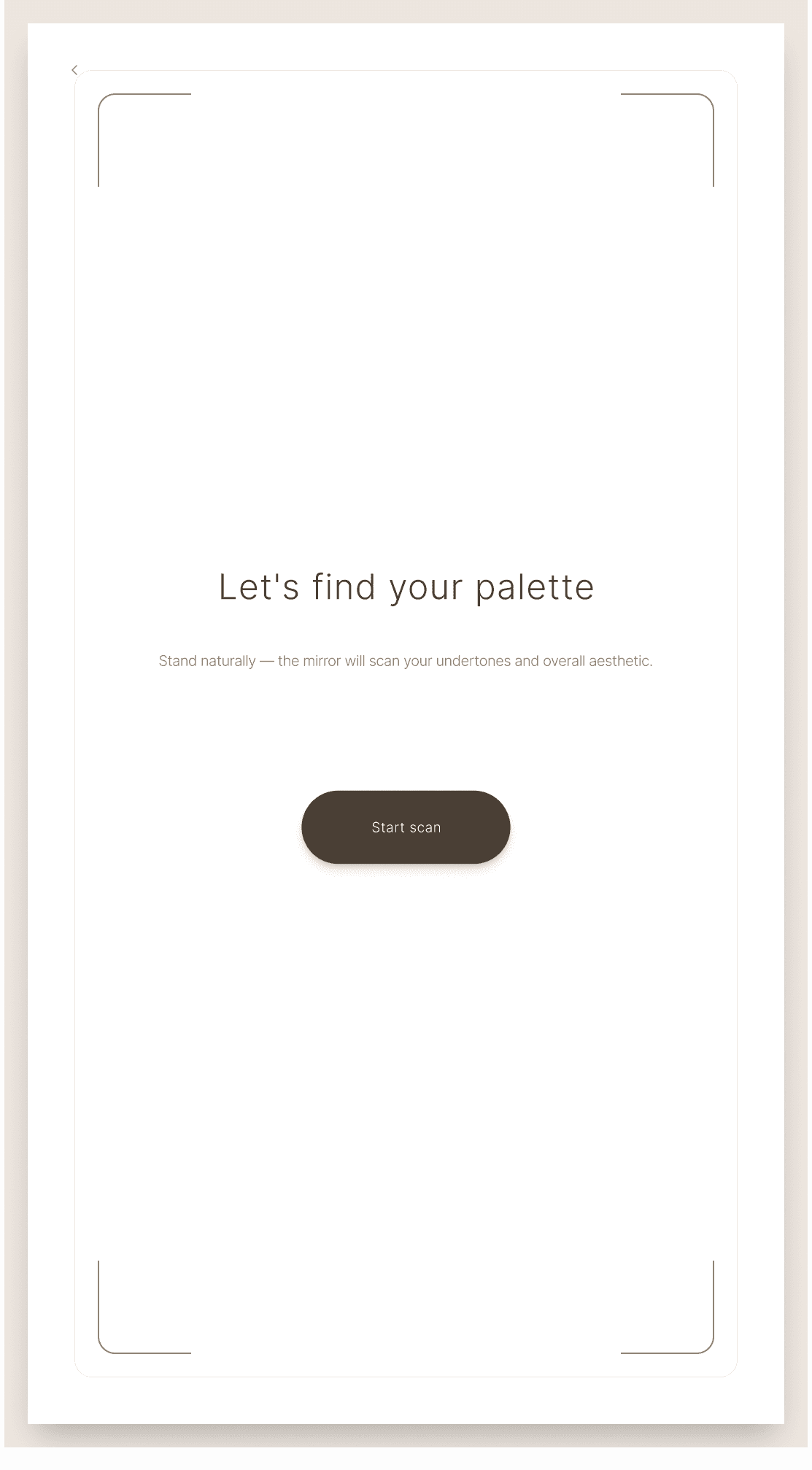
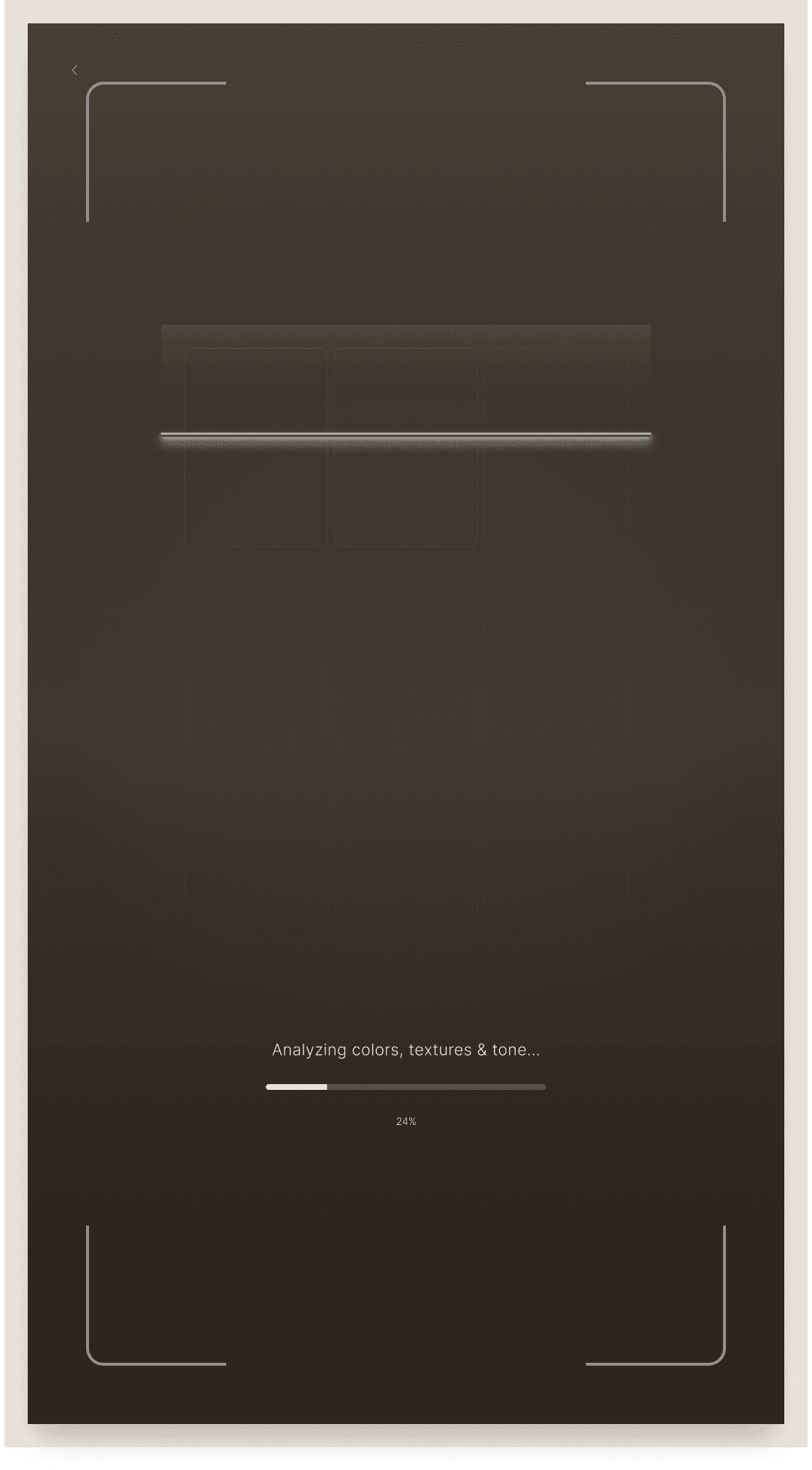
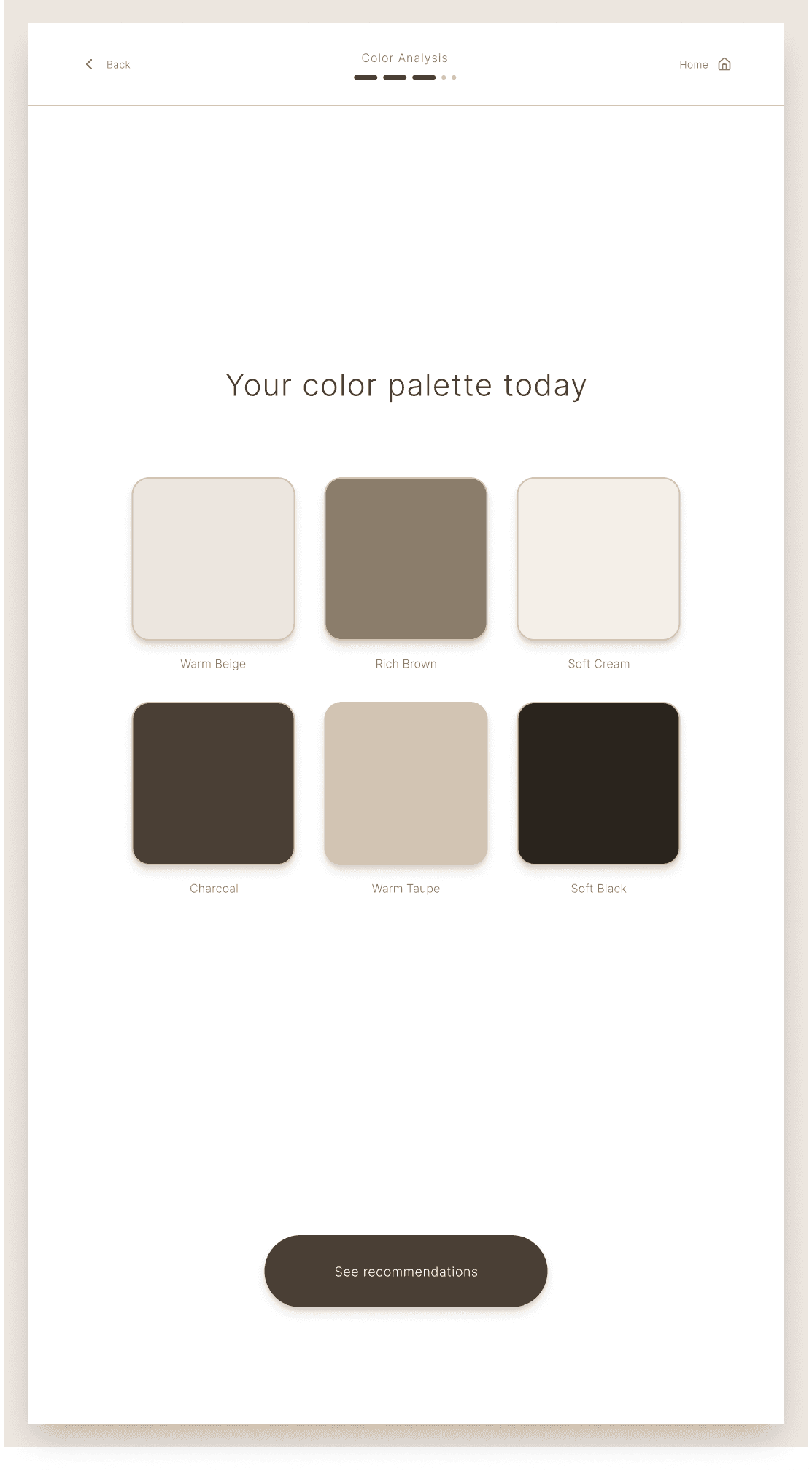
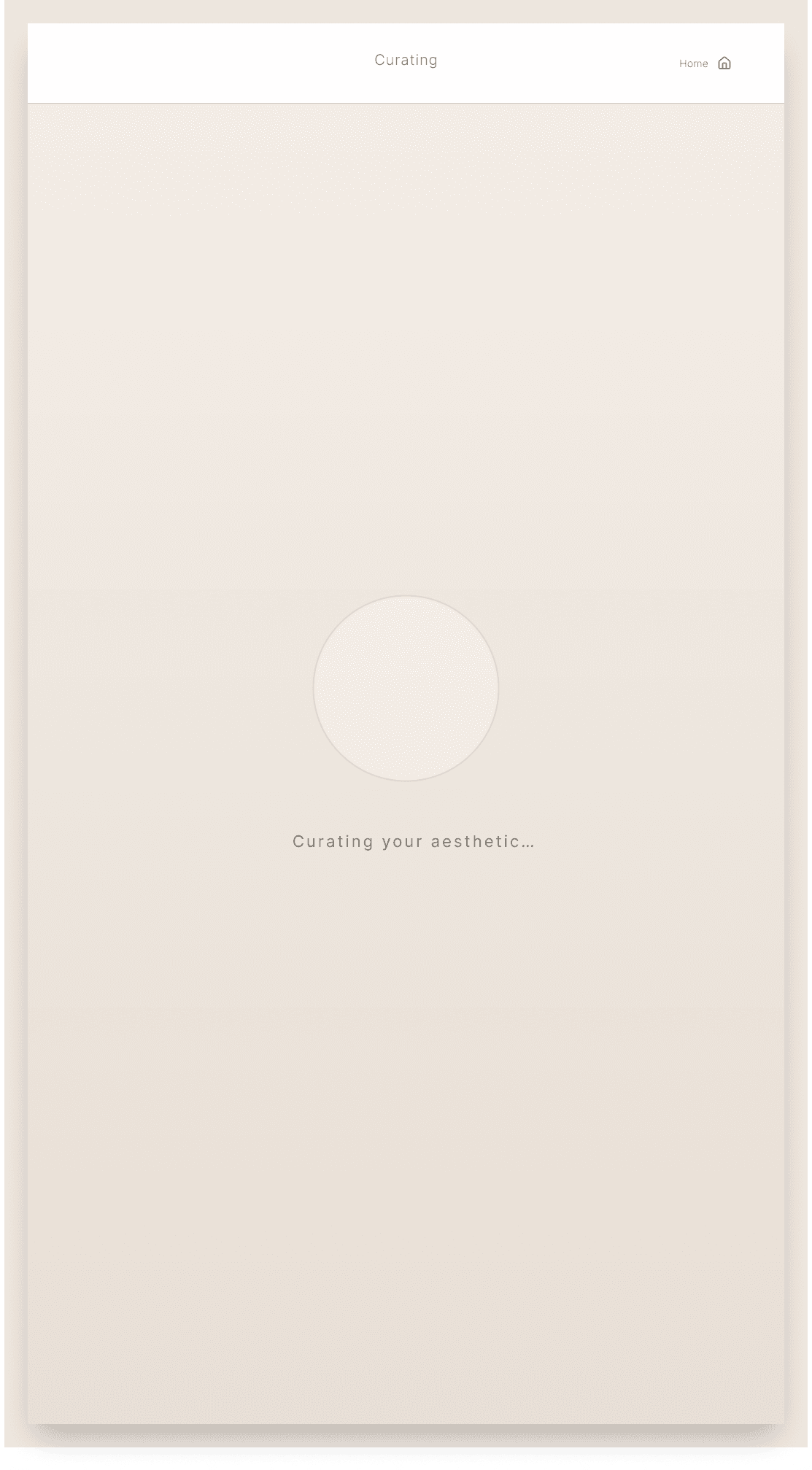
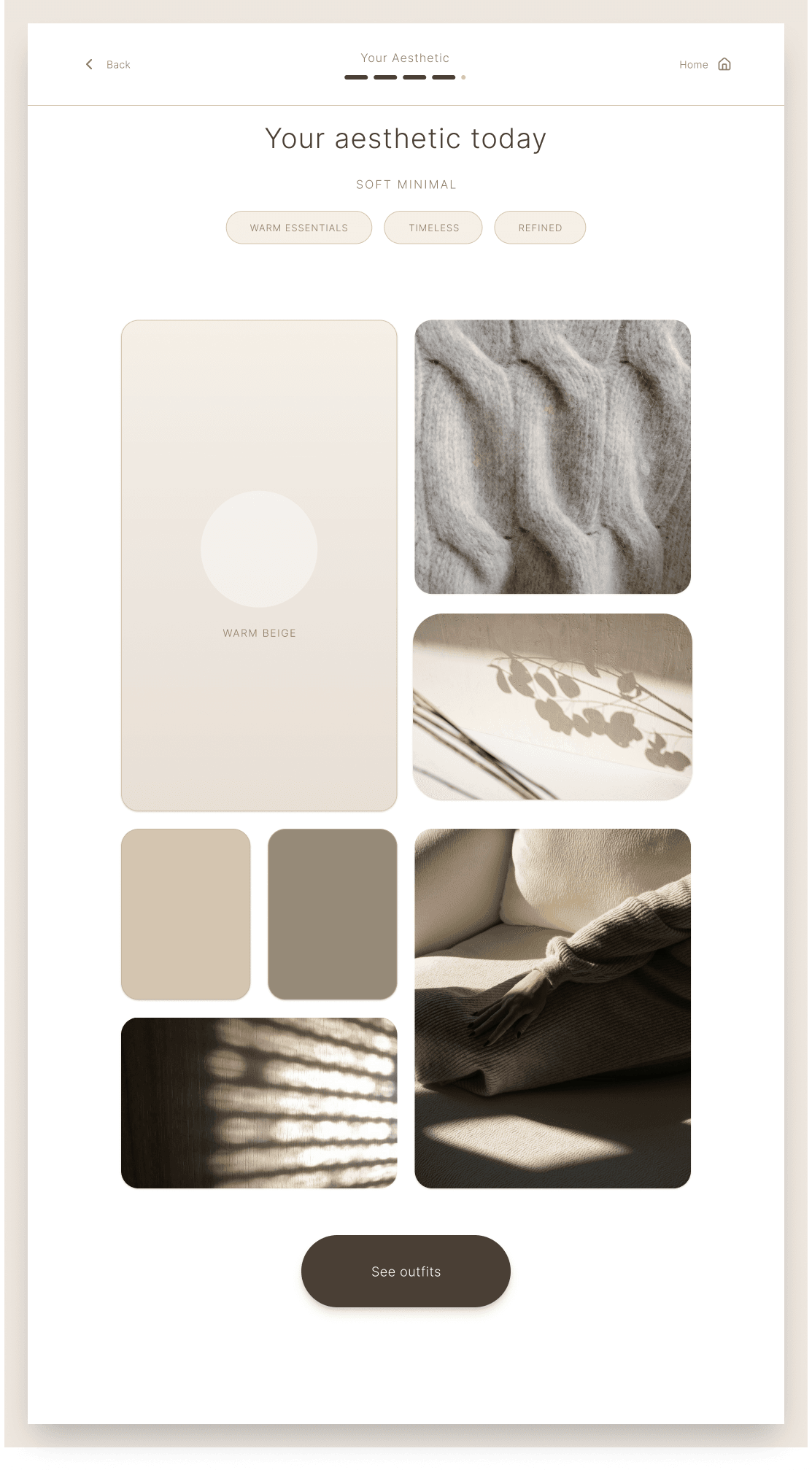
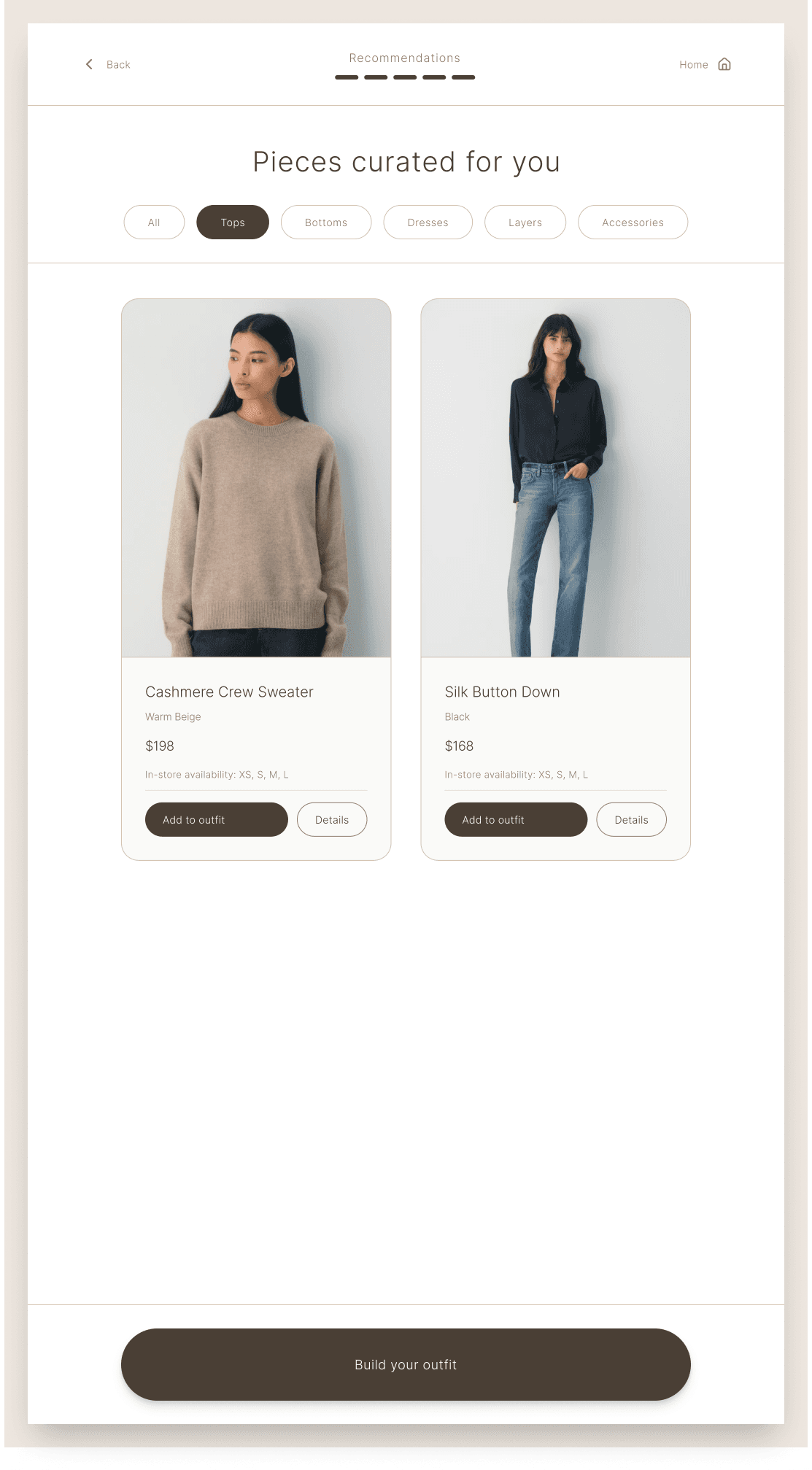
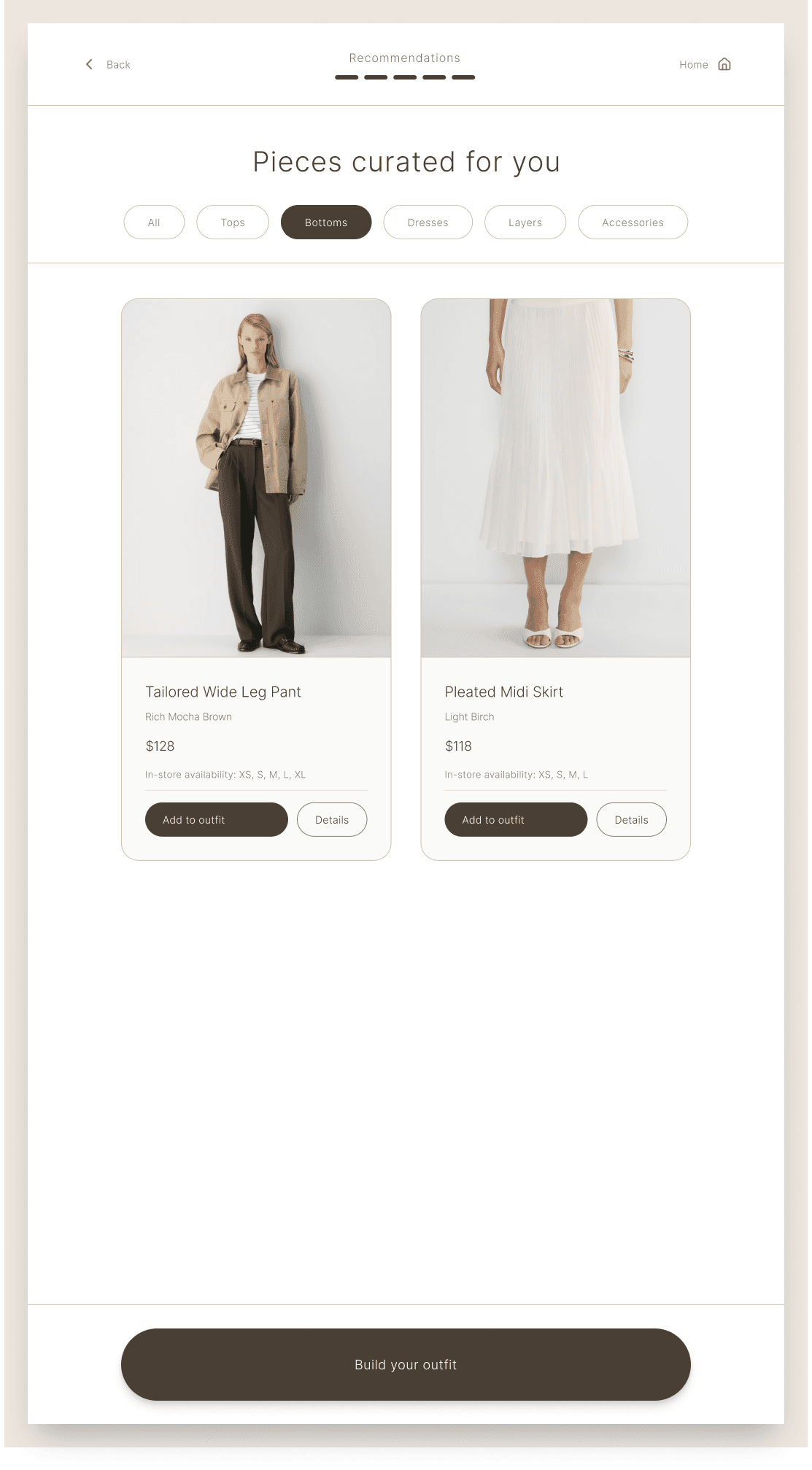
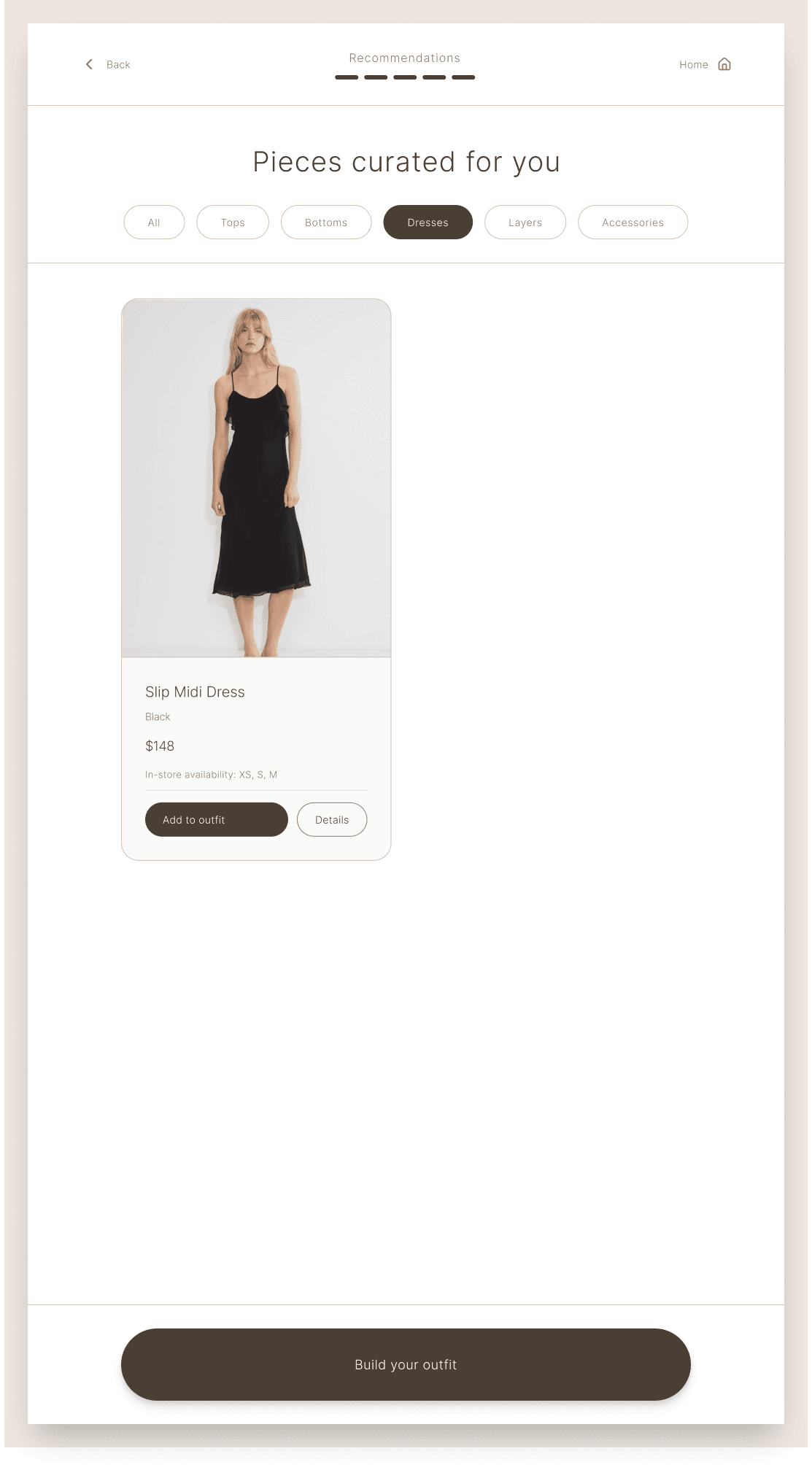
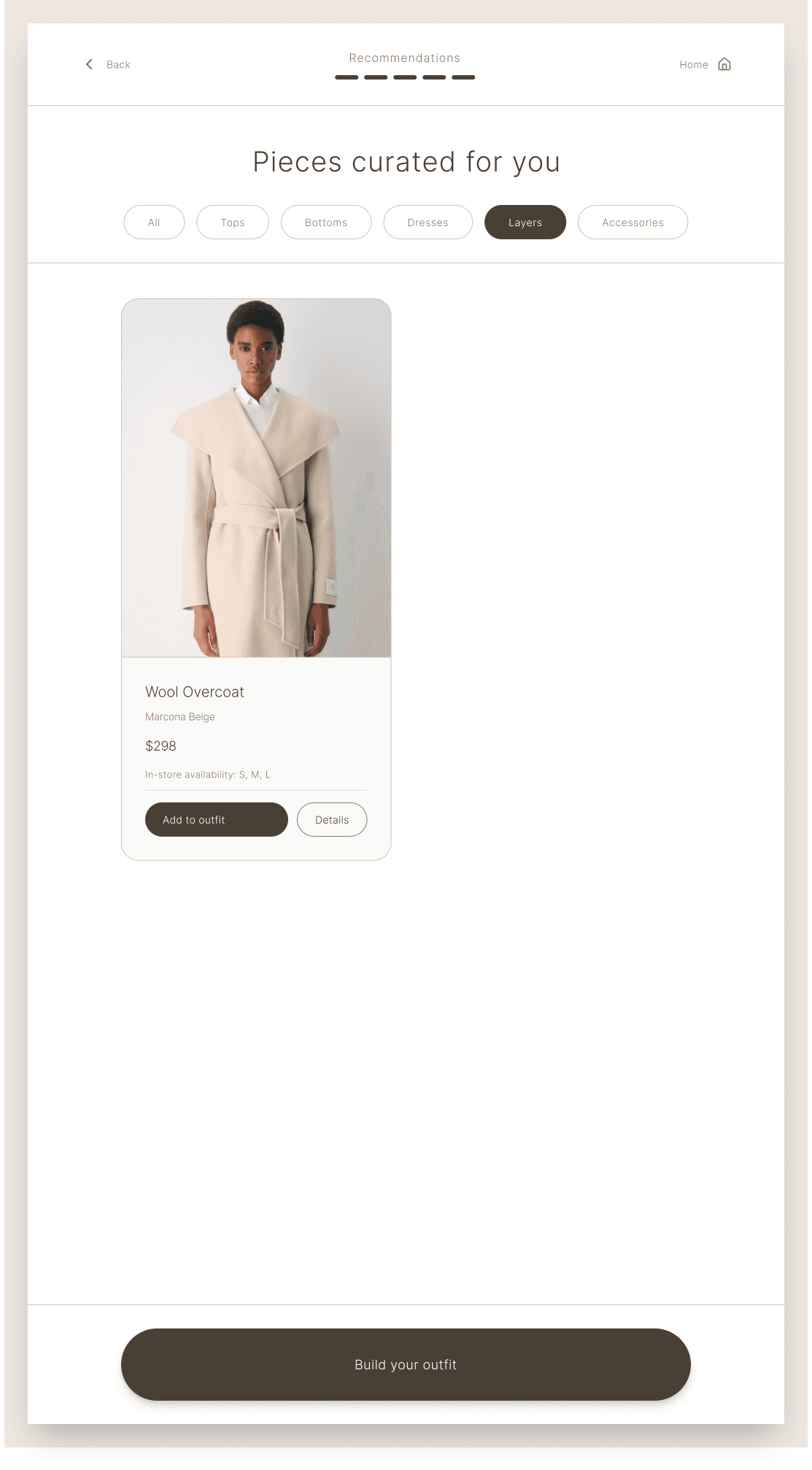
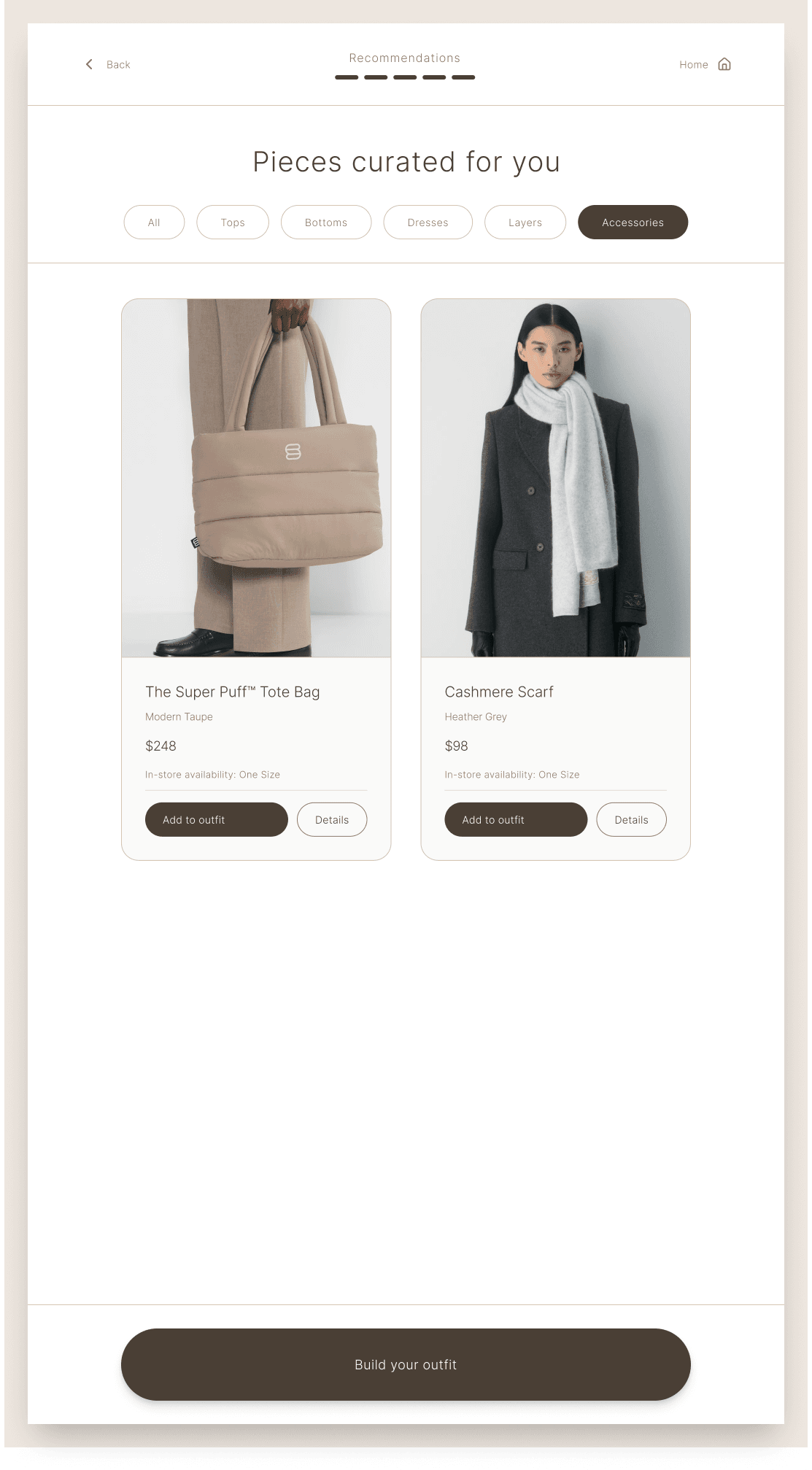
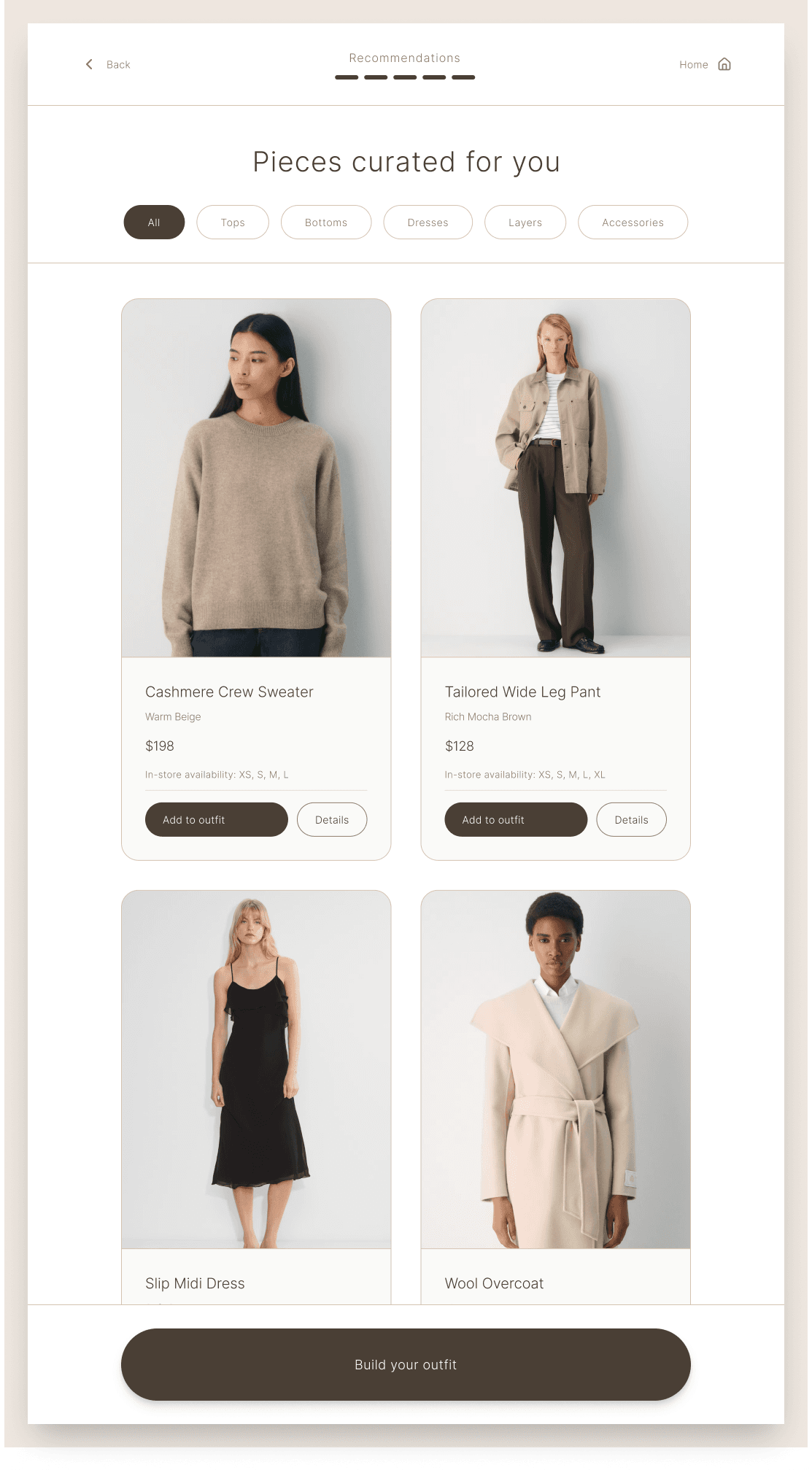
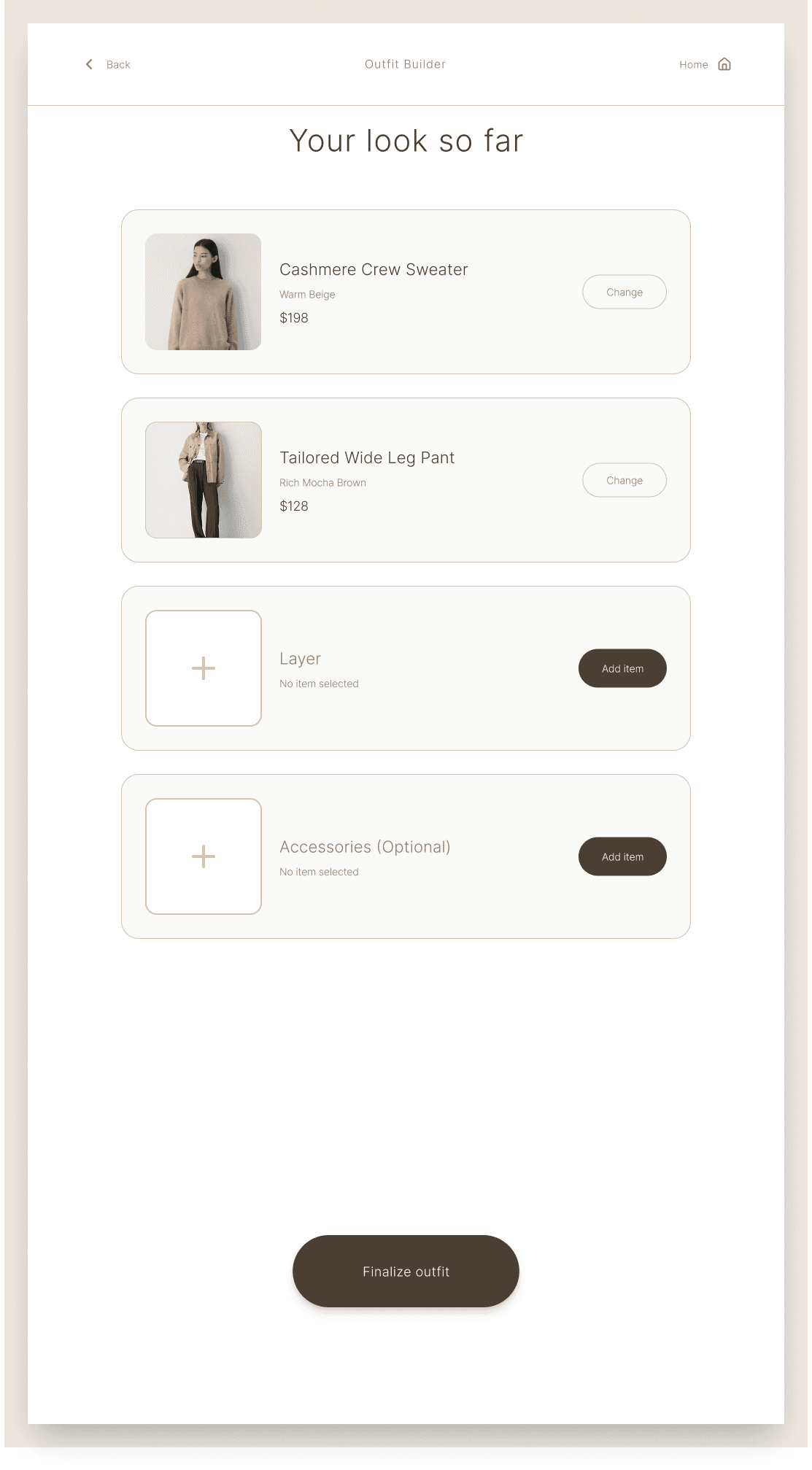
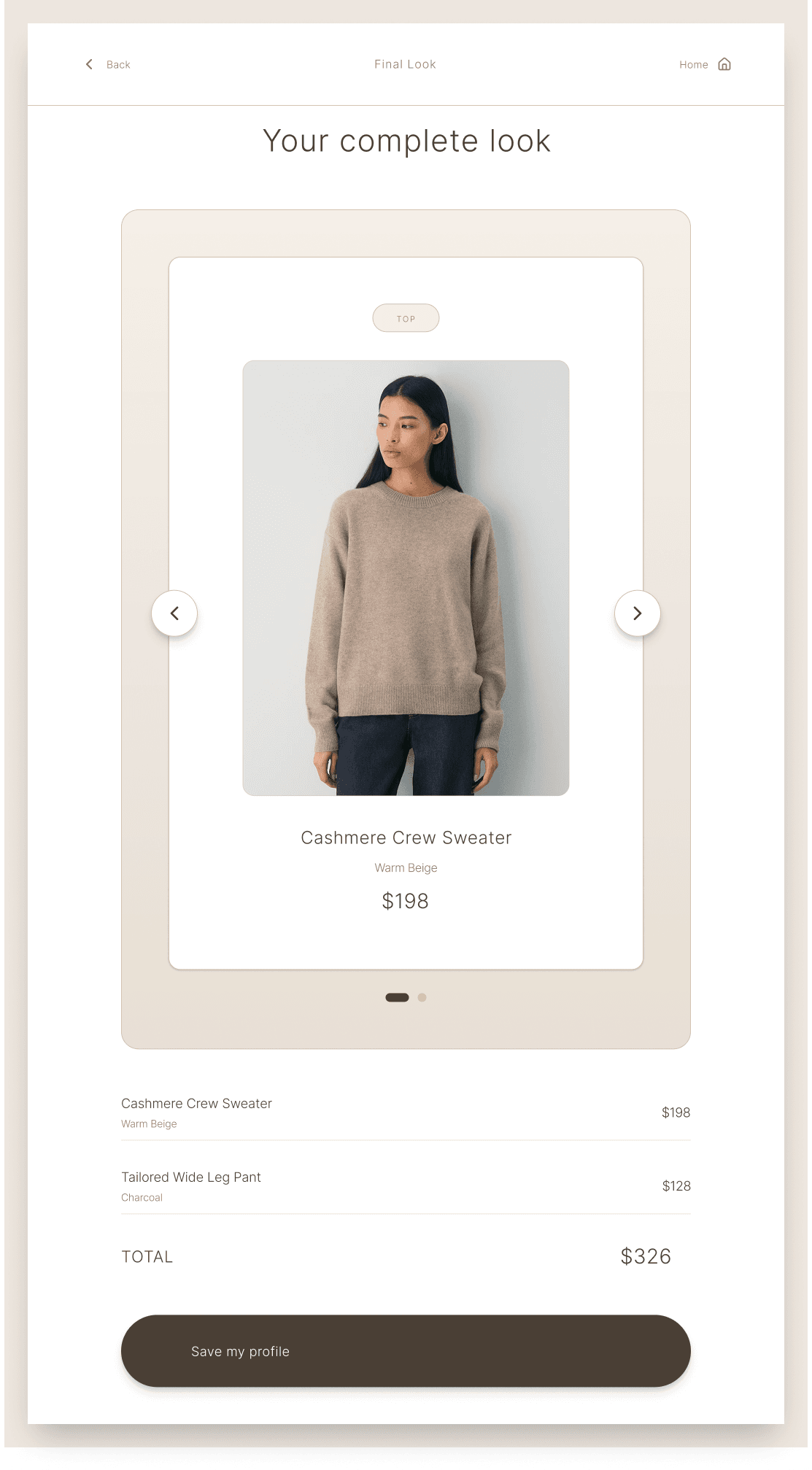
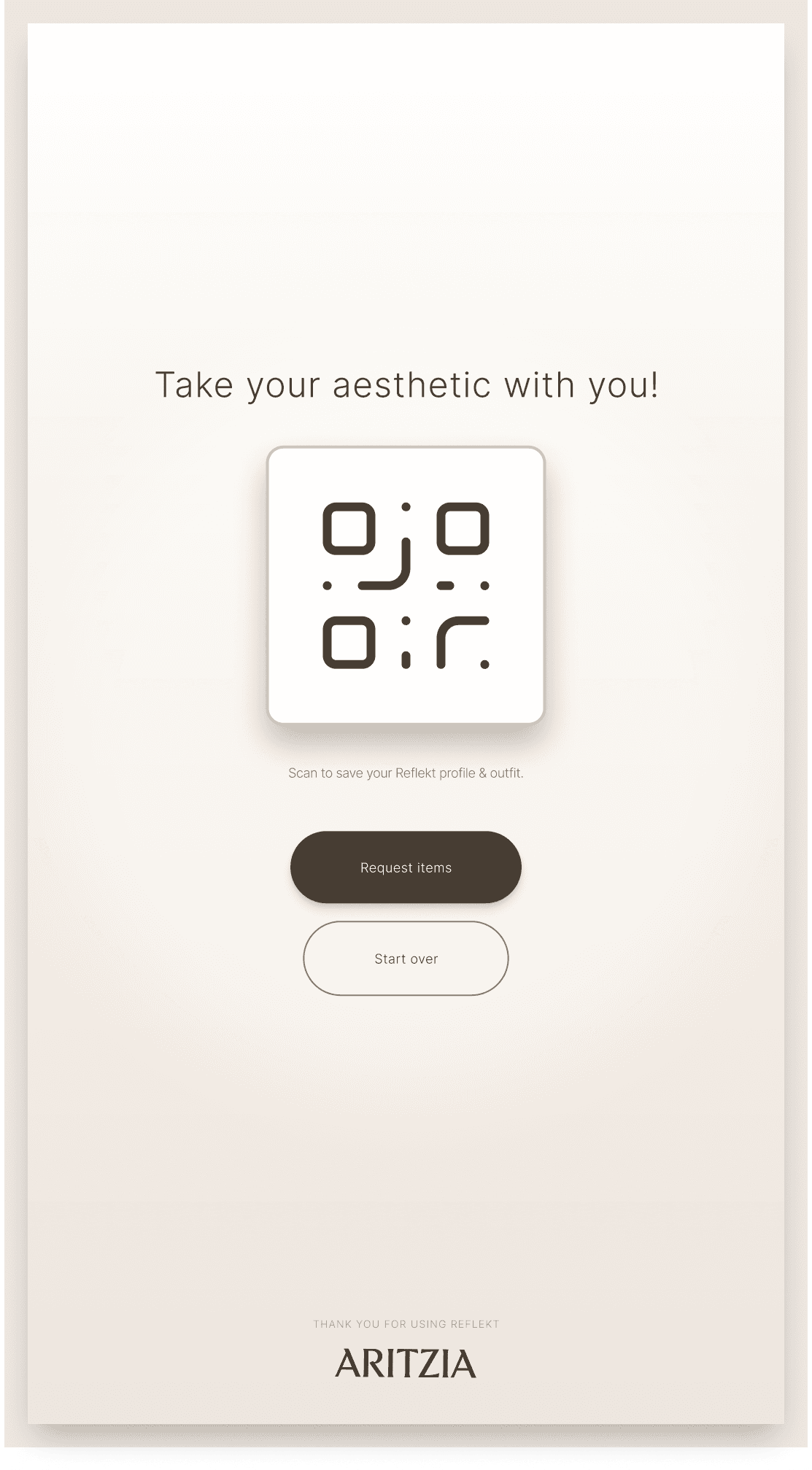
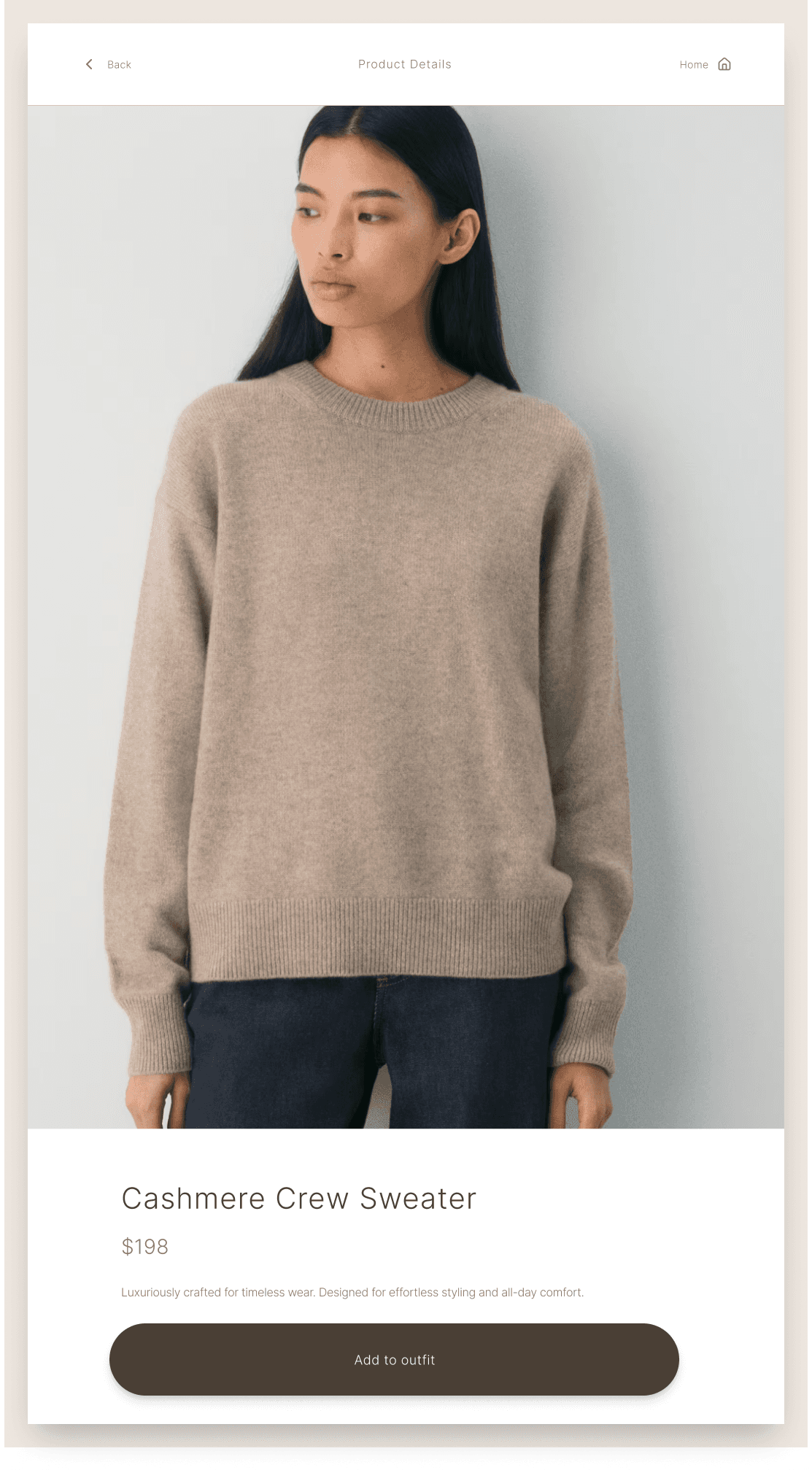
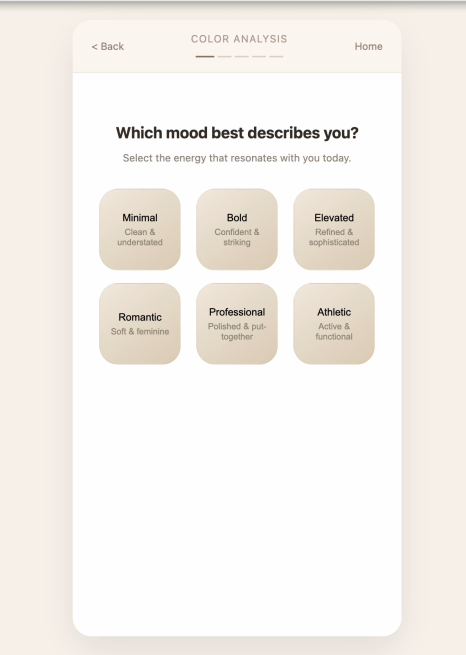
These wireframes explore the full Reflekt interaction flow, from mood selection to personalized style output. The focus was on creating a calm, intuitive experience that guides users step-by-step while maintaining a premium, editorial feel aligned with Aritzia’s retail environment. Each screen was designed to support emotional clarity, ease of navigation, and seamless progression through the mirror experience.
Scan the QR code to view and interact with the Reflekt prototype.
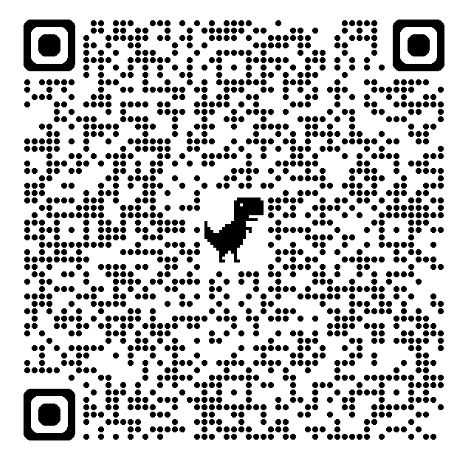
Extending the experience beyond the mirror
Adaptive Lighting & Visual Atmosphere
The surrounding environment shifts in response to user interaction warm, cool, or neutral reinforcing mood and enhancing immersion within the retail space.
Personalized Style Moodboards
Based on the user’s aesthetic profile, Reflekt curates visual moodboards that express identity through color, texture, and style direction, before introducing relevant in-store pieces.
Digital Continuity via QR Profile
Users can save their Reflekt profile through a QR code, allowing the experience to continue beyond the store and reinforcing a lasting connection with the brand.
Technical implementation
Prototype plan
The mood selection flow was prototyped using PHP and run locally through MAMP to simulate a live environment. A color-generation API was integrated to dynamically produce palettes based on the user’s selected mood, allowing the system to translate emotional input into visual output. This setup helped test how Reflekt could process real-time inputs and generate personalized style responses within a functional prototype.
HTML, CSS for UI
JavaScript for logic
Color API for palette generation
JSON as product dataset
Local MAMP server
API + Data Mashup Explanation
Color API
Generates palette
+
JSON Data
Product listings
JavaScript
Merges into recommendations
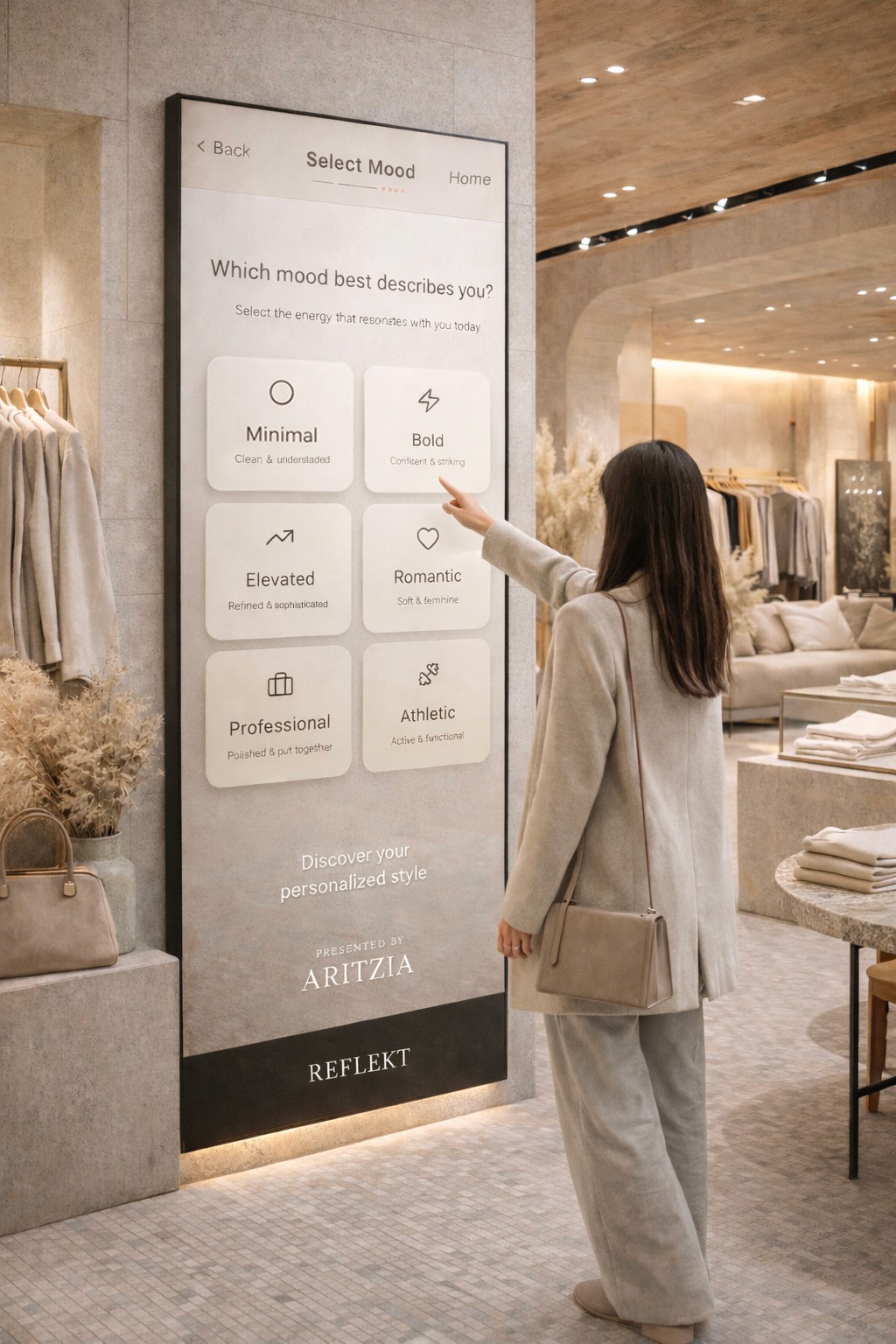
Physical prototype and mockups
We explored how Reflekt could extend beyond a digital concept into a tangible, in-store experience. The prototype was developed and tested through a coded mood-selection flow running on a local server, captured as a live video demonstration to show real interaction and logic in action.
This was paired with a spatial mockup of a full-scale smart mirror integrated into a premium retail environment, illustrating how Reflekt seamlessly blends digital interaction with physical space to enhance engagement beyond the screen.
Mood
Scan Intro
Scanning
Color Palette
Recommendations
User journey summary
Spatial mirror mockup
Impact & Results
Outcomes:
Introduced an emotion-first approach to in-store personalization
Strengthened the connection between shopper identity and style discovery
Reduced decision fatigue through guided, mood-based interaction
Enhanced the retail experience by blending technology with physical space
Measured results:
Increased dwell time through interactive, personalized engagement
Attracted fashion-conscious, experience-driven shoppers aligned with the brand
Positive response to the immersive and emotionally aware experience
45%
Increase in user engagement with interactive in-store experiences
60%
Improved perceived alignment between brand identity and in-store experience
30%
Increase in dwell time when personalization is introduced in physical retail
Credits
Individual project by
Celina Soudani
Conceptual academic project developed in 2025. Aritzia referenced for educational purposes only.